Chobble Tickets in pictures
Each screenshot is a real Chobble Tickets page on a phone. Scroll the gallery to see how listings, checkouts, attendees, staff tools and reporting fit together.
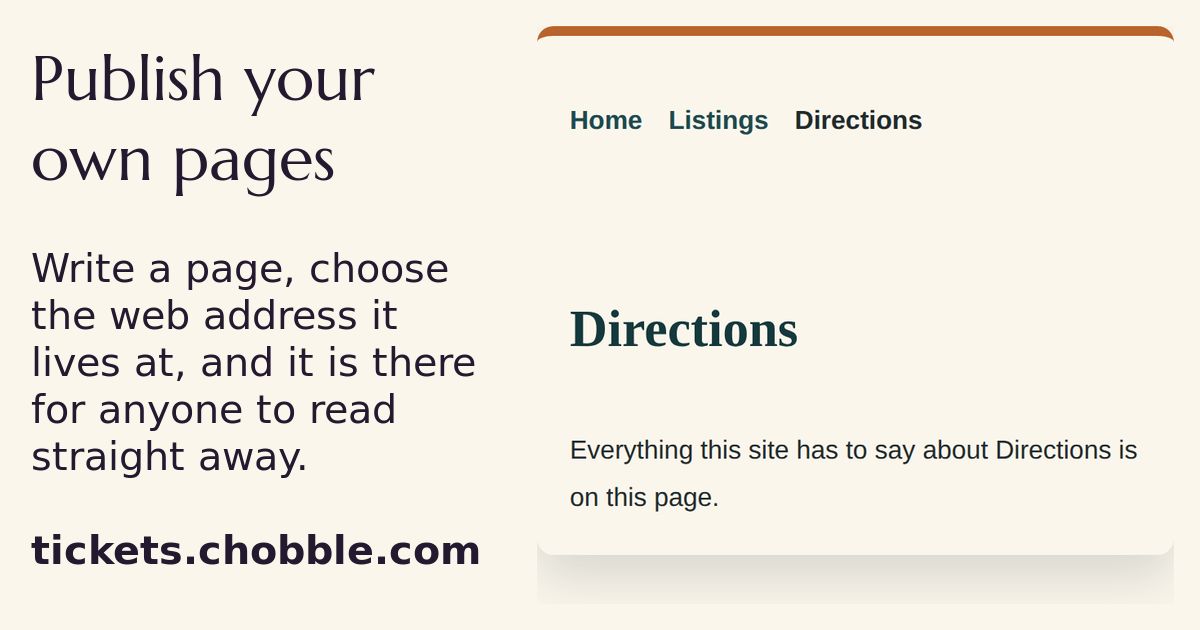
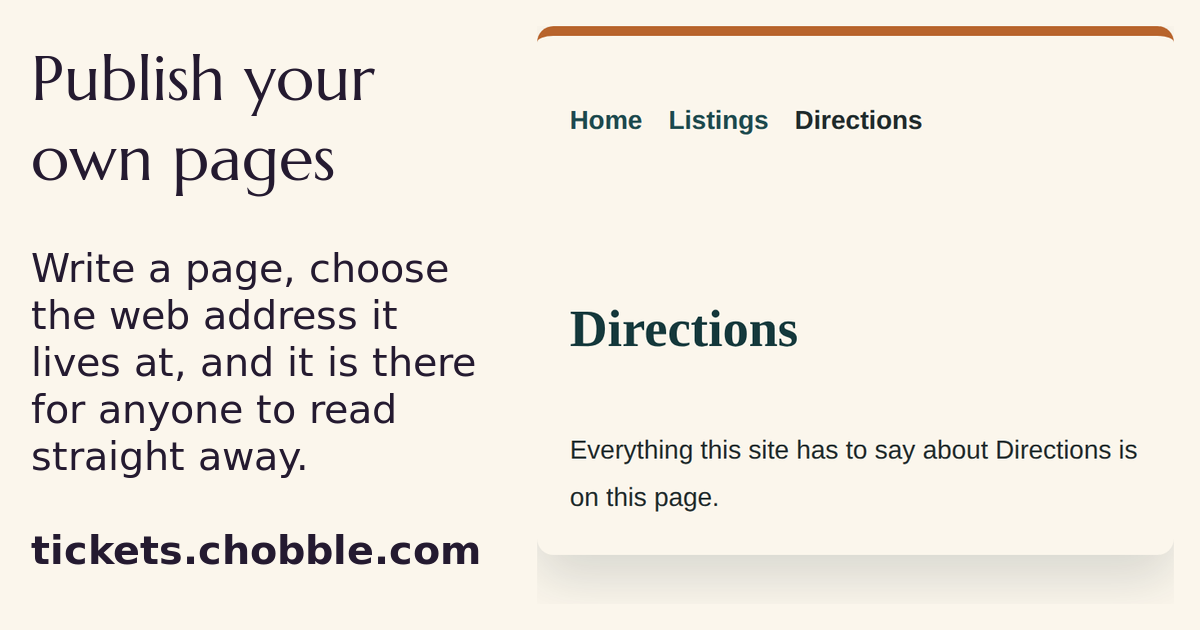
A page the organiser wrote, live at the address they chose.
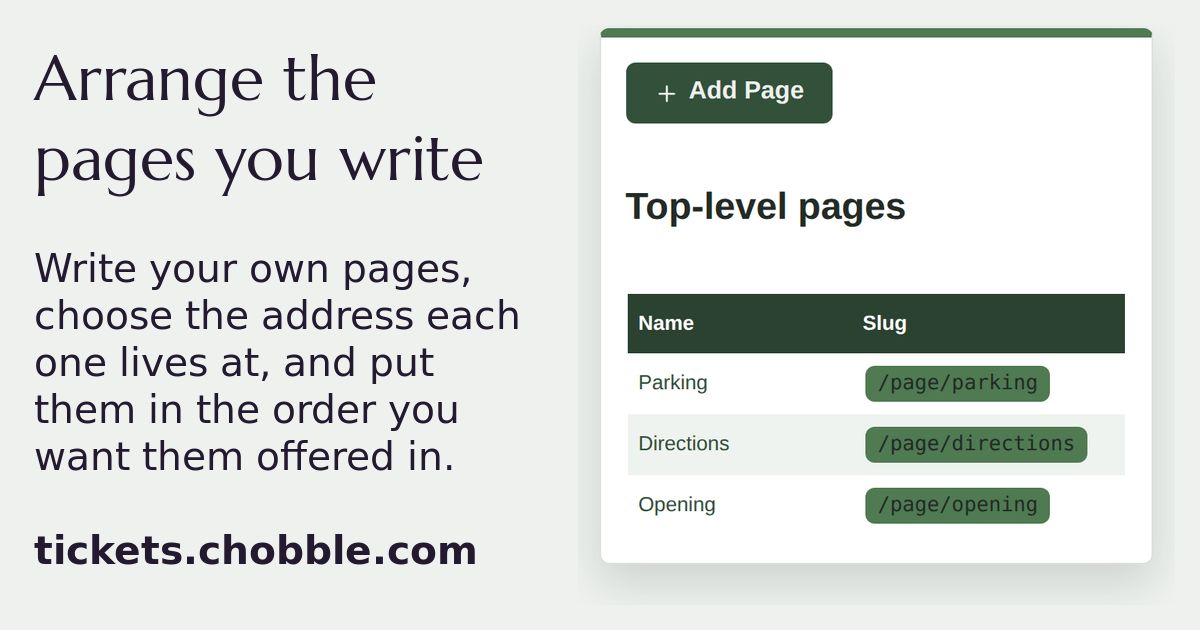
An organiser's own pages, in the order they chose.
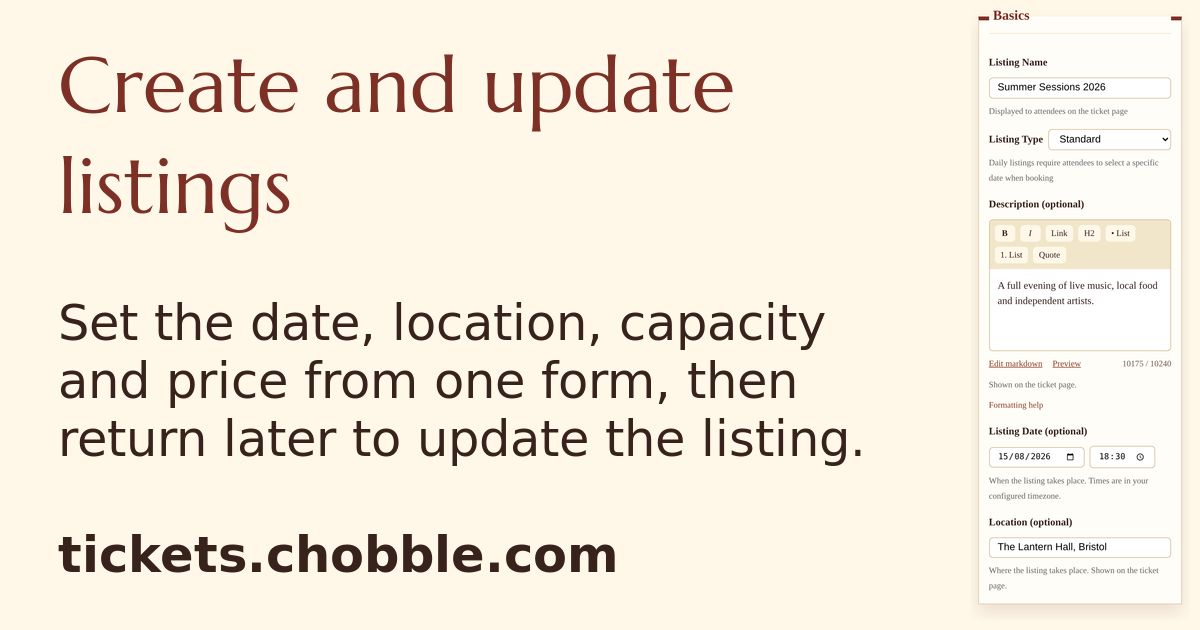
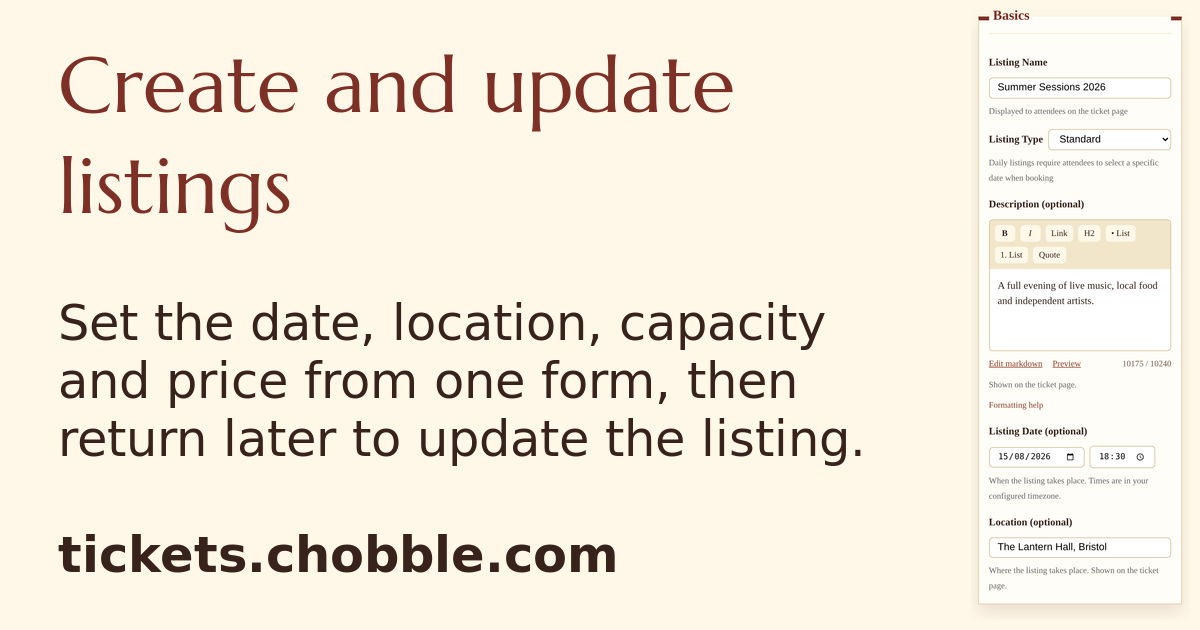
A listing form with the name, date, venue and price of a new event.
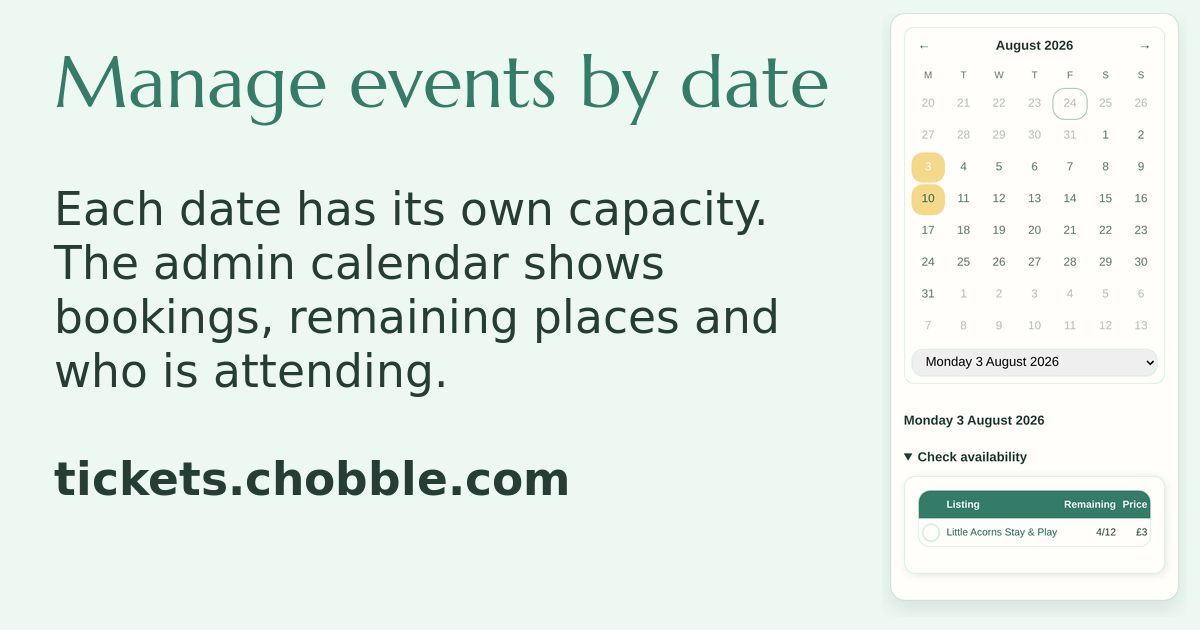
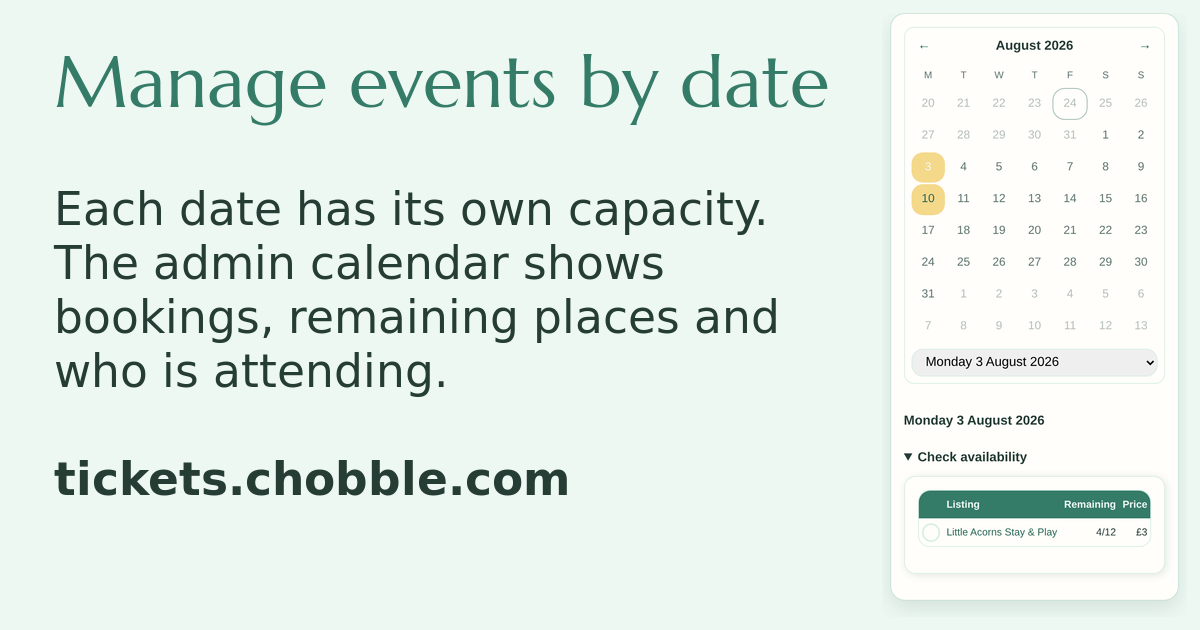
A daily events calendar showing how many places are left on each date.
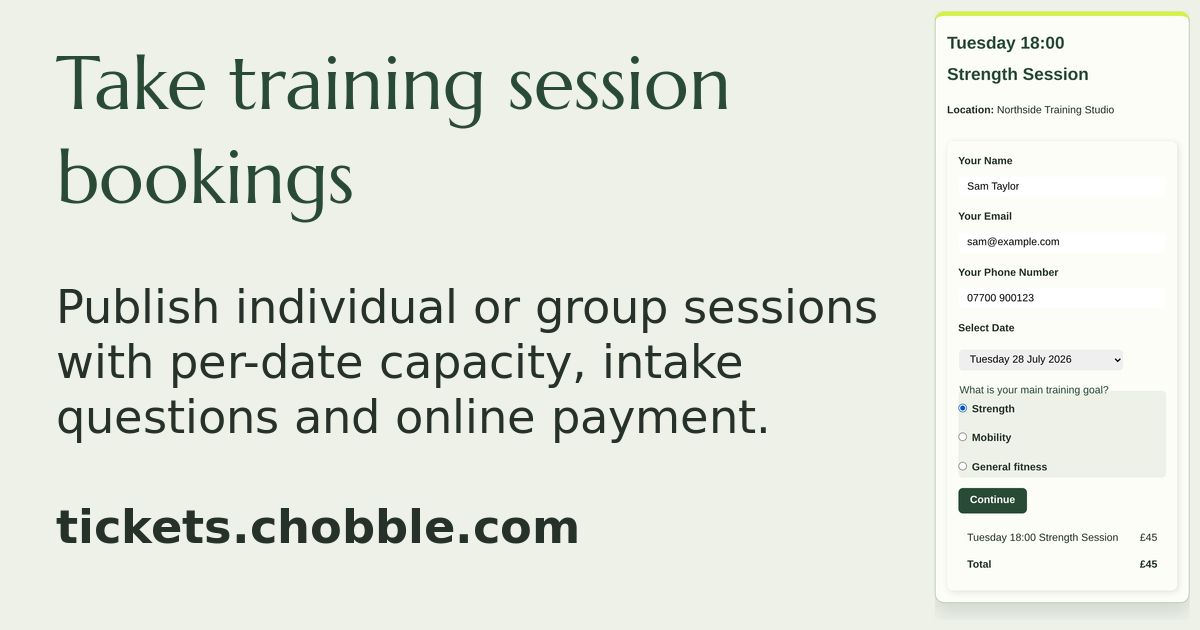
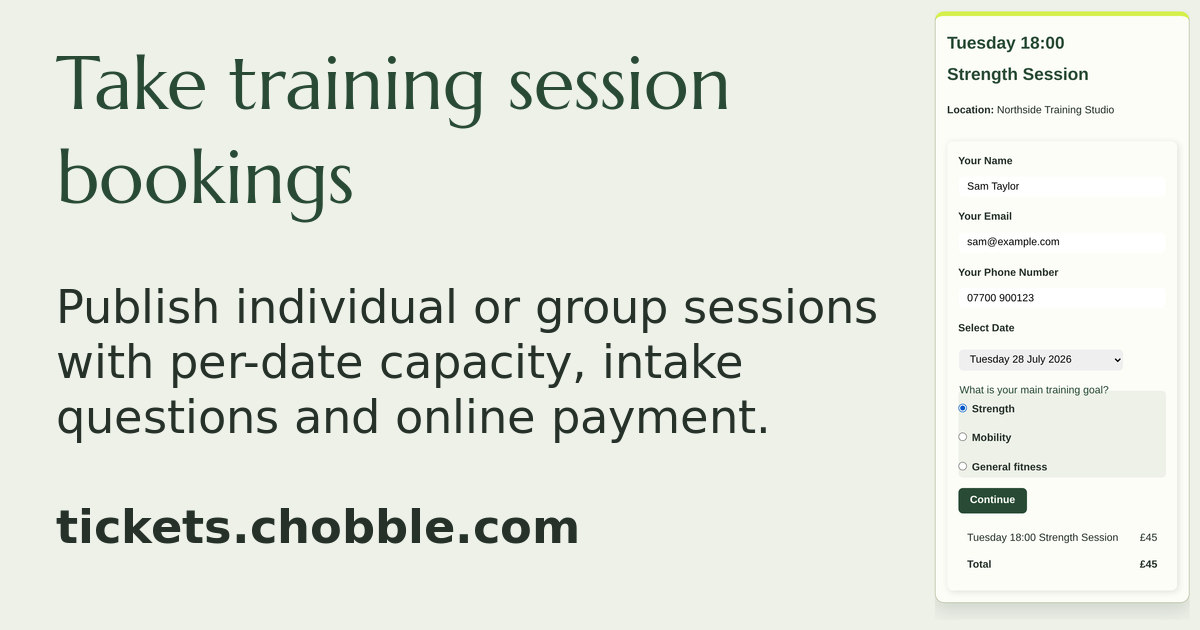
A personal training checkout with an offered date and an intake question.
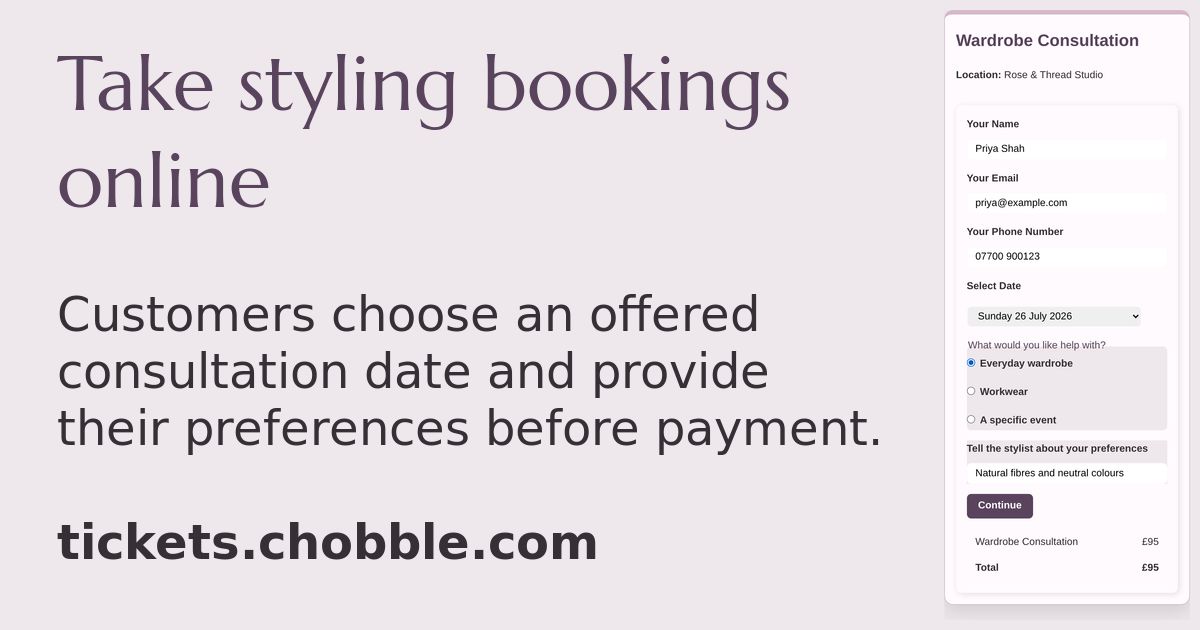
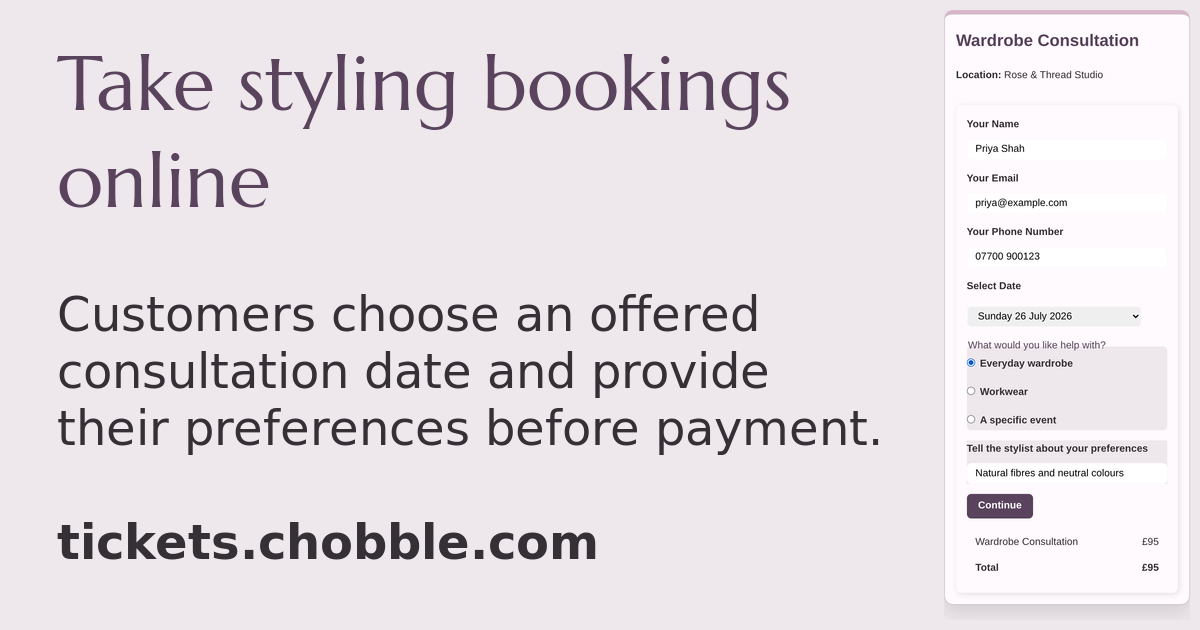
A styling consultation checkout collecting the customer's preferences.
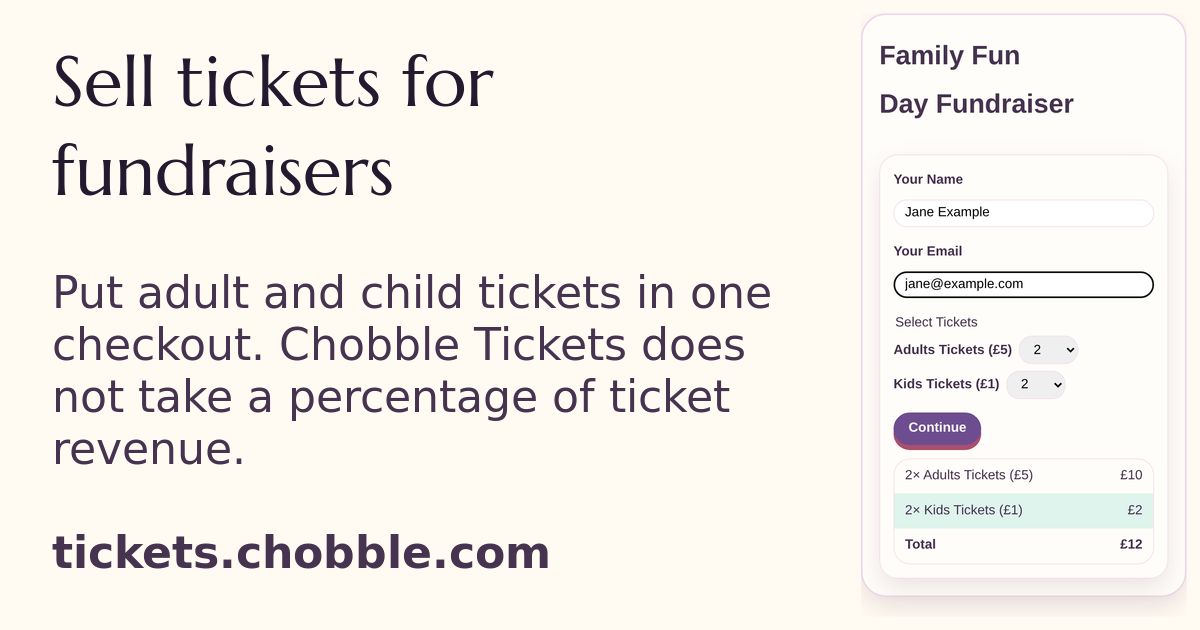
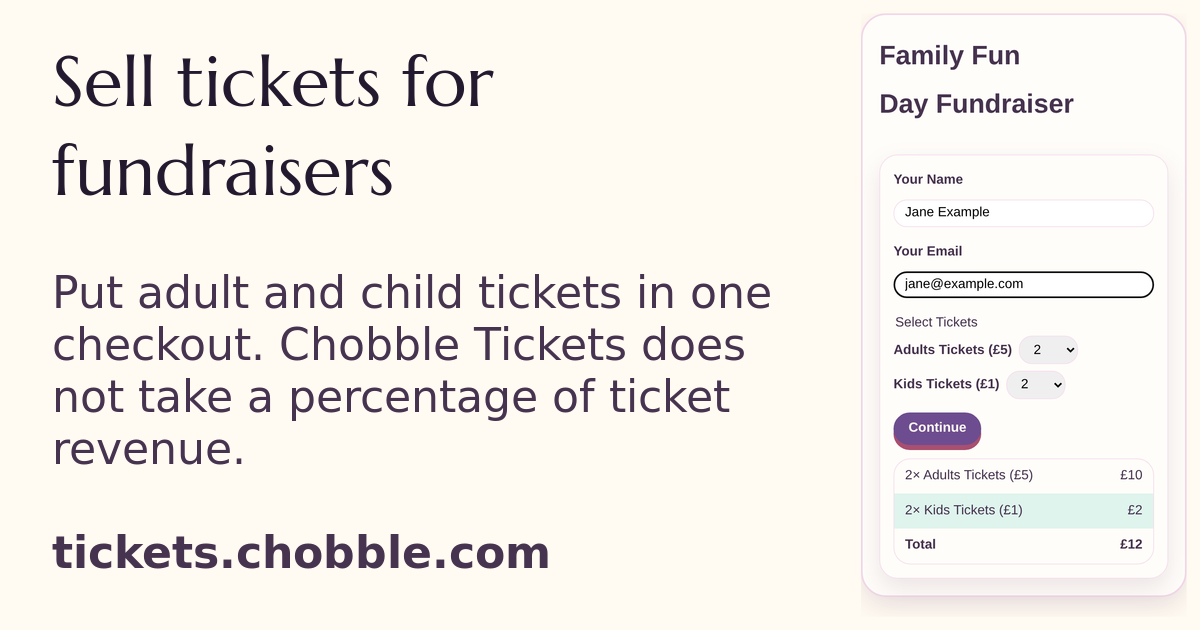
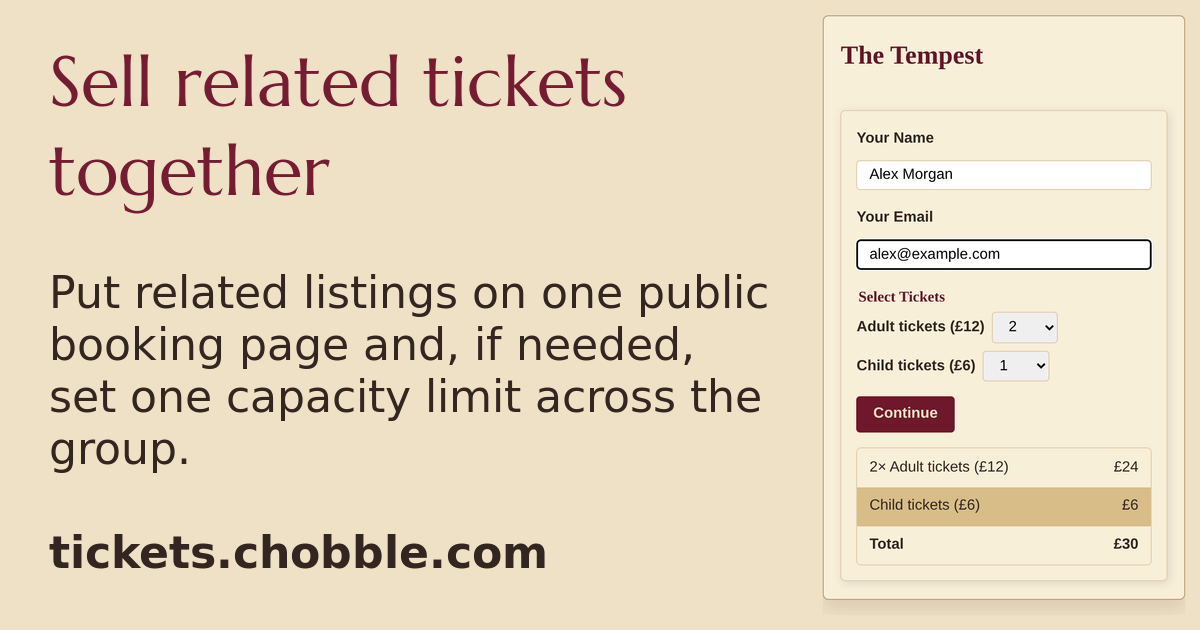
Group checkout for a family fun day — adult and child tickets in one basket.
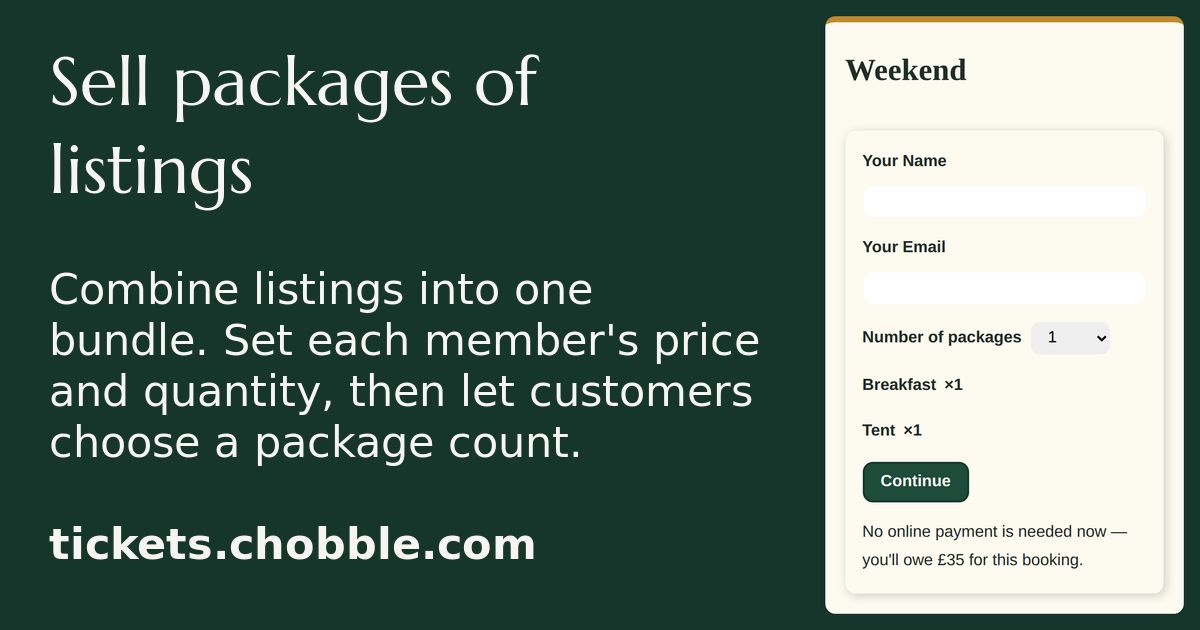
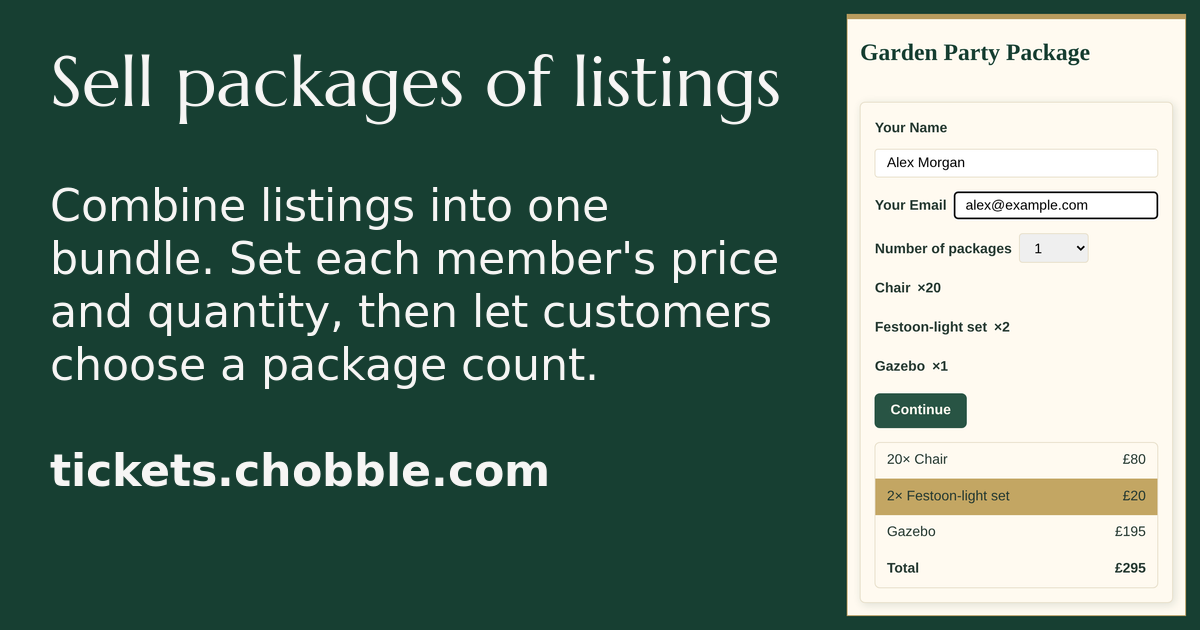
A package booking page naming every item the buyer gets.
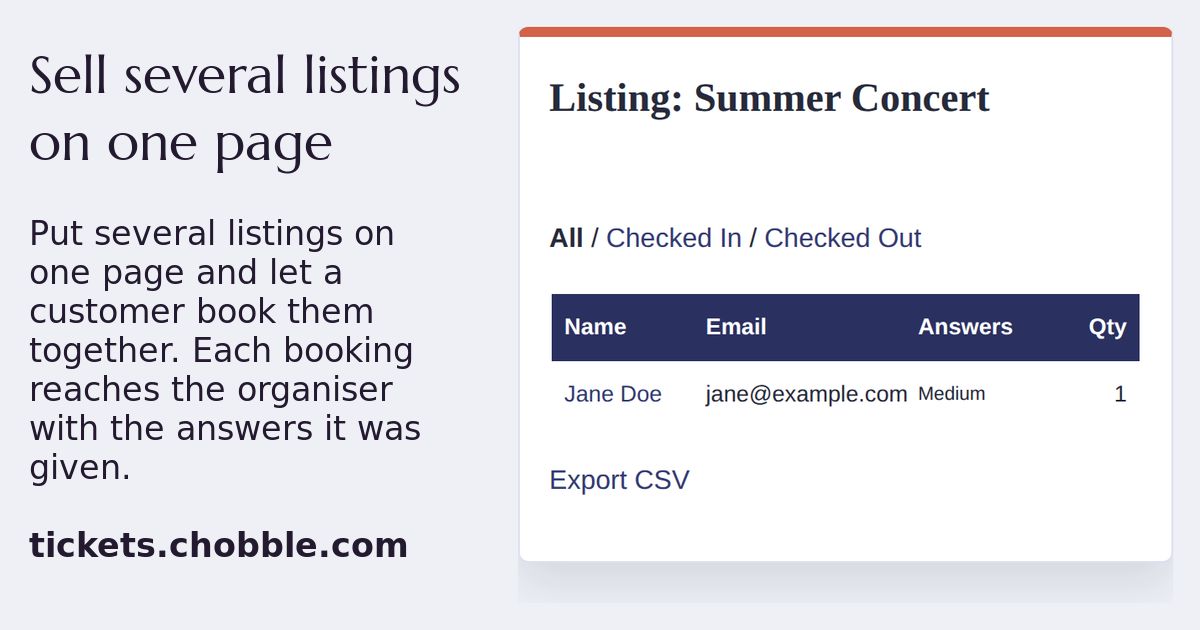
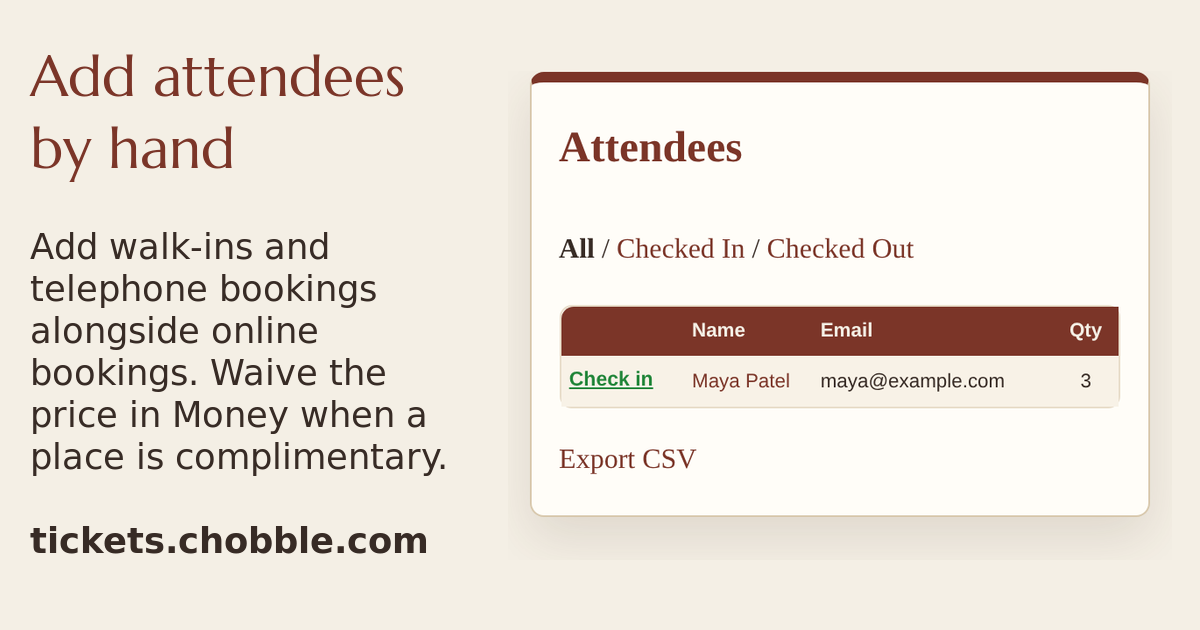
An attendee list holding a booking made from a group page, with the answer the customer picked.
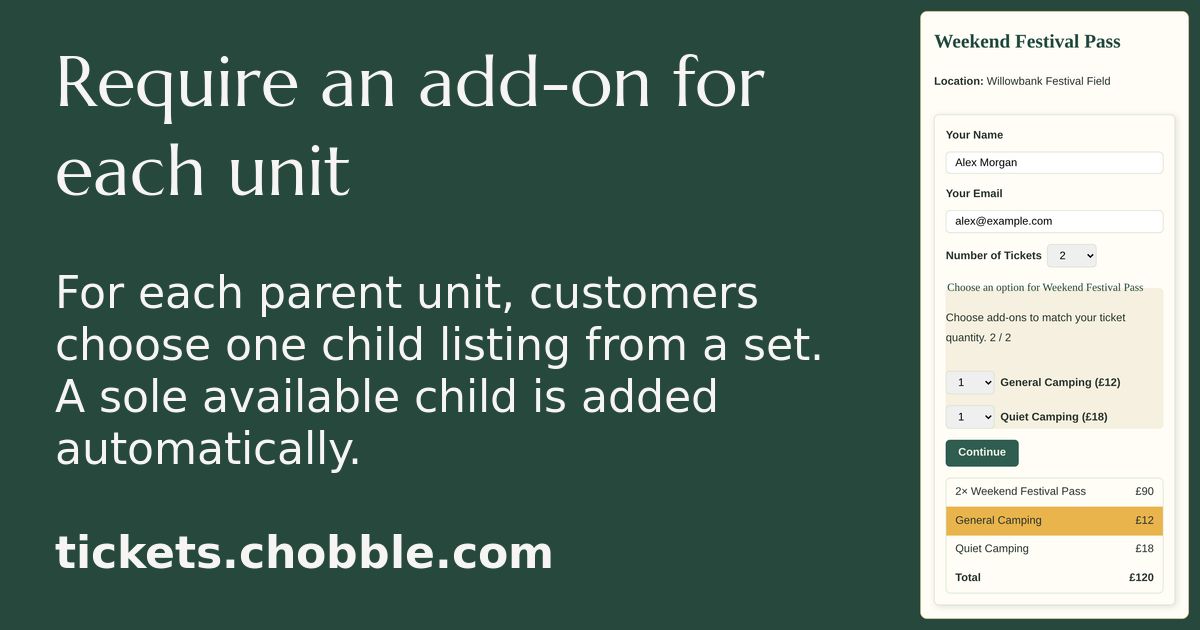
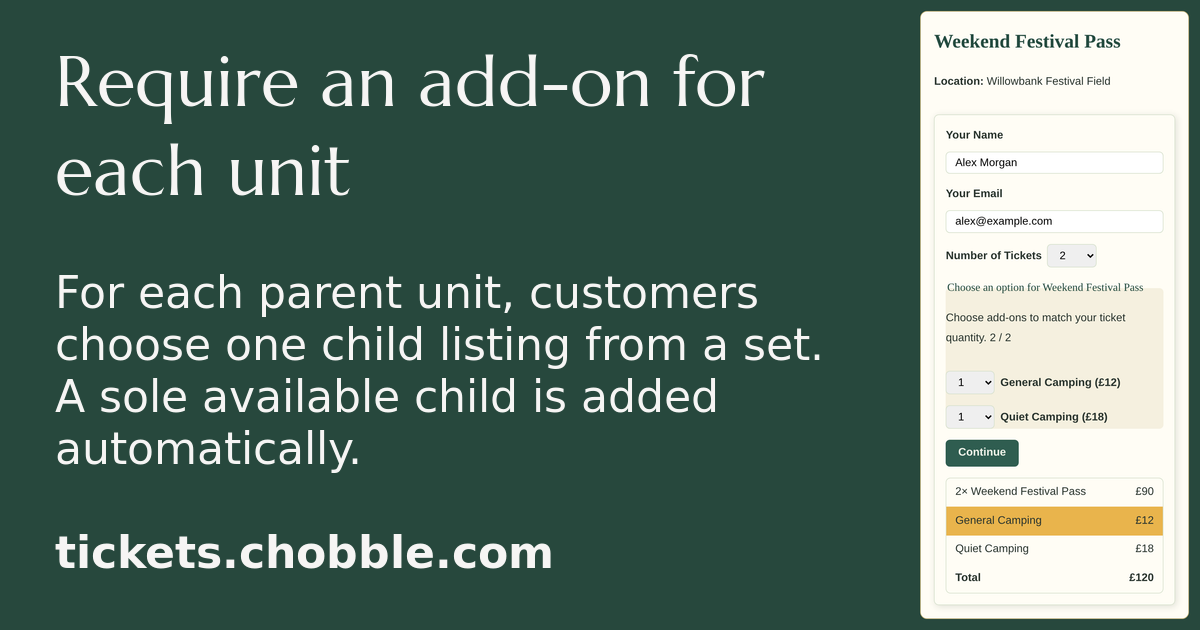
A festival pass that requires each camper to pick a camping option.
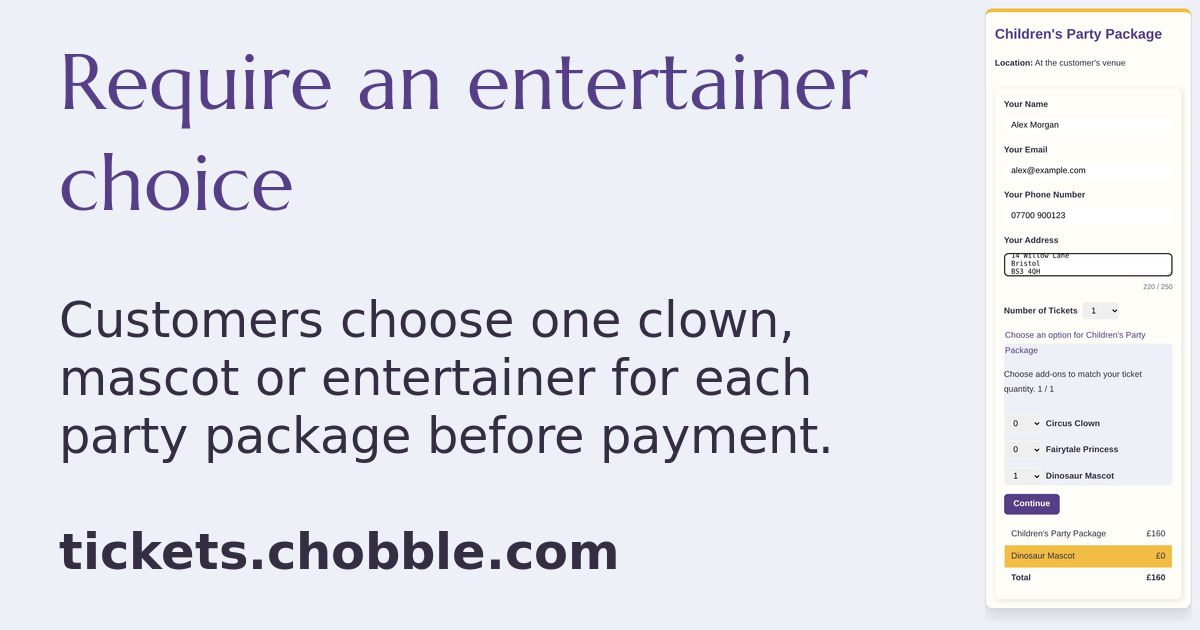
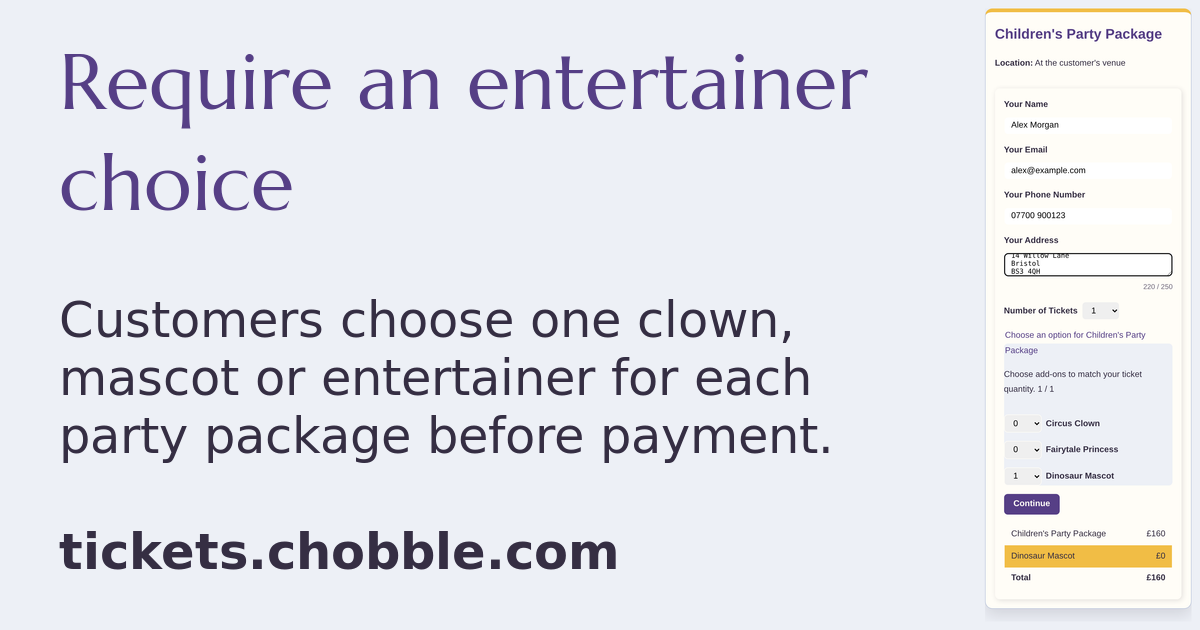
A children's party package that requires one entertainer choice.
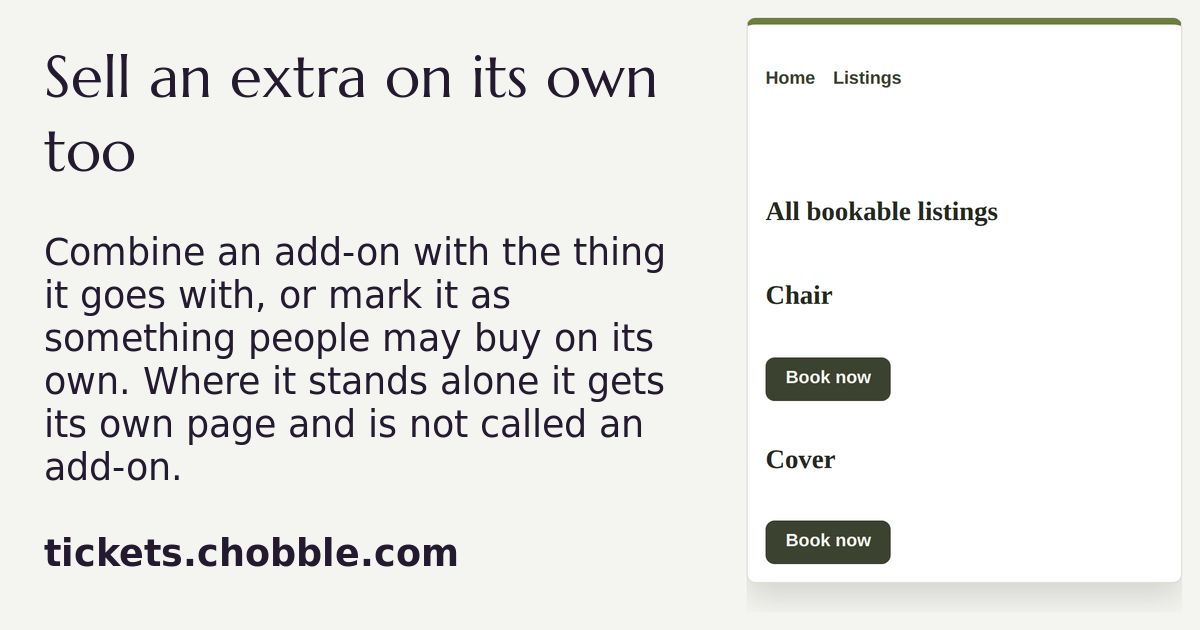
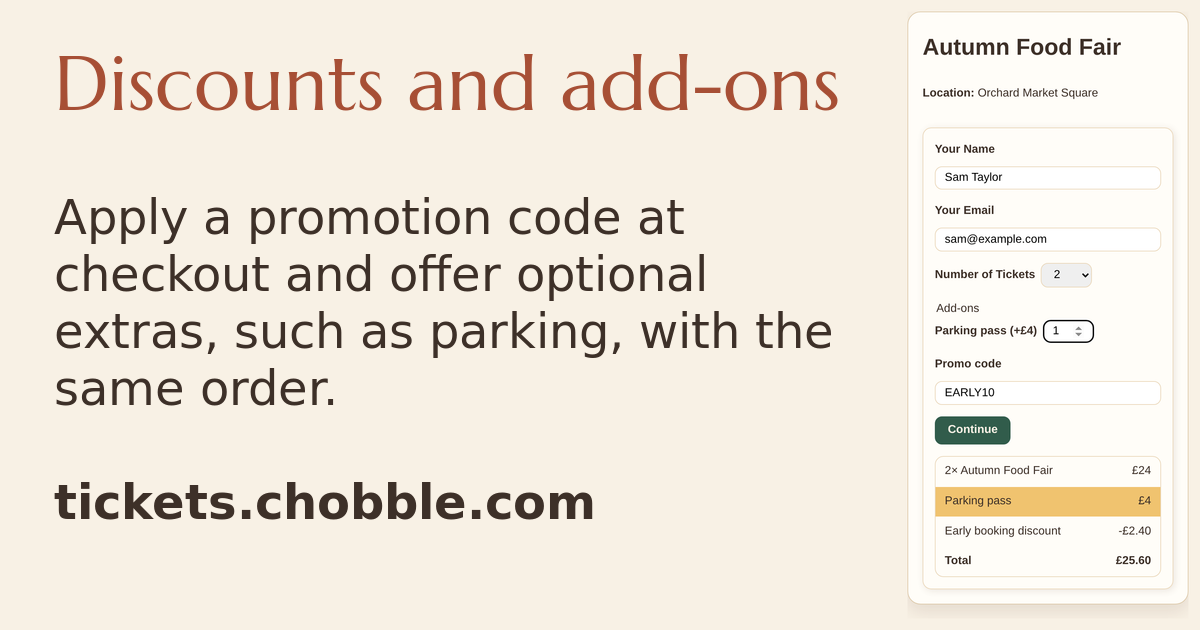
A public list where an add-on is offered on its own as well as with the thing it goes with.
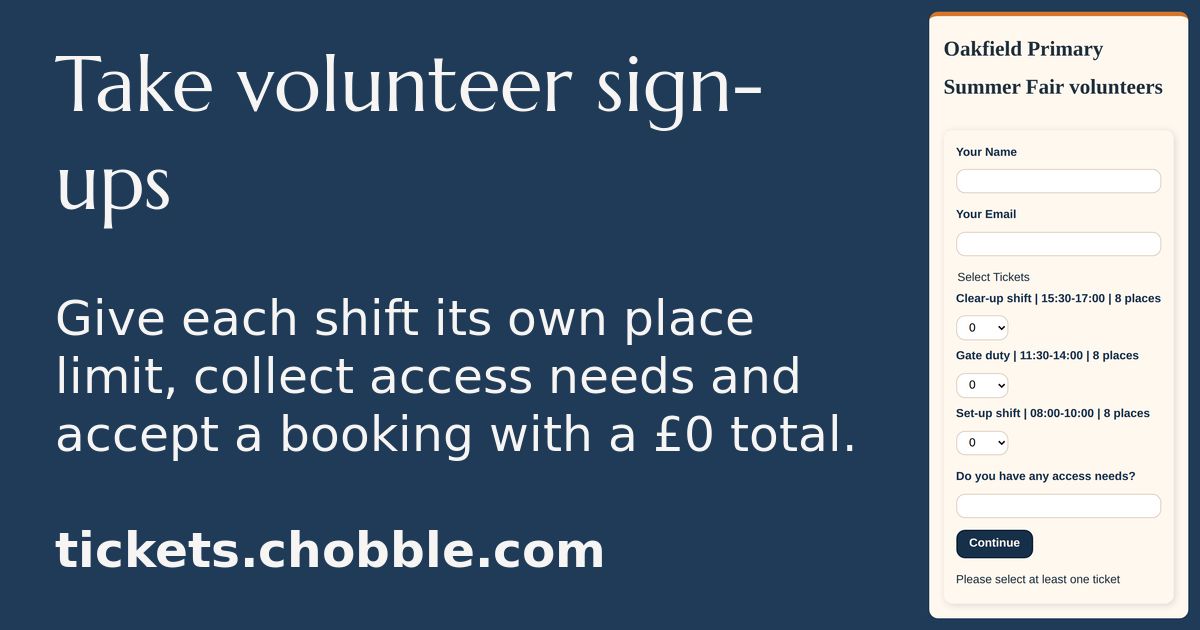
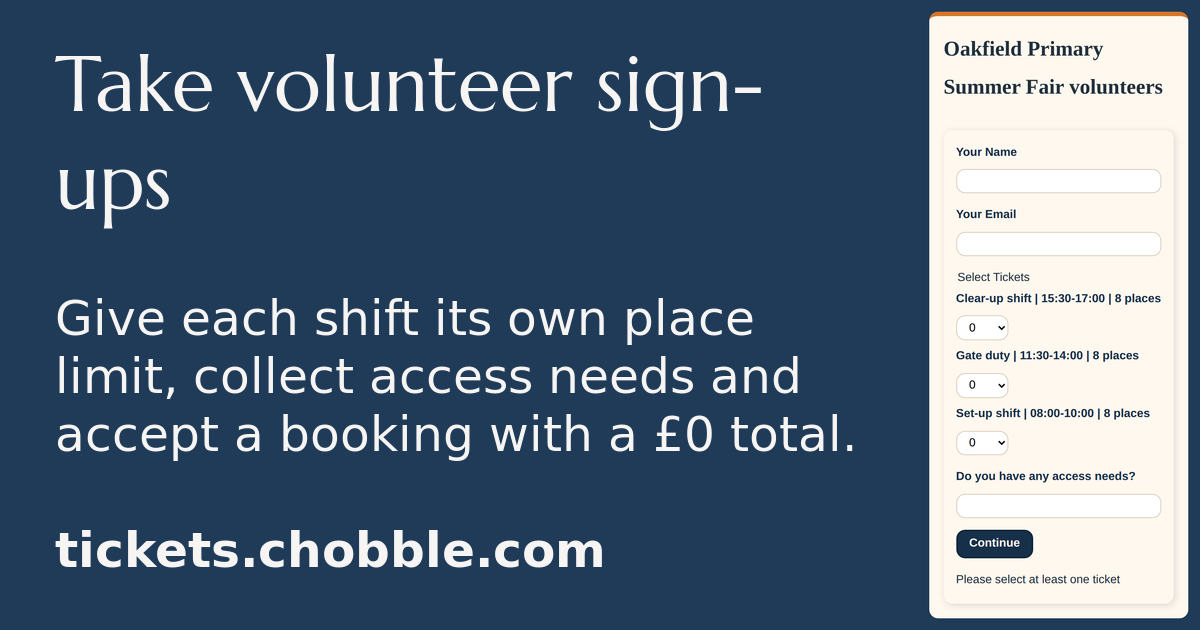
A volunteer sign-up page with three shifts of eight places and an access-needs question.
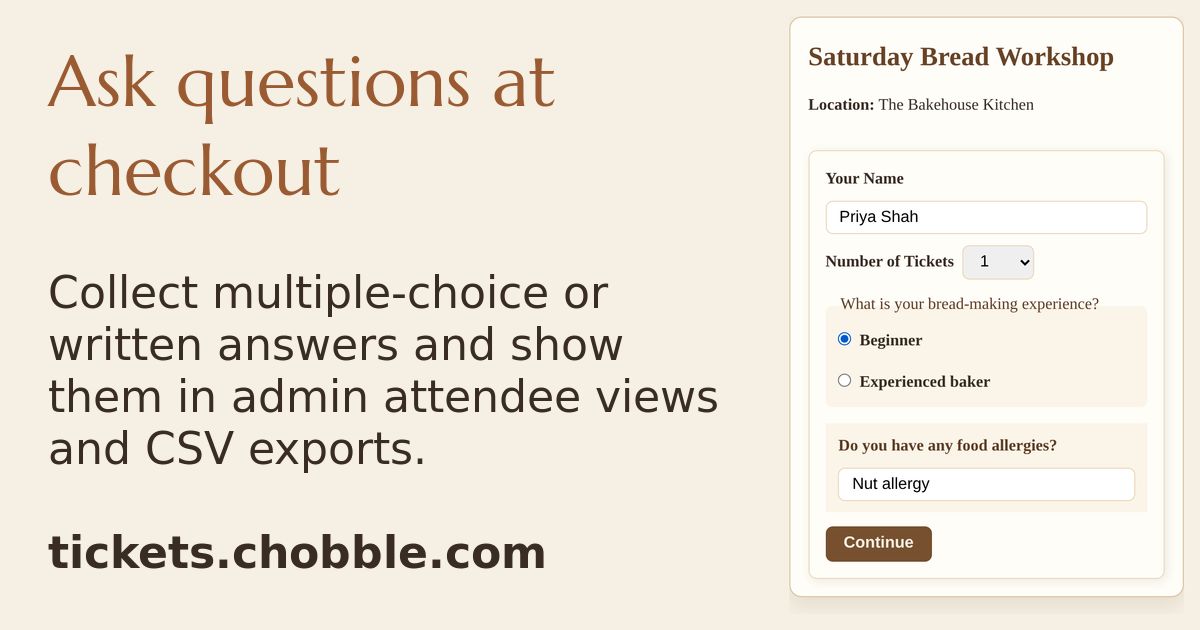
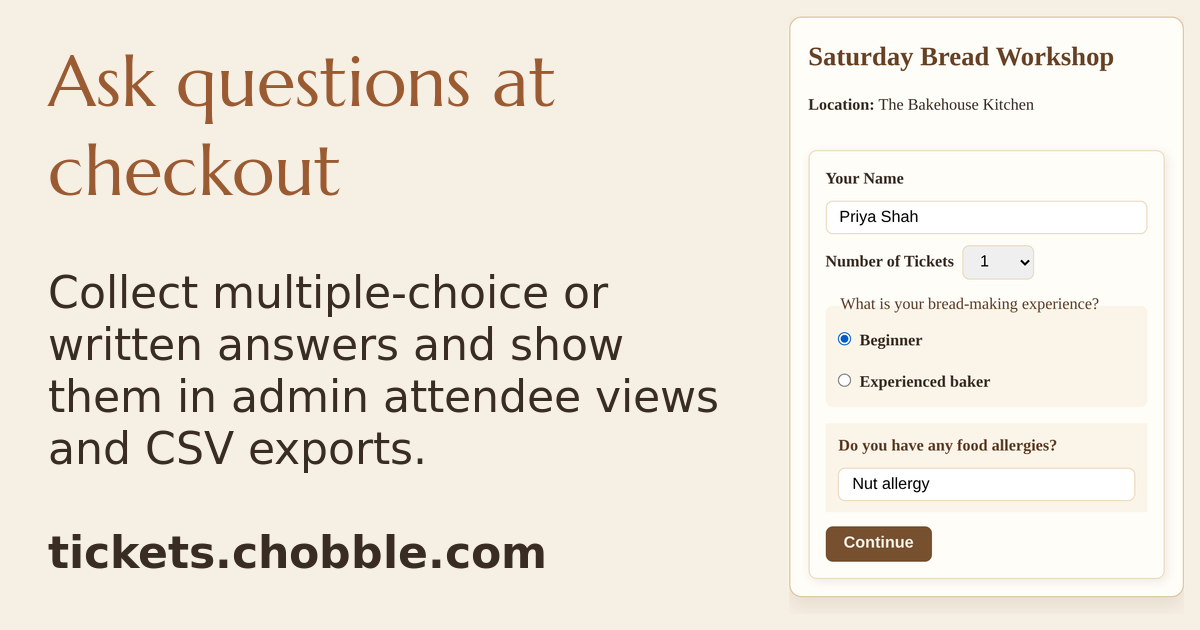
Custom questions at checkout — bread experience and food allergies.
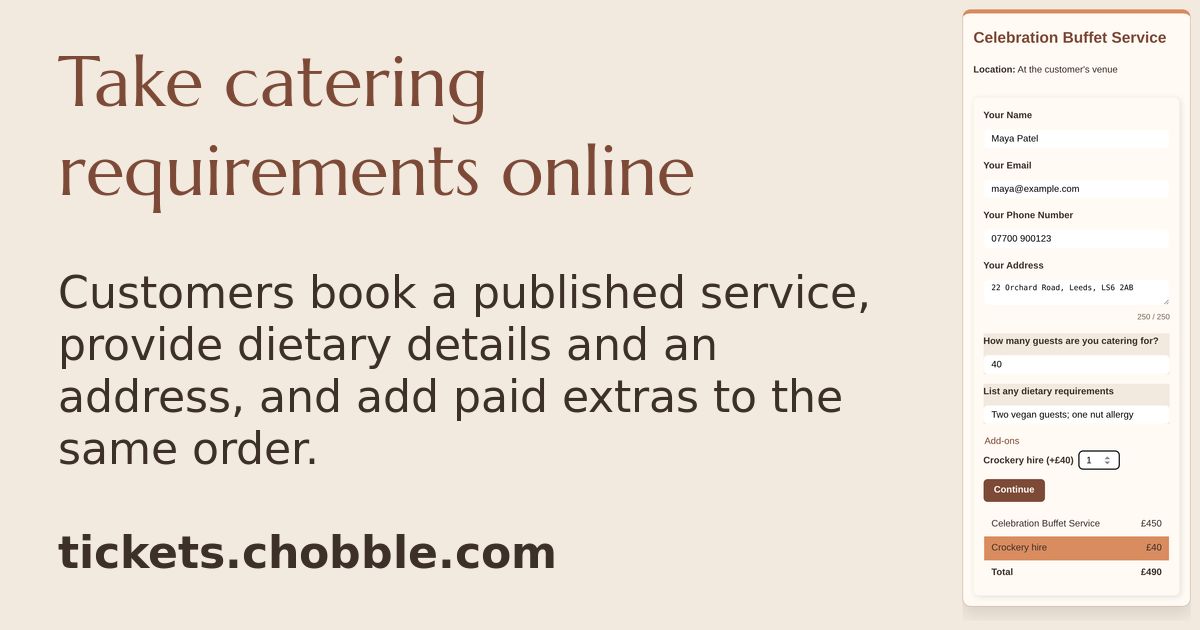
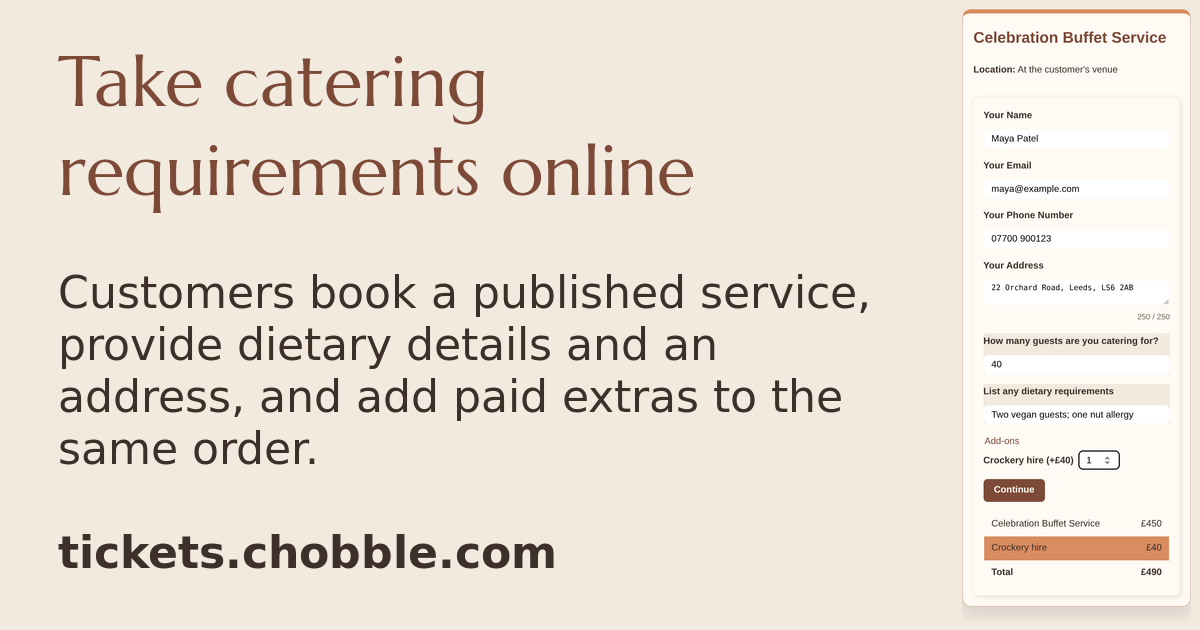
A catering checkout with guest requirements and a paid crockery extra.
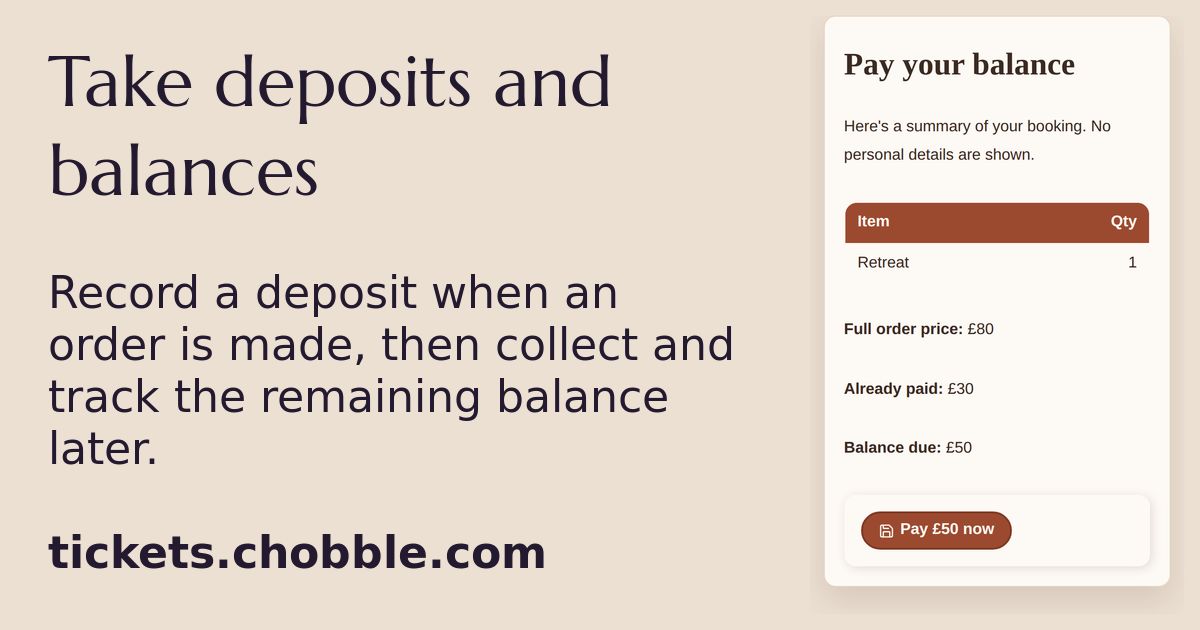
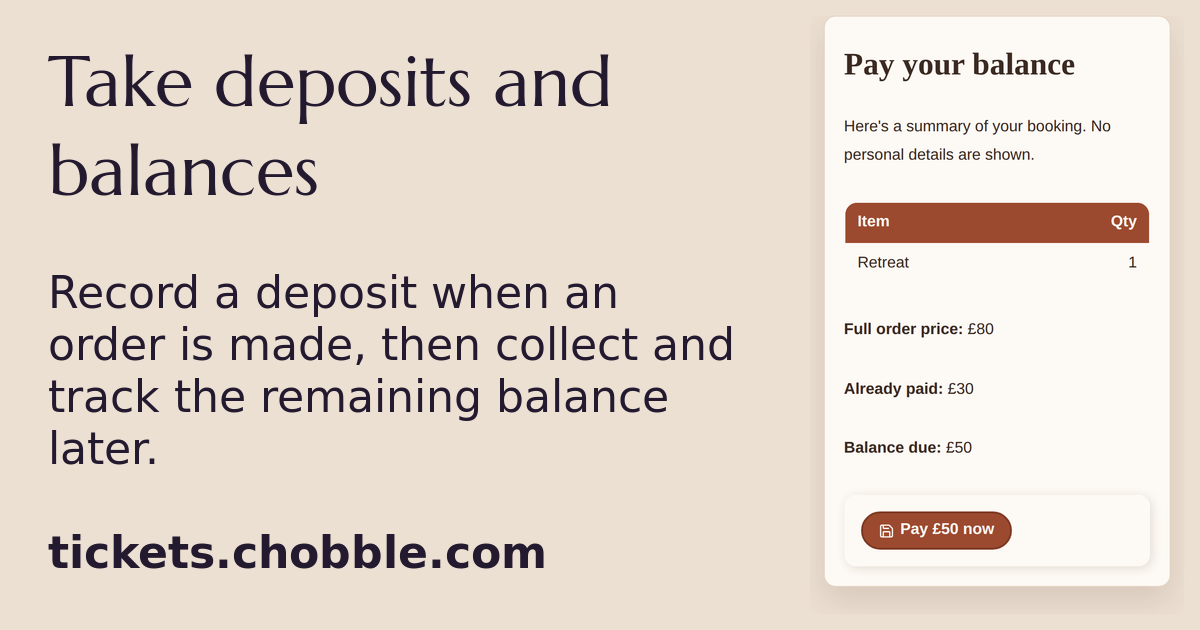
A balance page for a Retreat place with £80 ordered, £30 paid and £50 left.
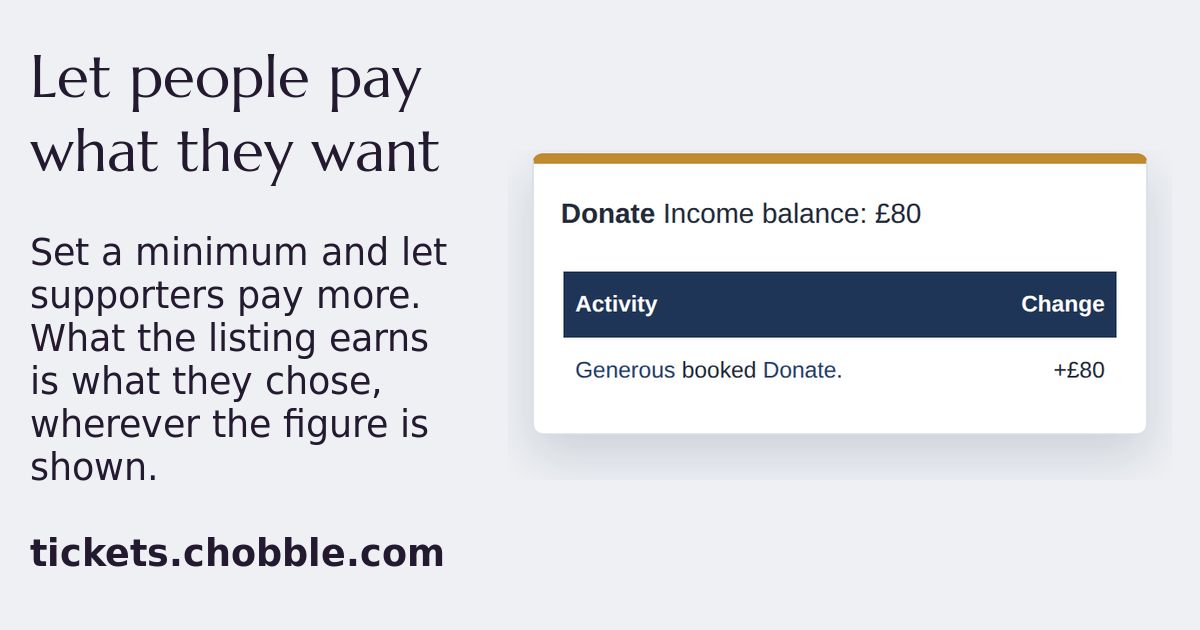
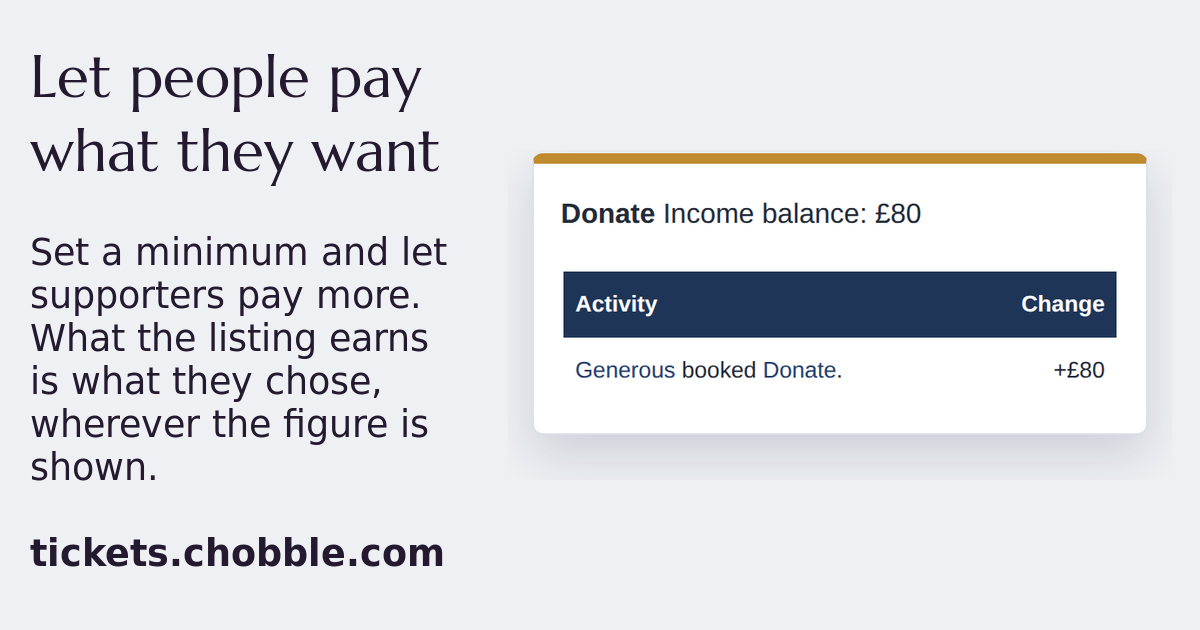
A donation listing earning the £80 a supporter chose to pay.
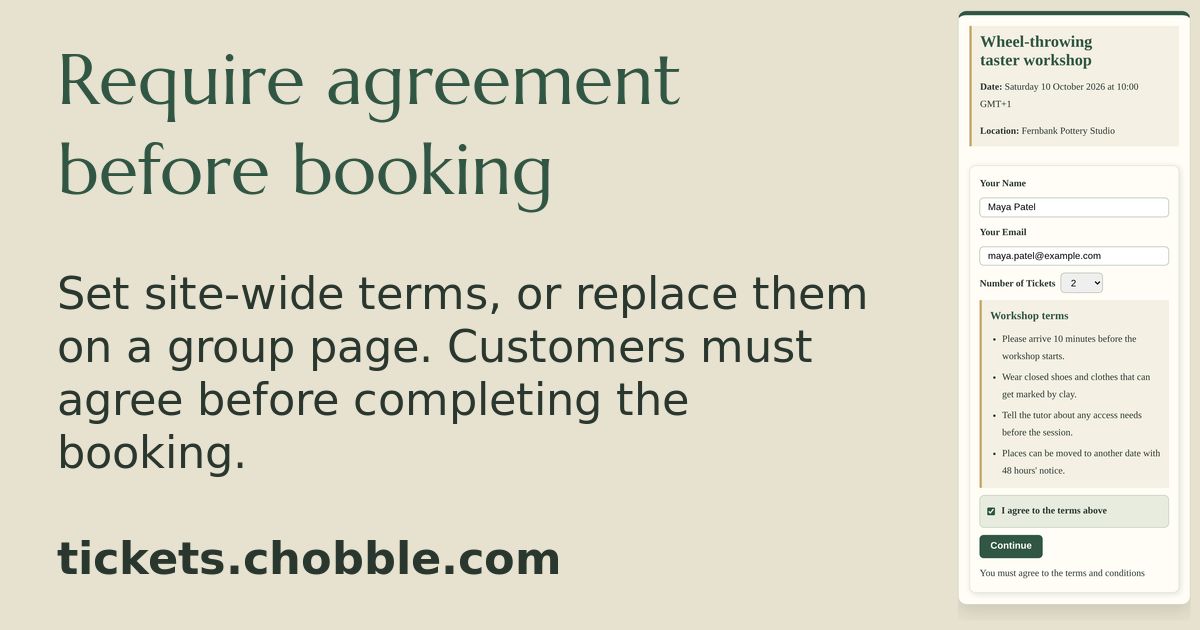
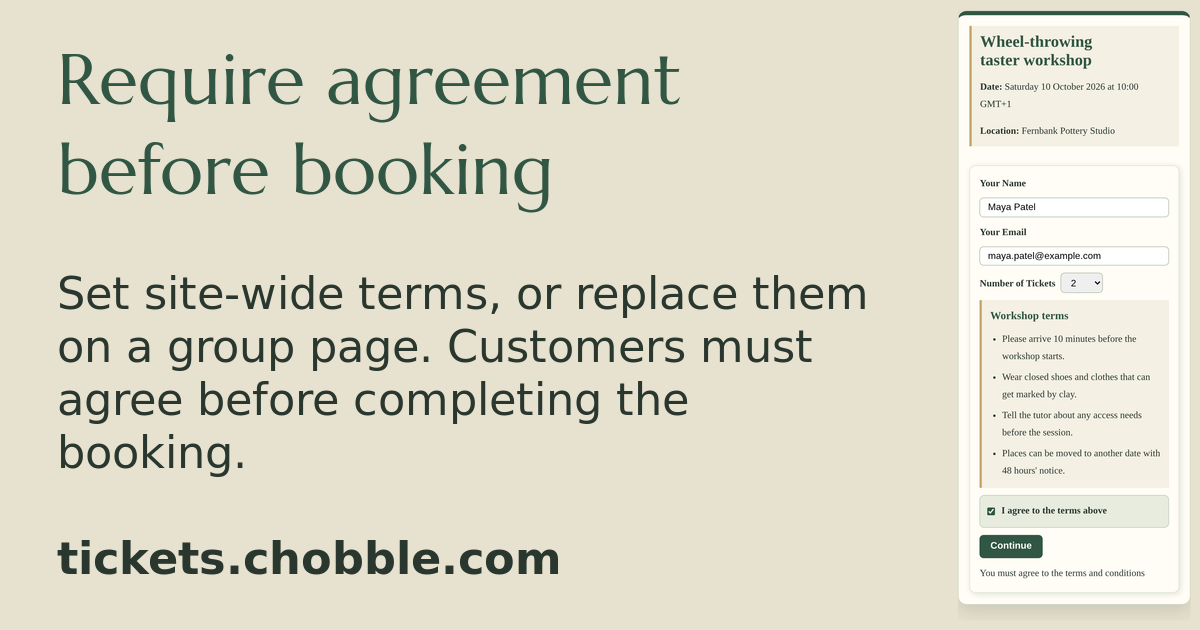
Workshop terms shown at checkout, so the buyer agrees before paying.
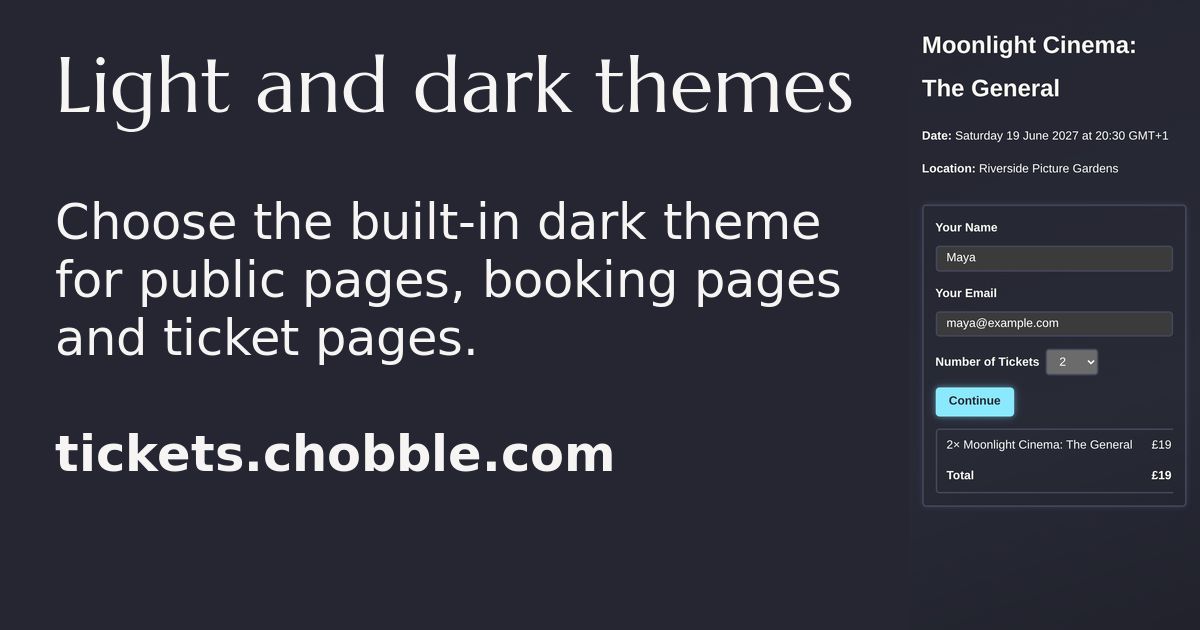
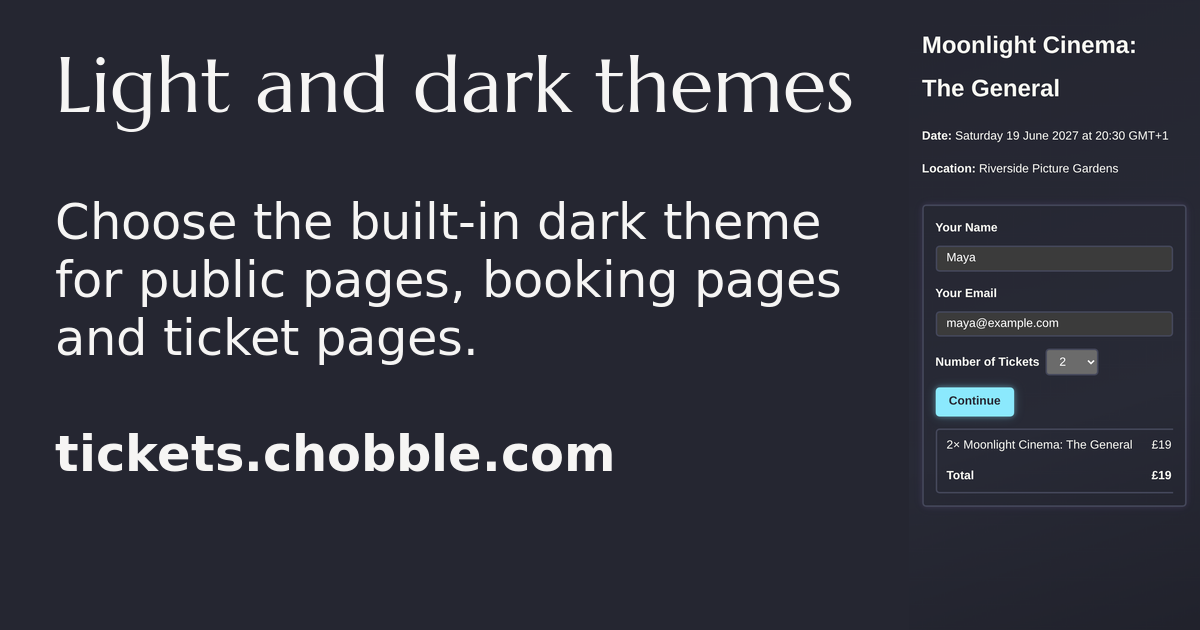
The built-in dark theme on a Moonlight Cinema checkout.
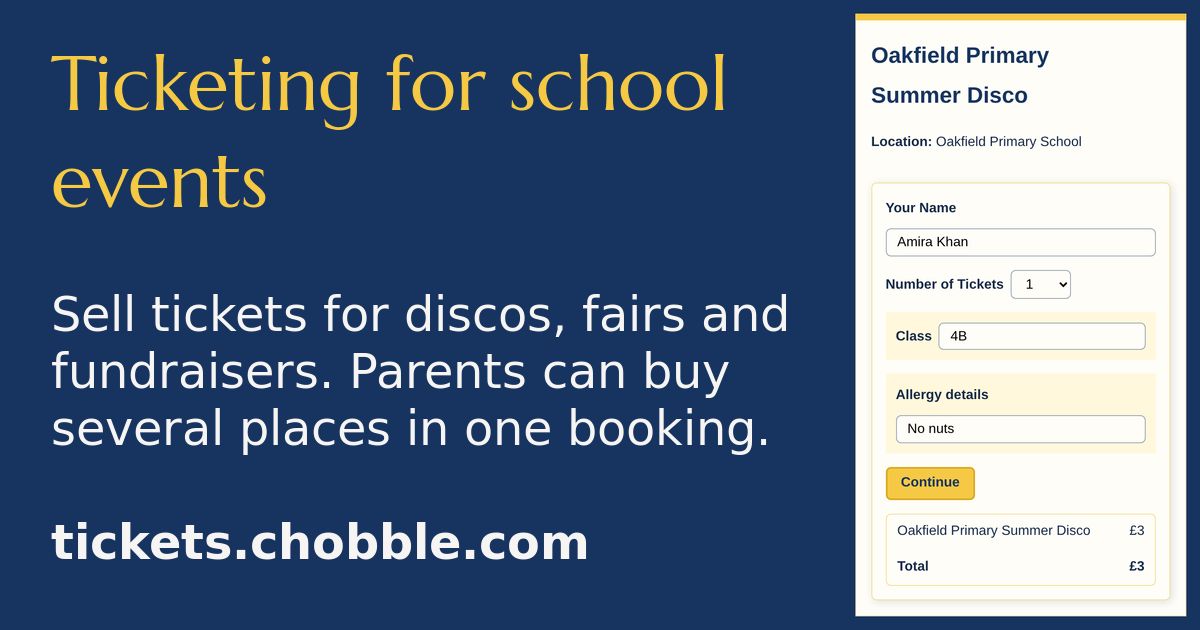
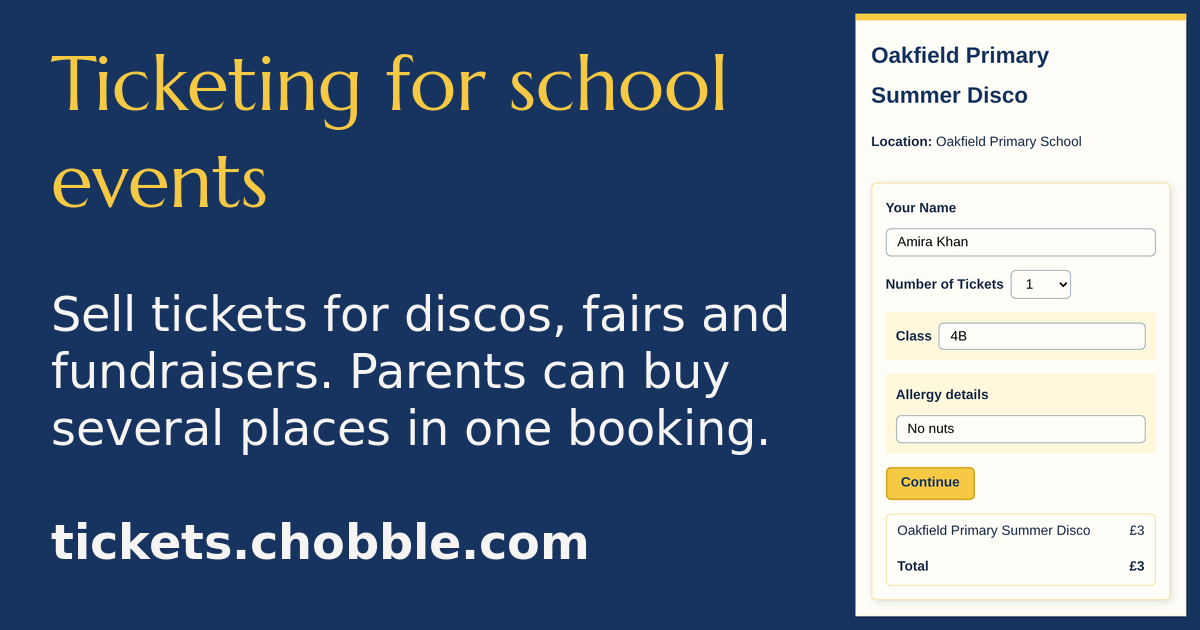
A primary school disco checkout — one parent, two children.
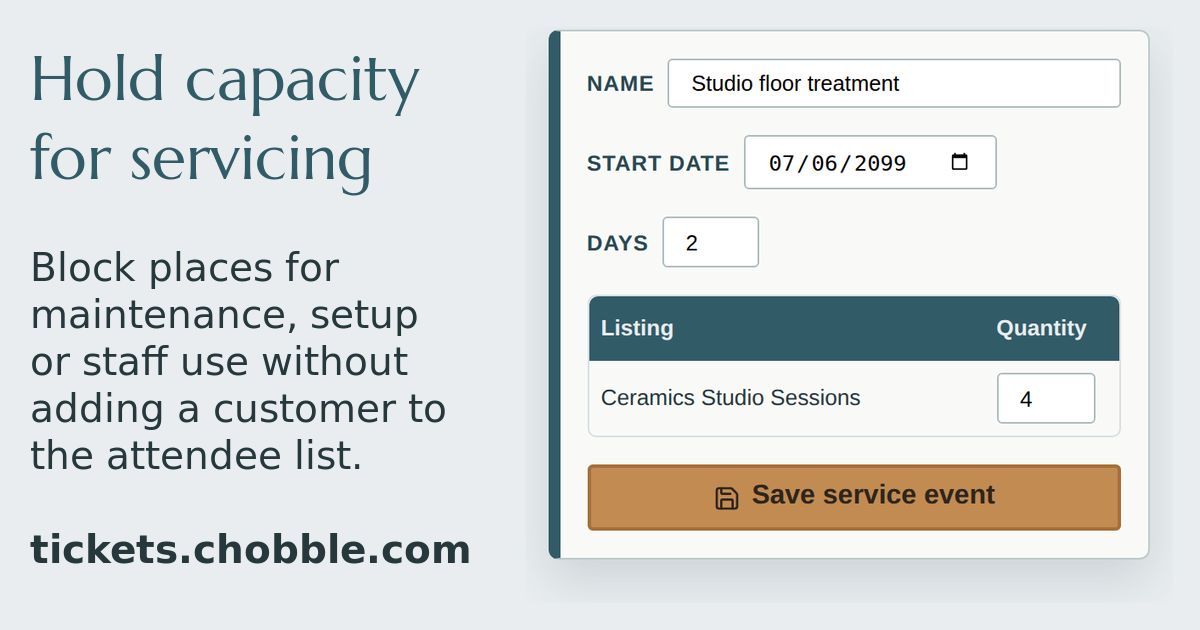
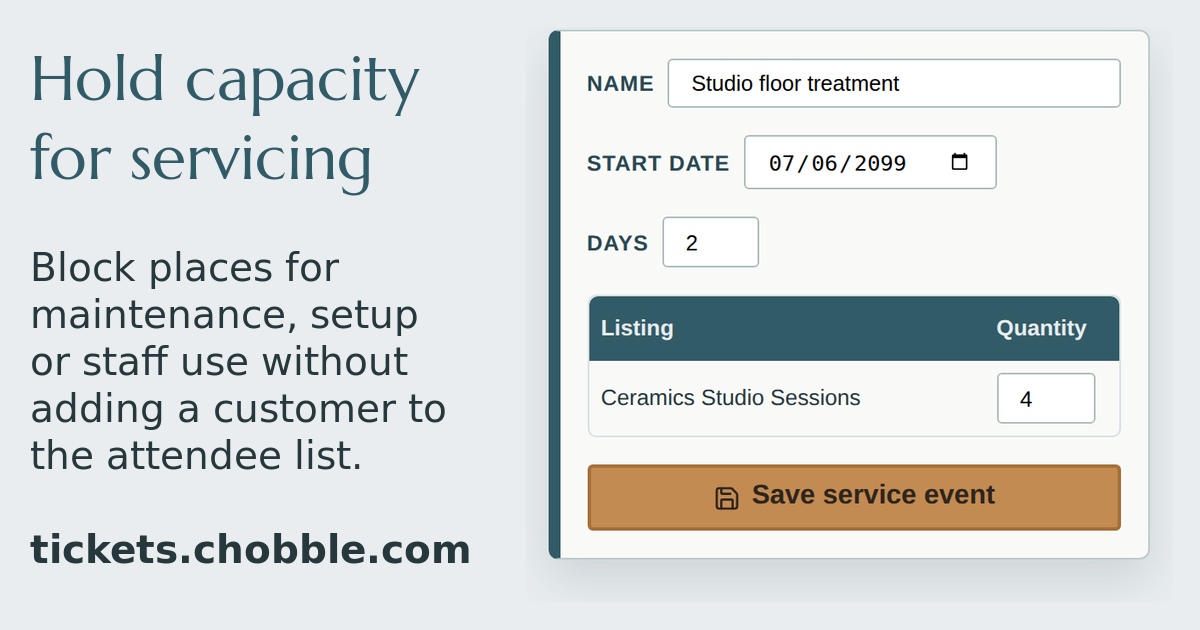
Service events hold places without adding a customer to the list.
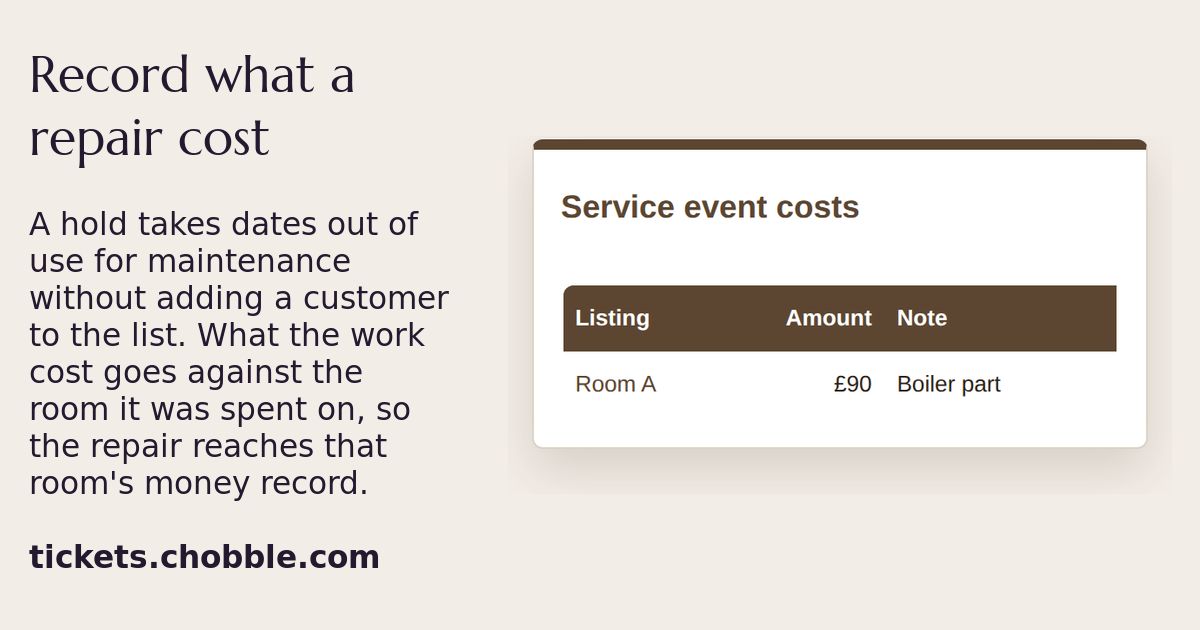
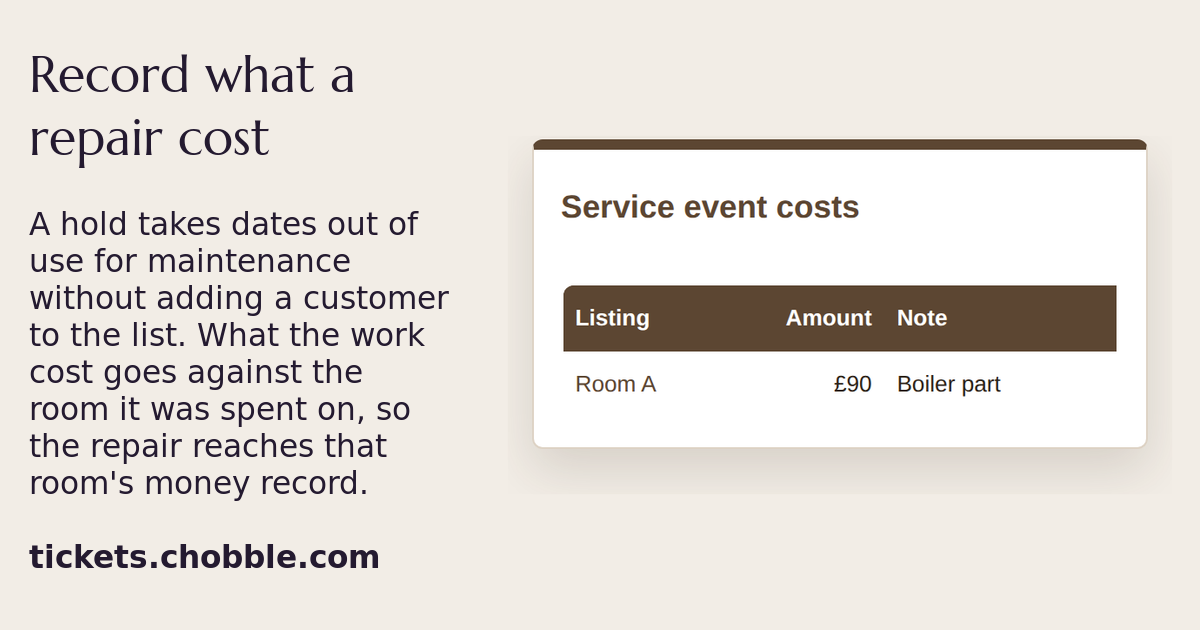
A maintenance cost recorded against the room it was spent on.
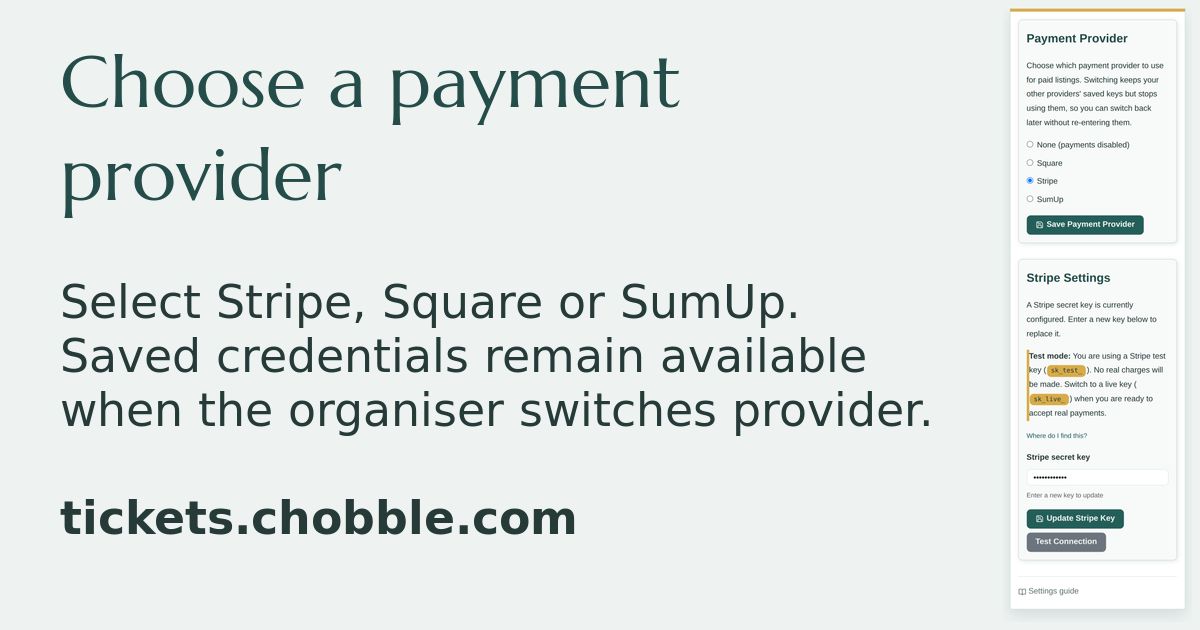
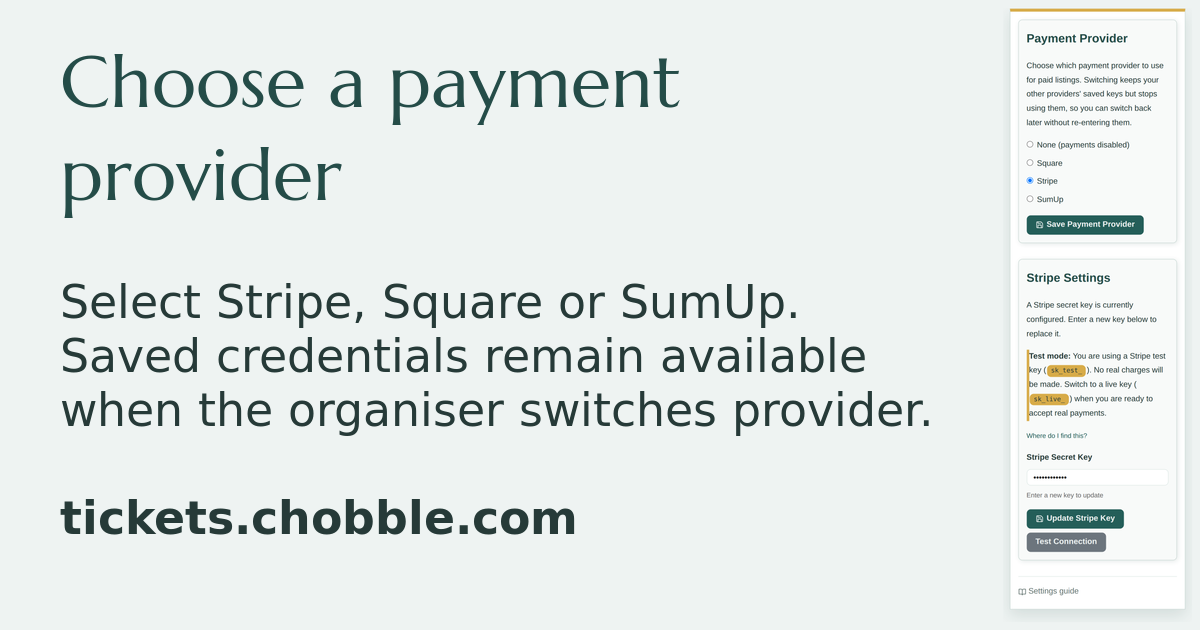
Payment provider settings with Stripe selected and its saved test key.
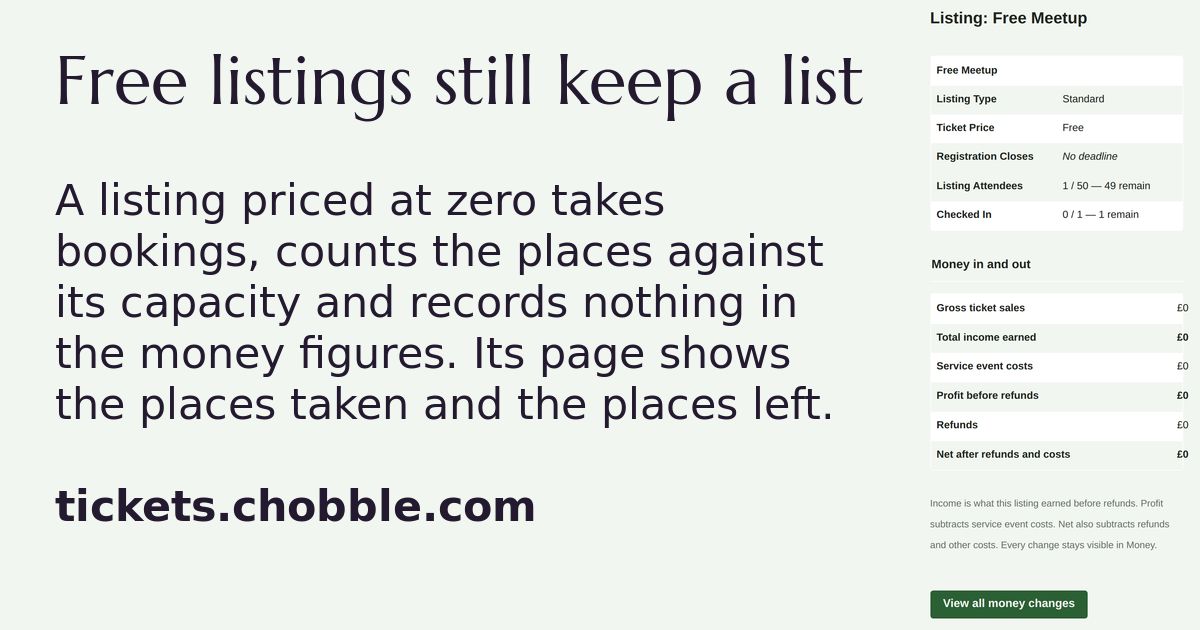
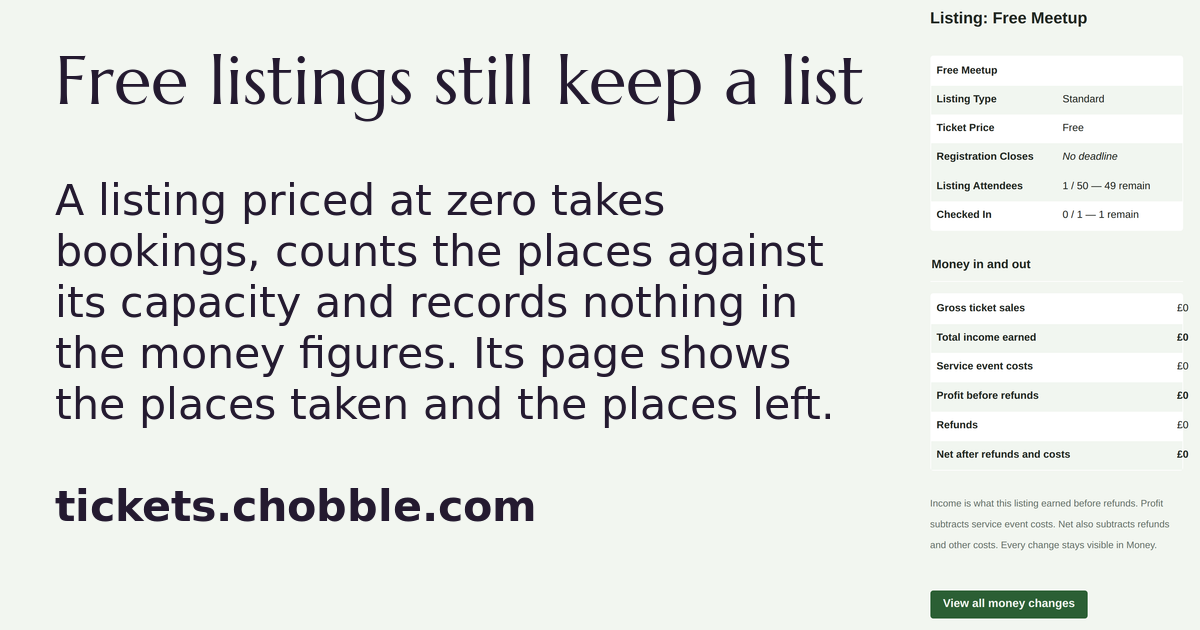
A free listing's own page, showing one place taken and no money recorded.
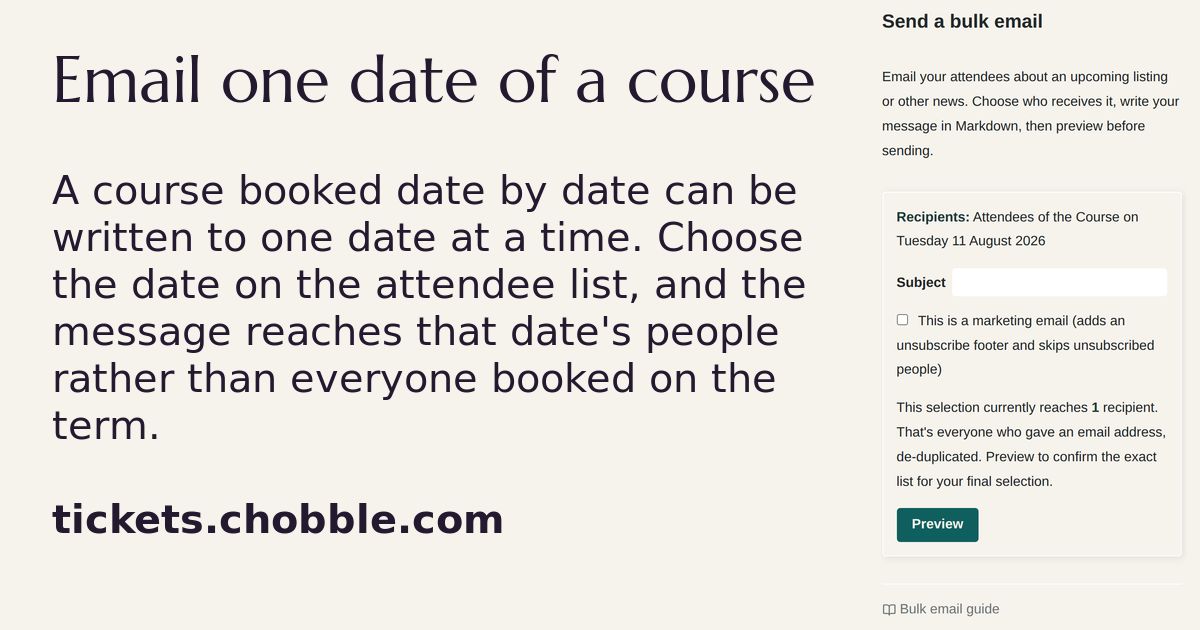
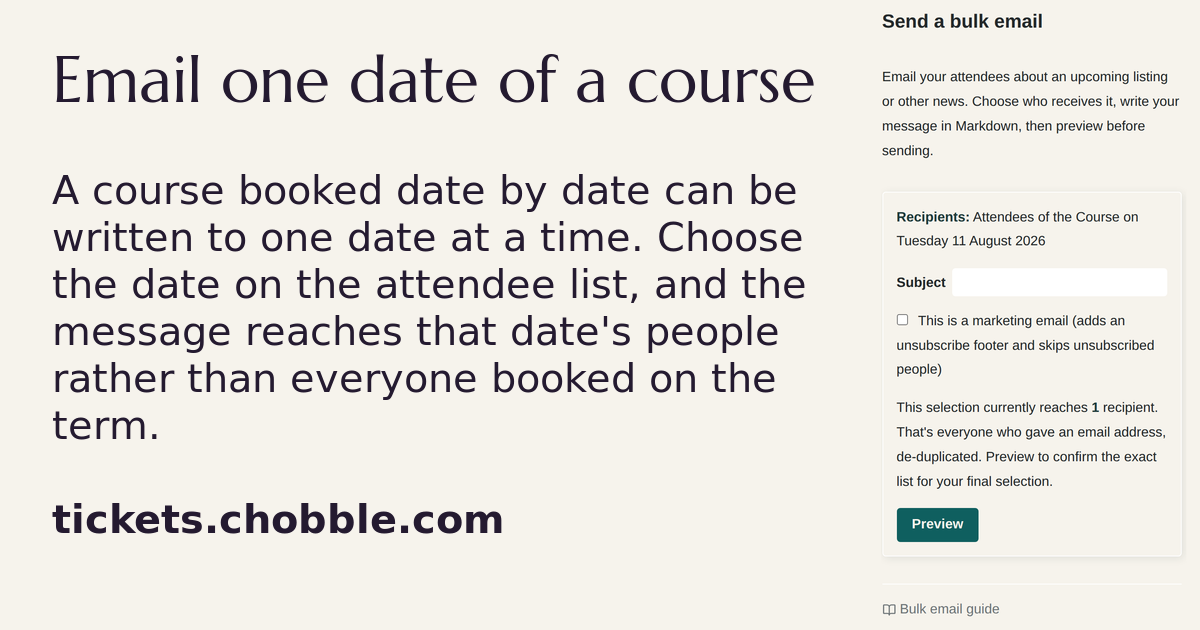
A bulk email addressed to one day of a course rather than to the whole term.
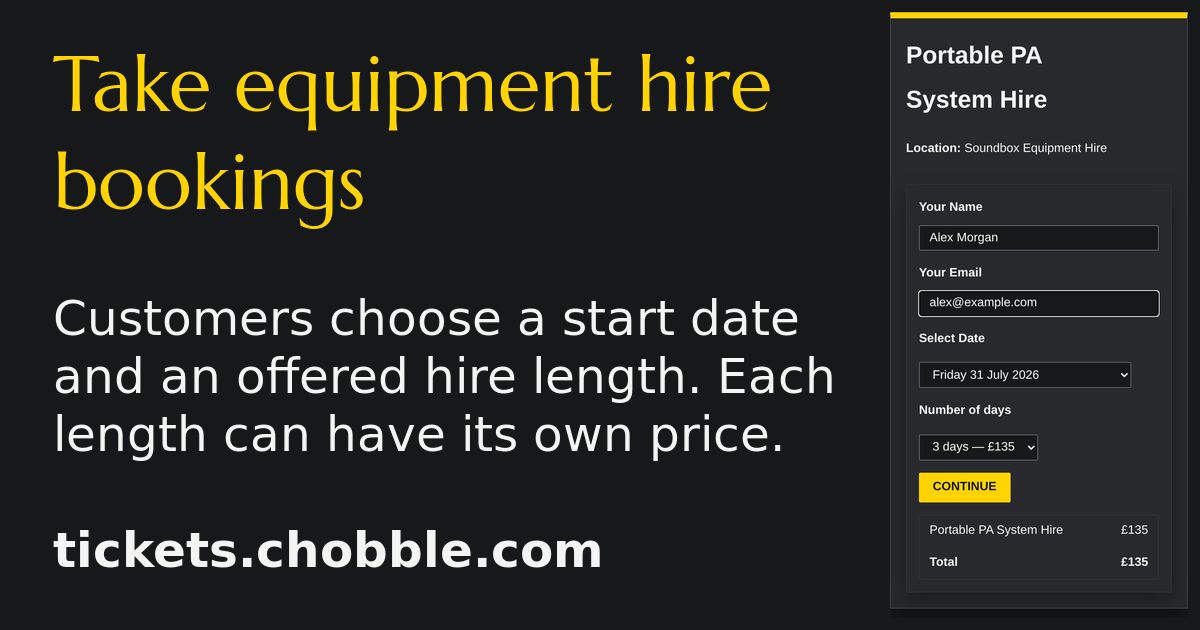
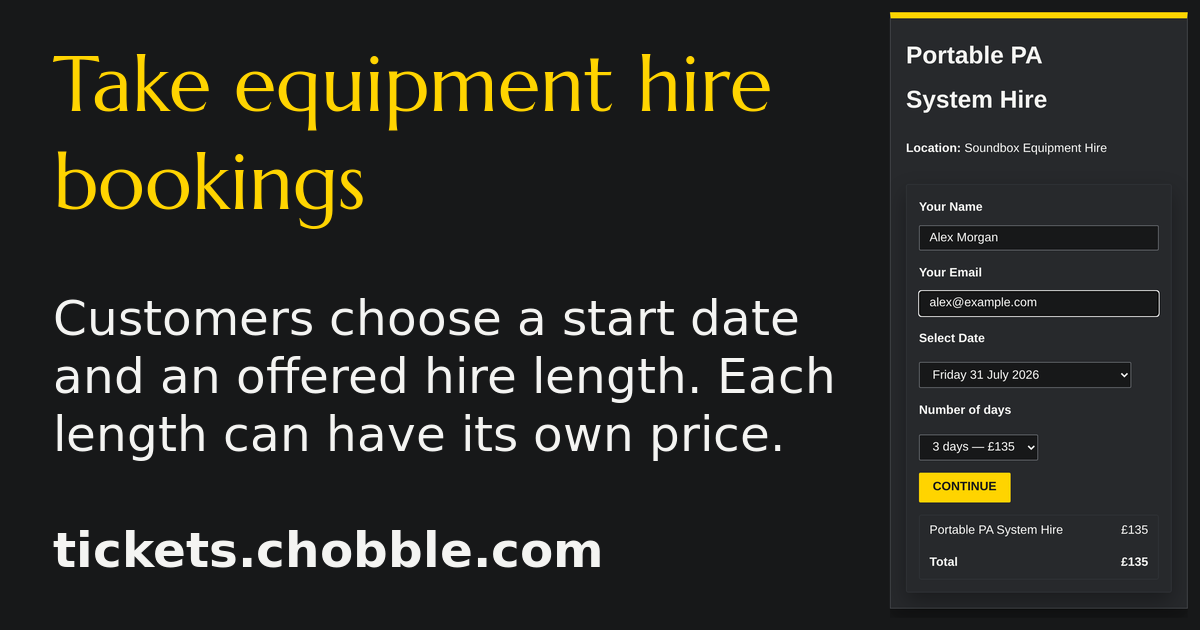
Equipment hire booking — pick dates and quantities for each item.
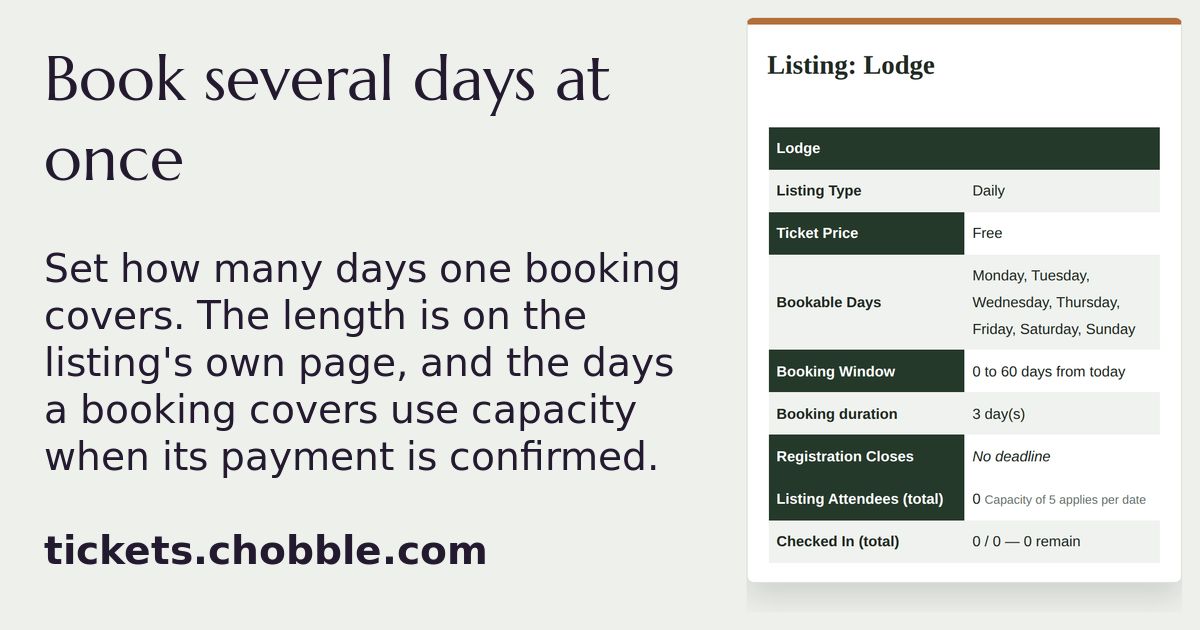
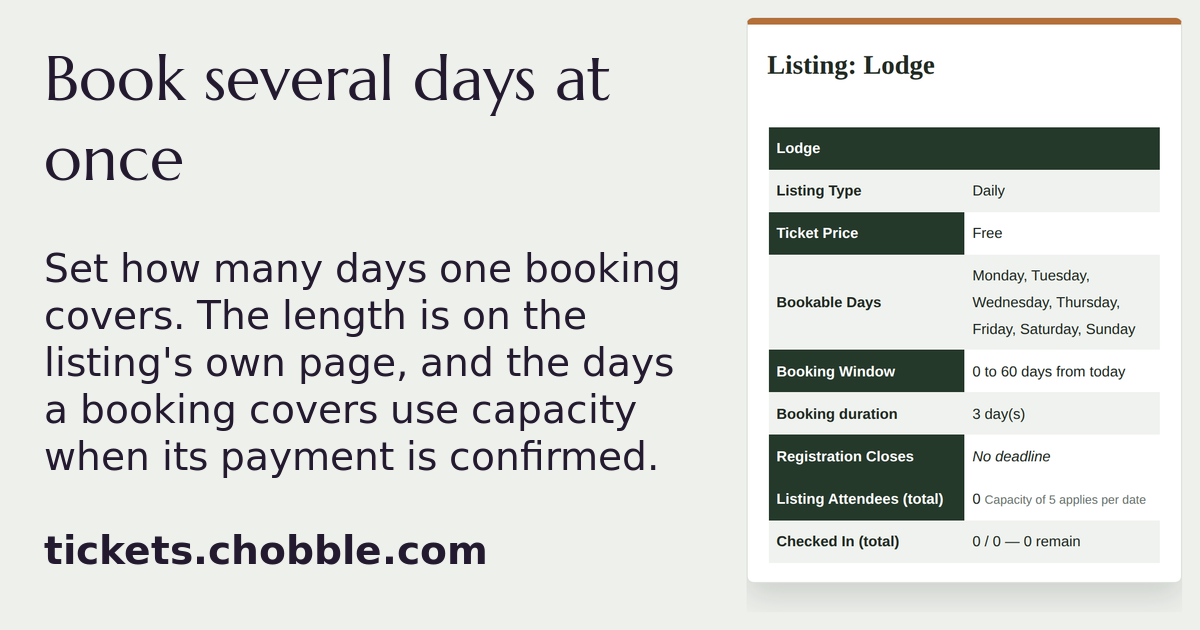
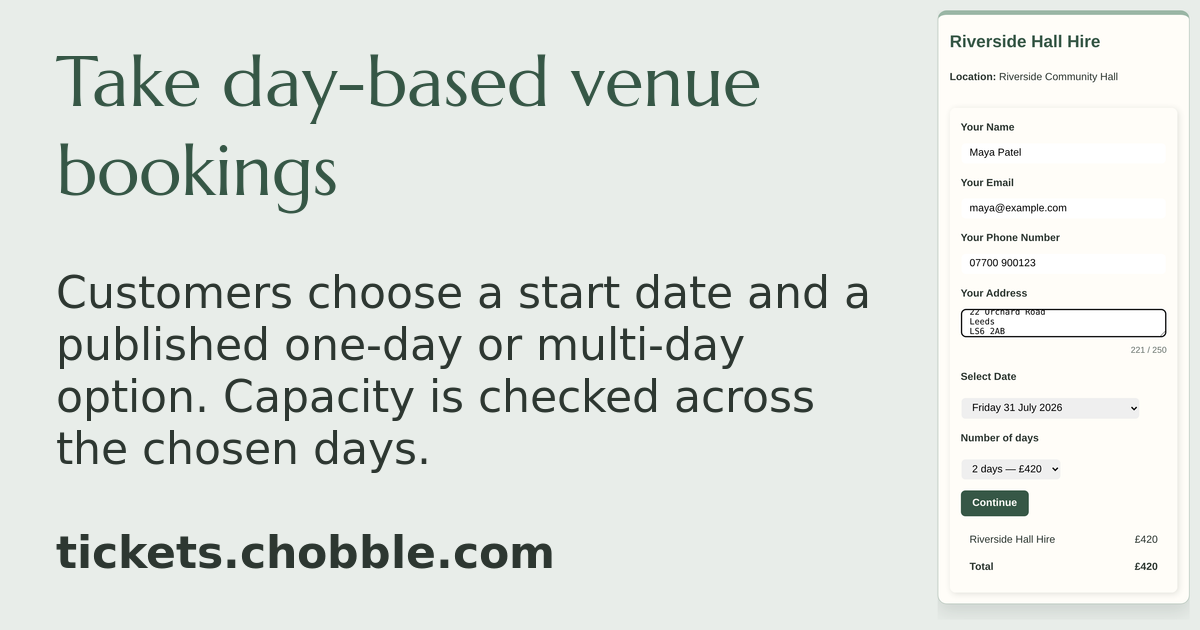
A listing booked by the day, saying each booking lasts three days.
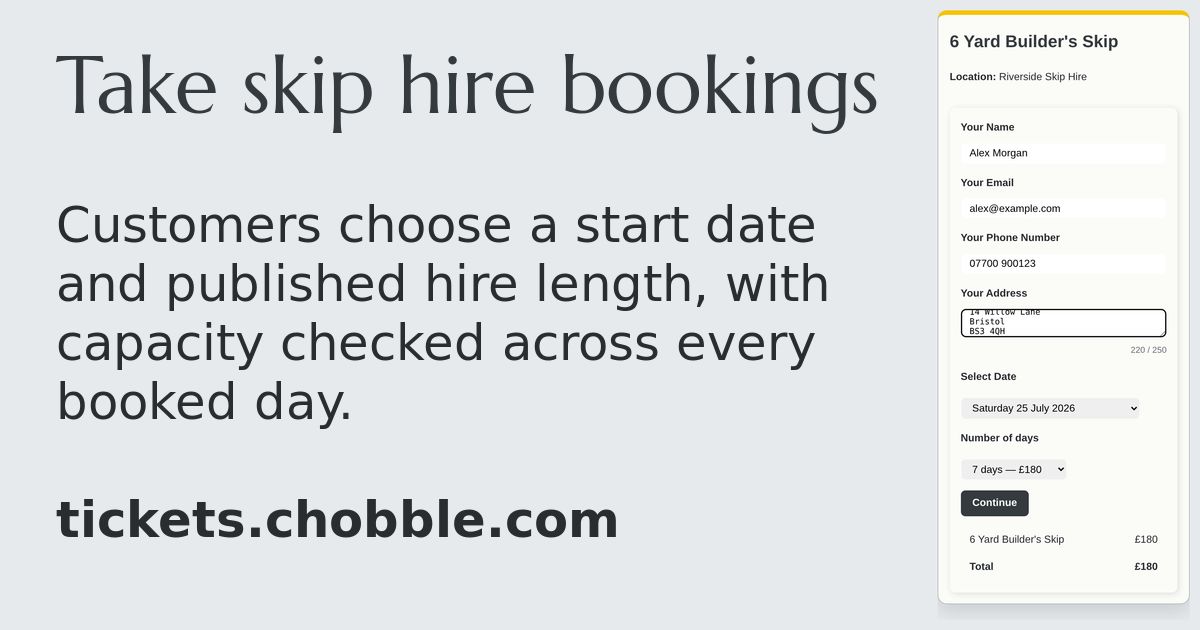
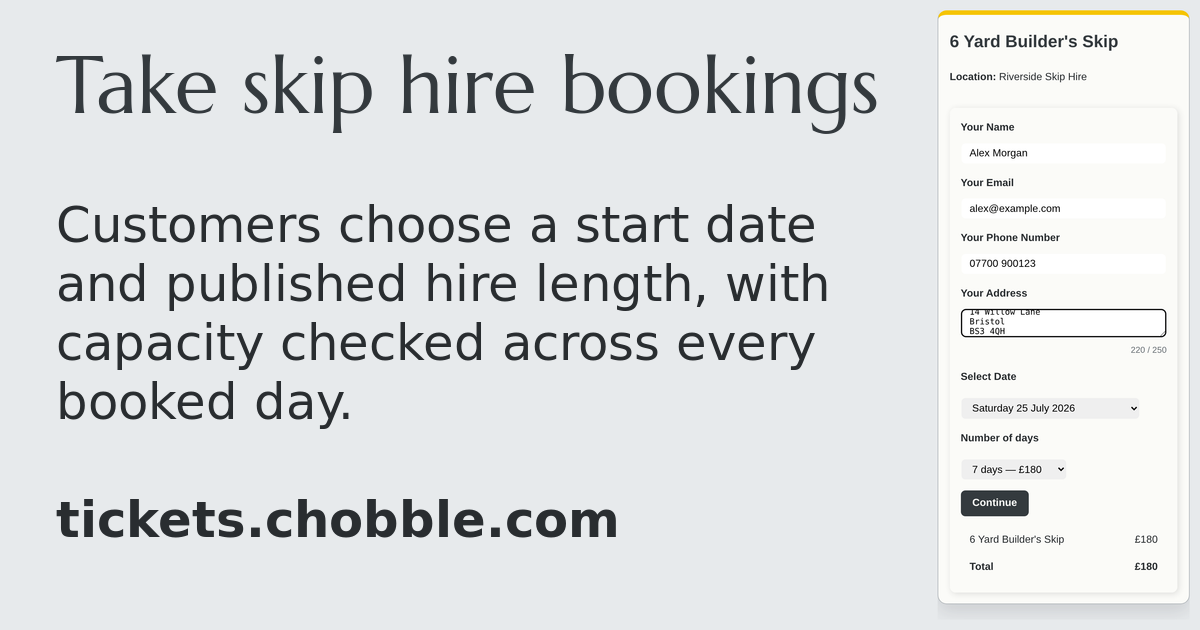
A skip hire checkout with a customer-selected start date and seven-day price.
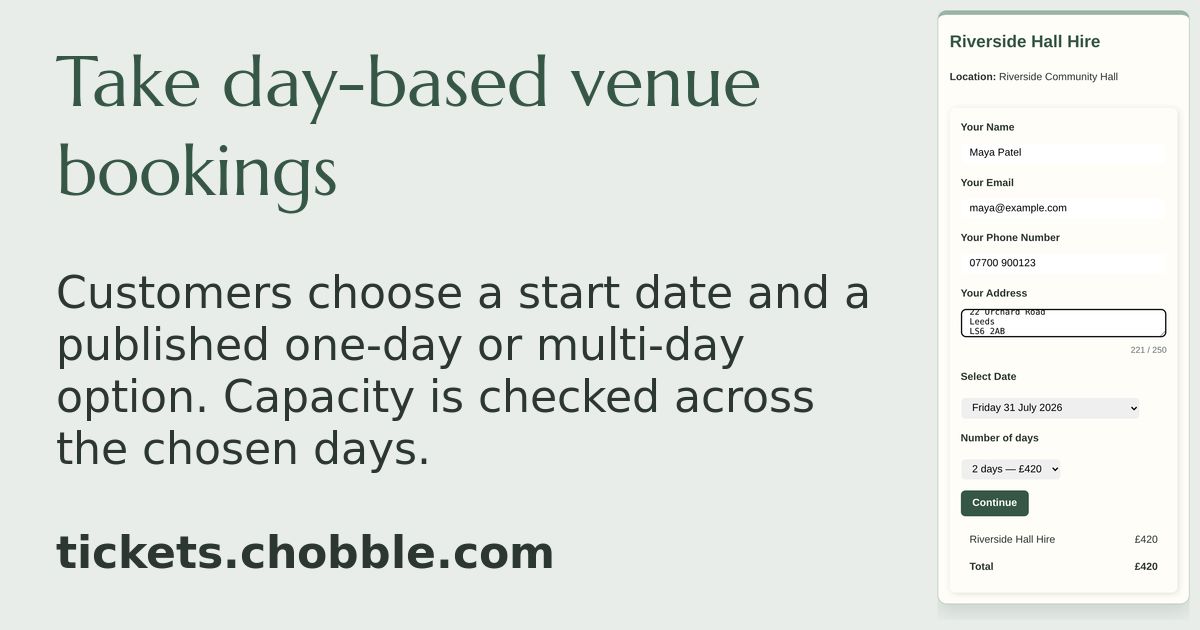
A venue hire checkout with an available date and two-day price.
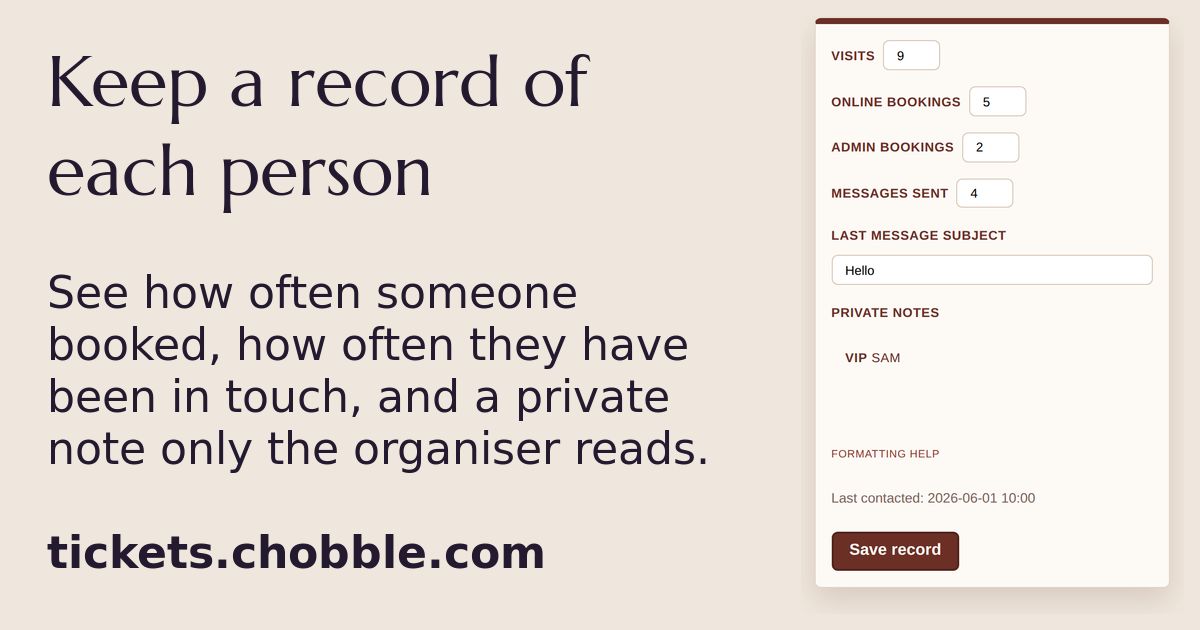
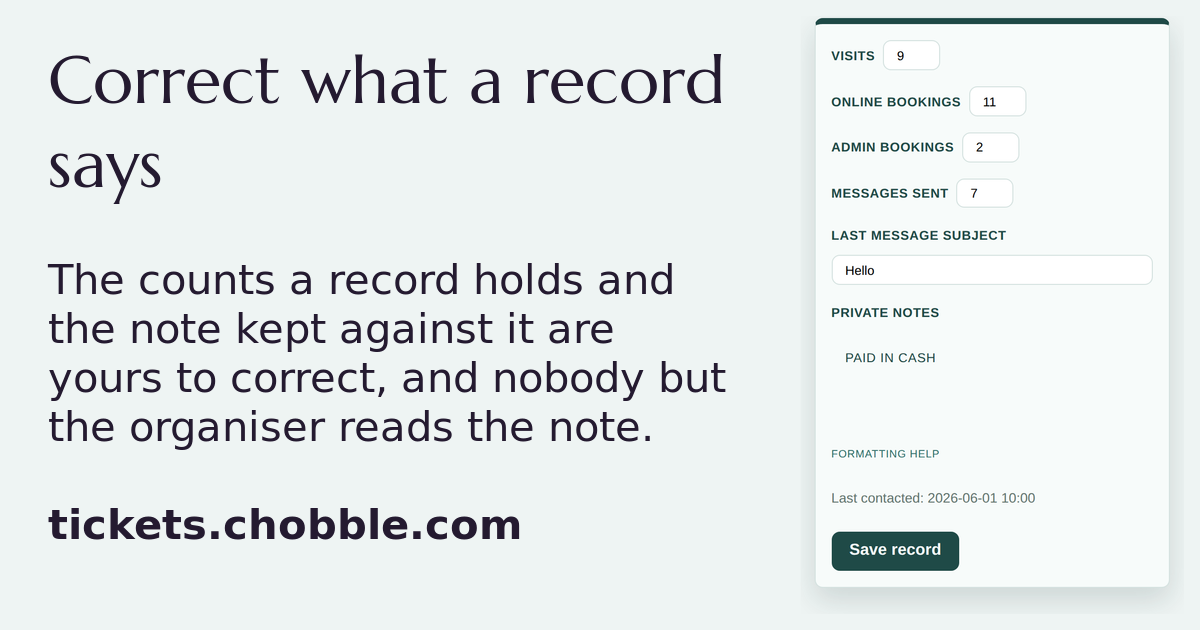
One person's record, showing how often they booked, how often they were in touch, and a private note.
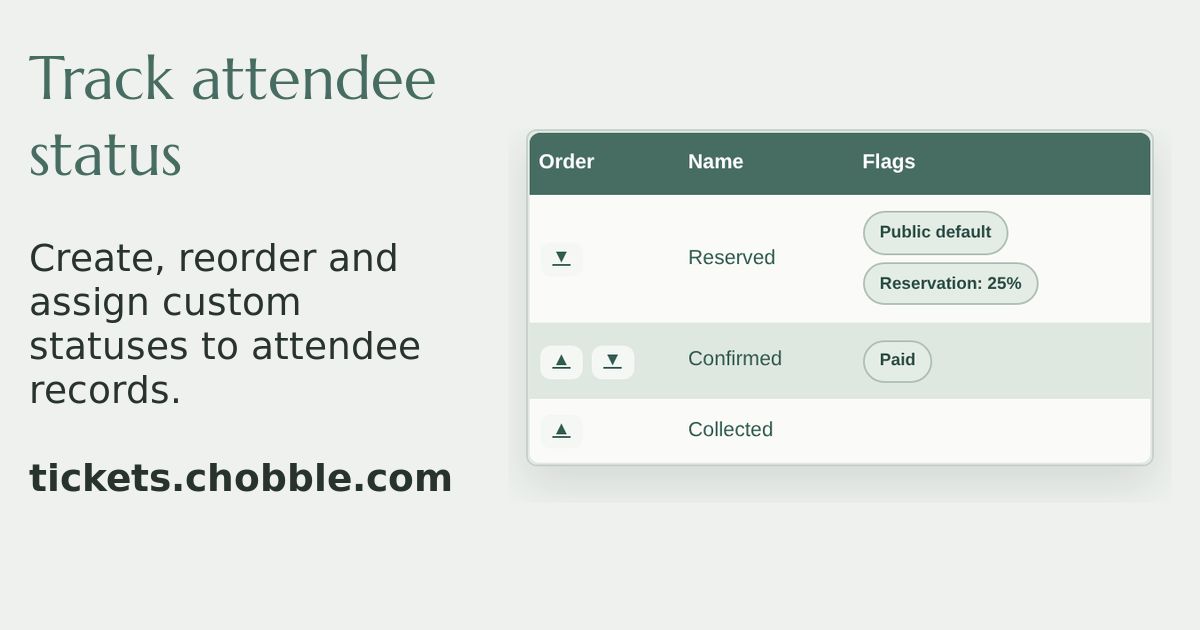
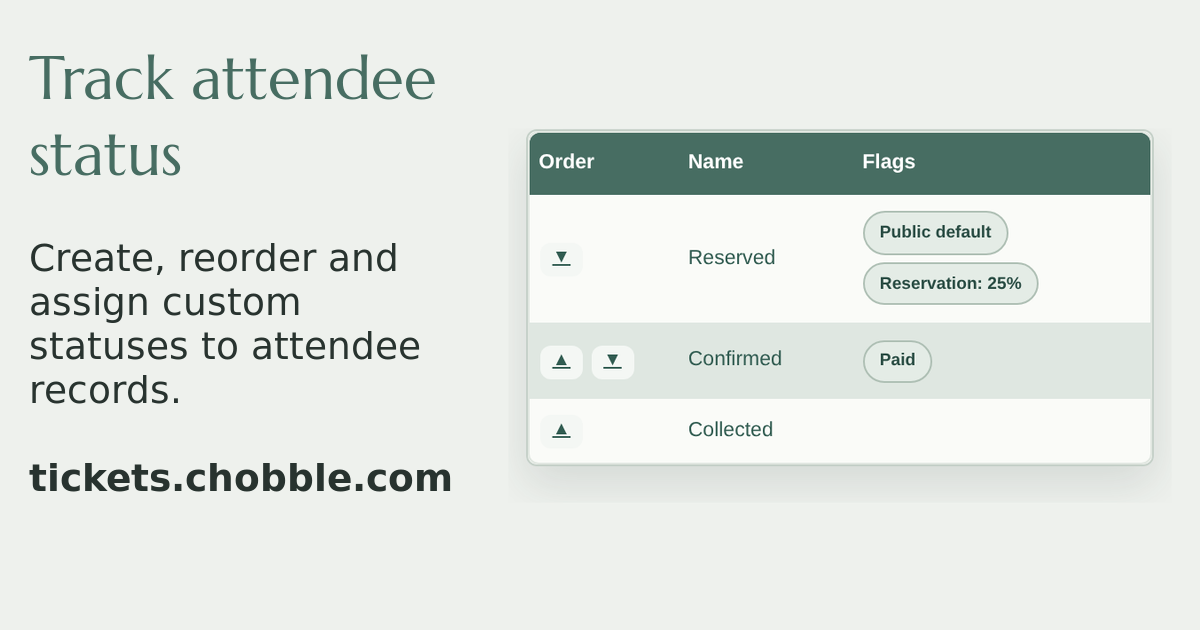
Attendee statuses — Reserved, Confirmed and Collected, in order.
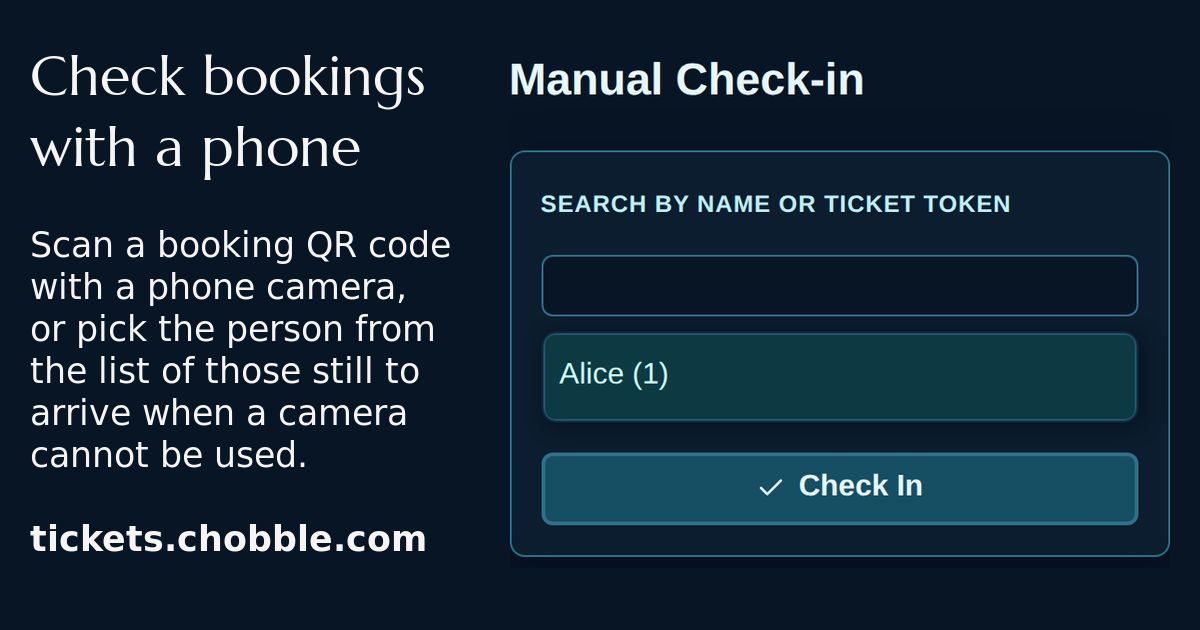
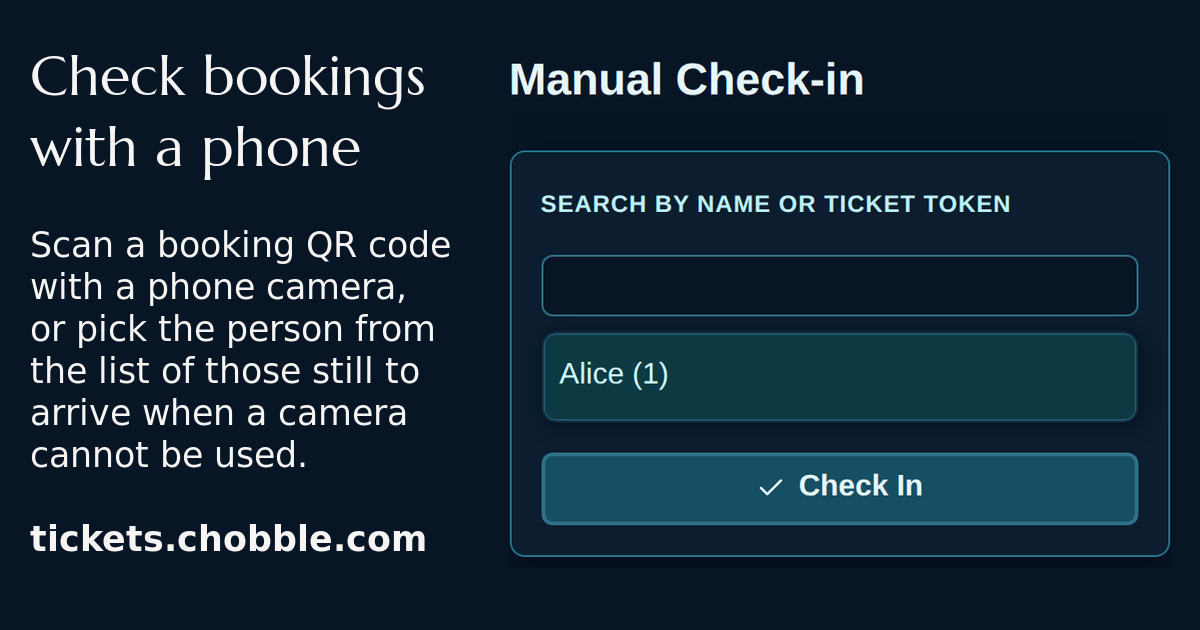
Manual check-in for someone whose ticket cannot be scanned.
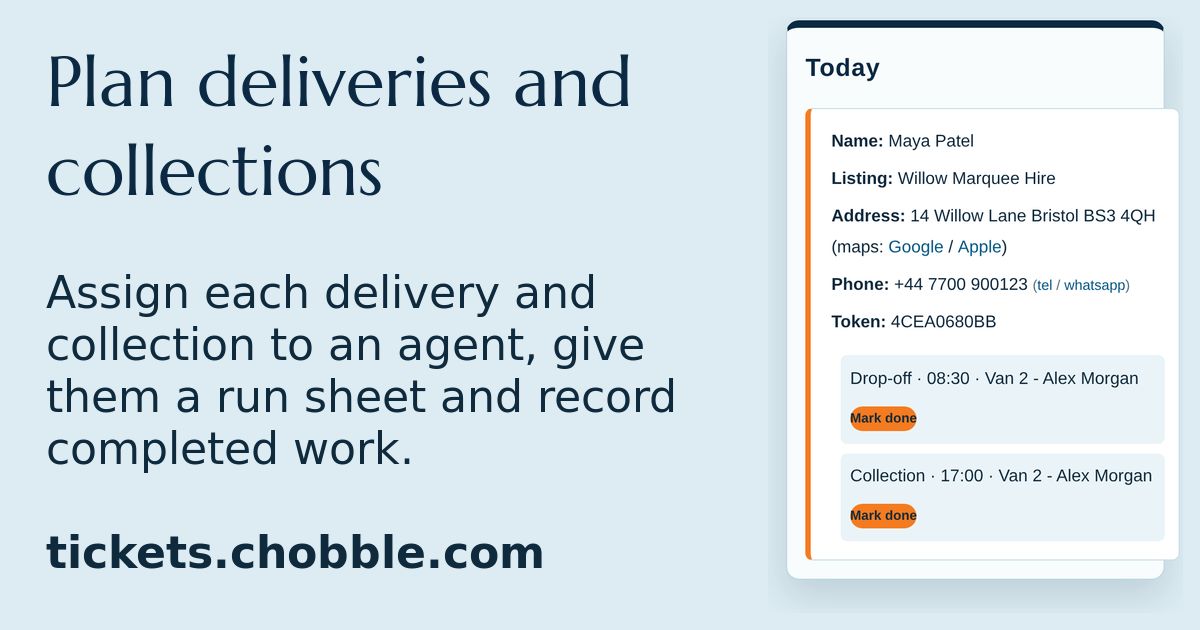
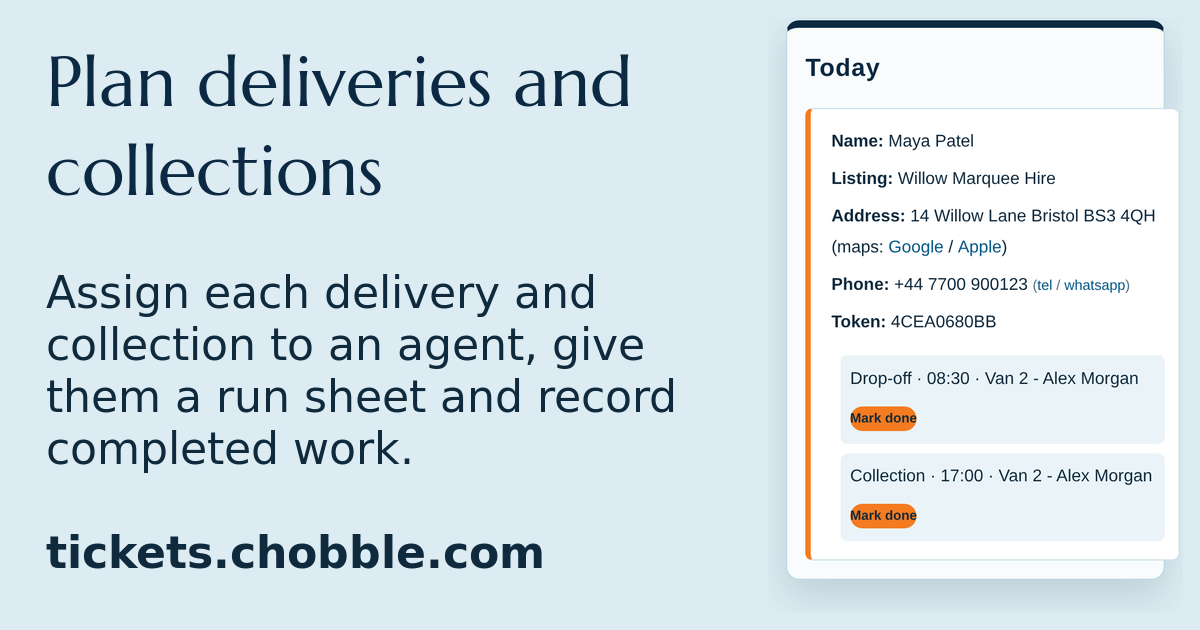
A delivery run sheet — drop-off and collection for each booking.
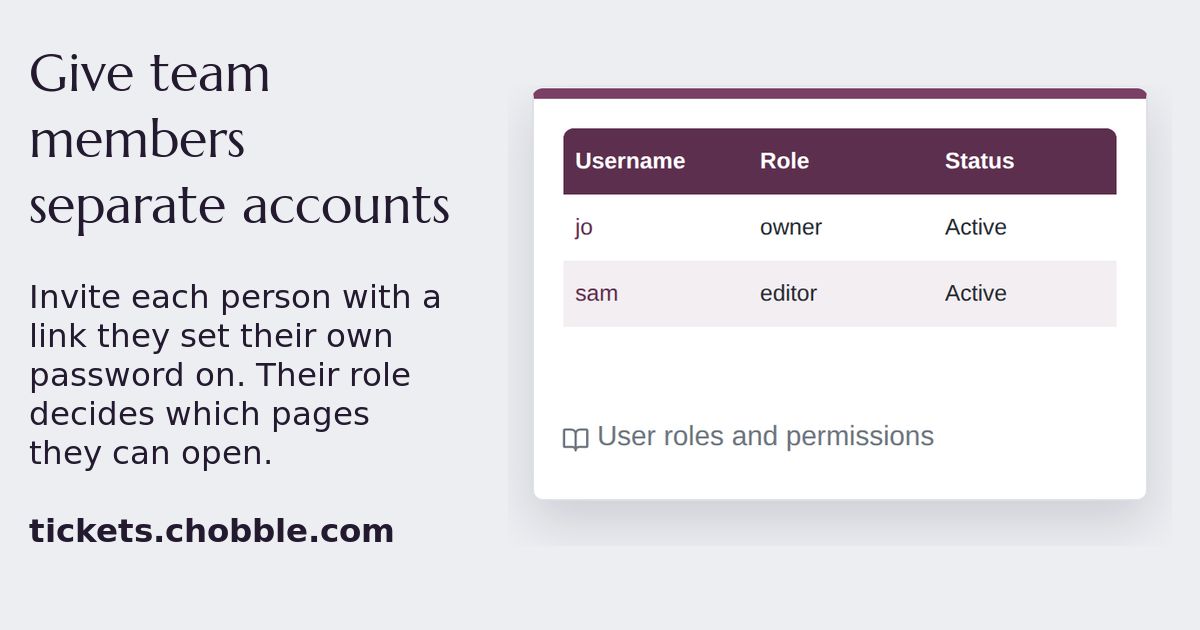
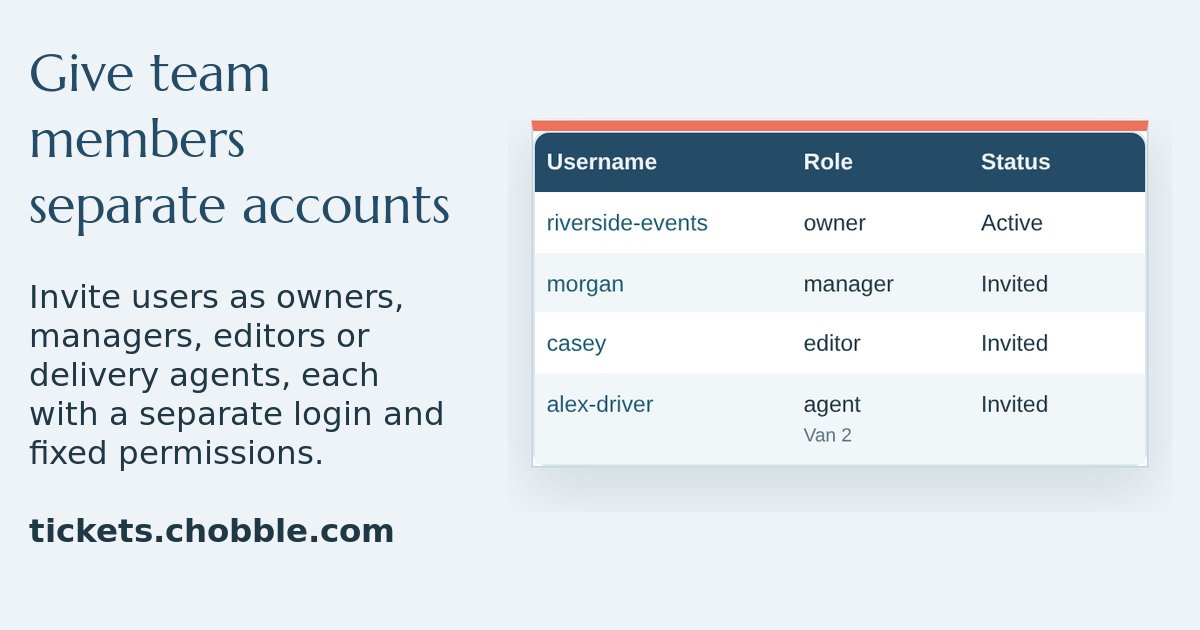
A users table with the owner and an editor who joined from an invite.
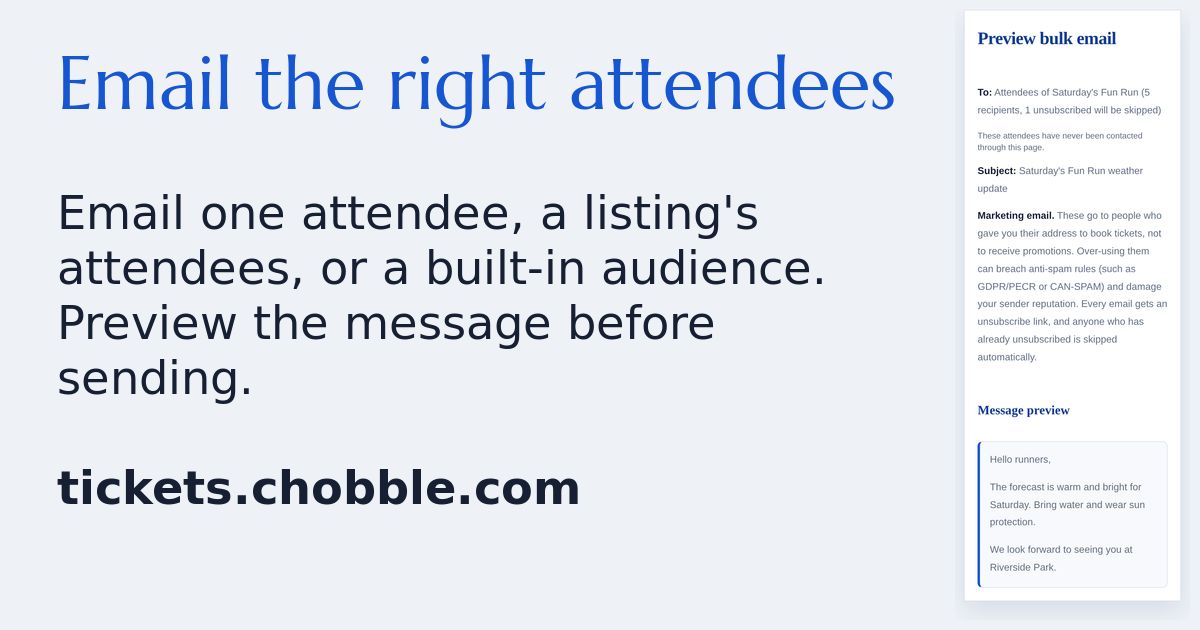
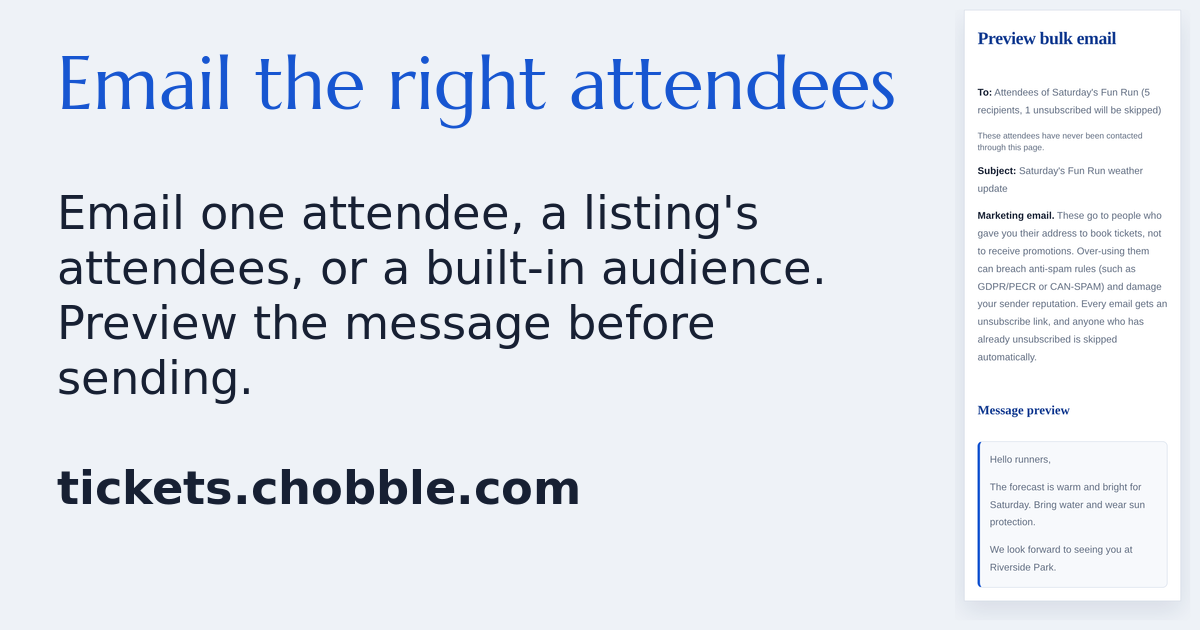
A bulk email preview before it is sent to a saved attendee group.
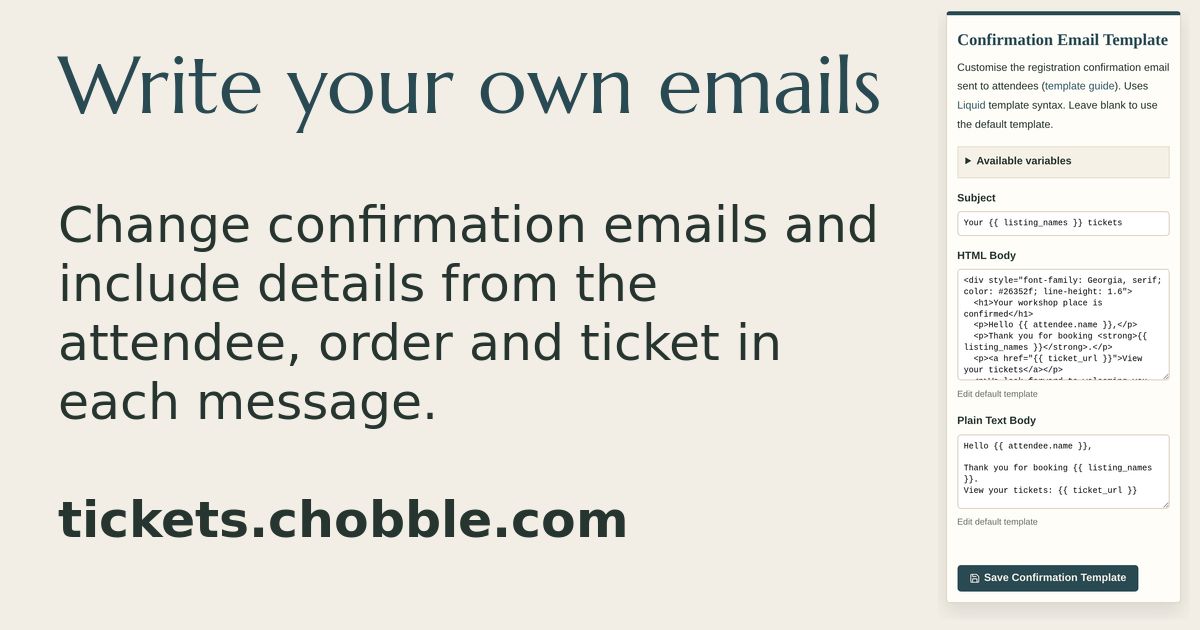
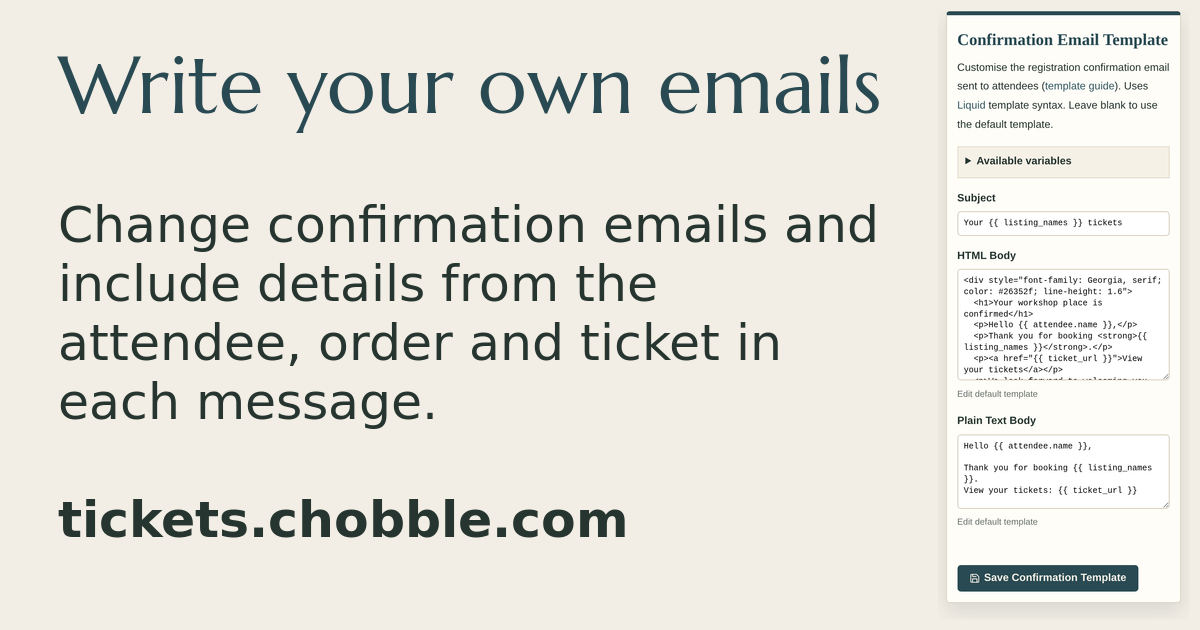
The confirmation email editor with attendee and ticket placeholders.
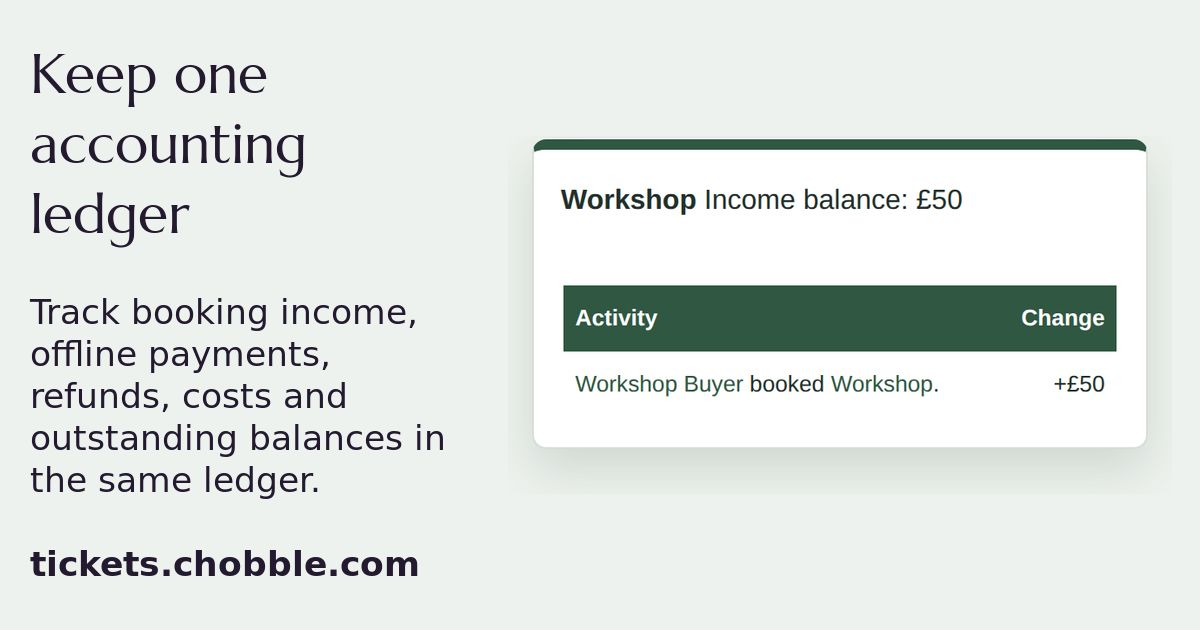
A listing's statement with one paid booking and the £50 balance it leaves.
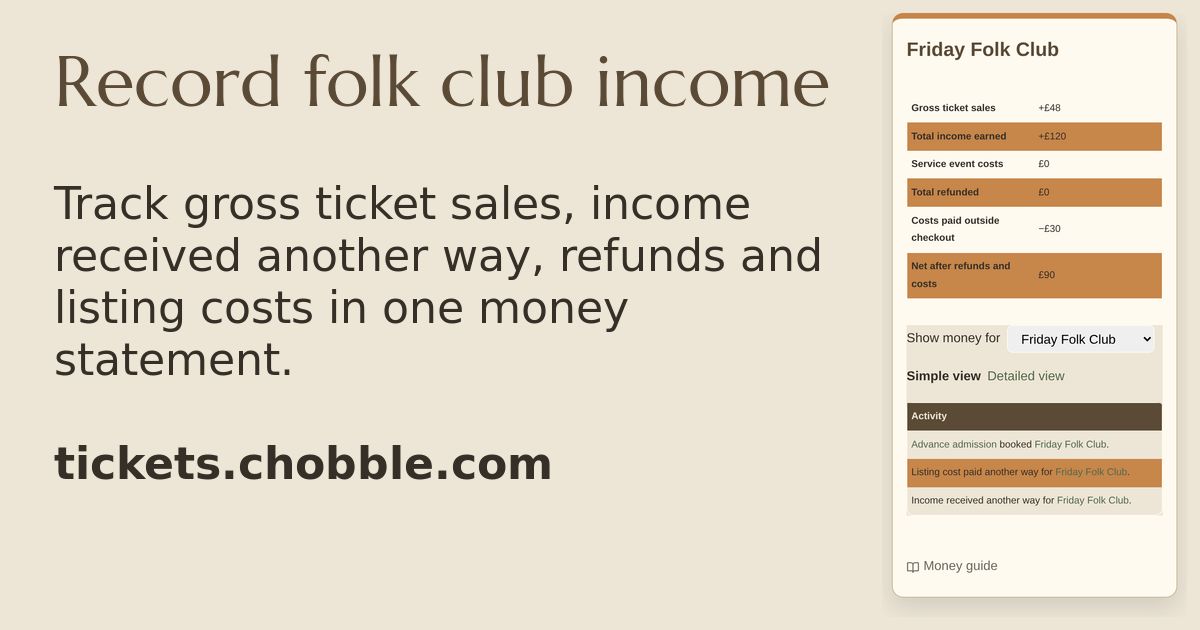
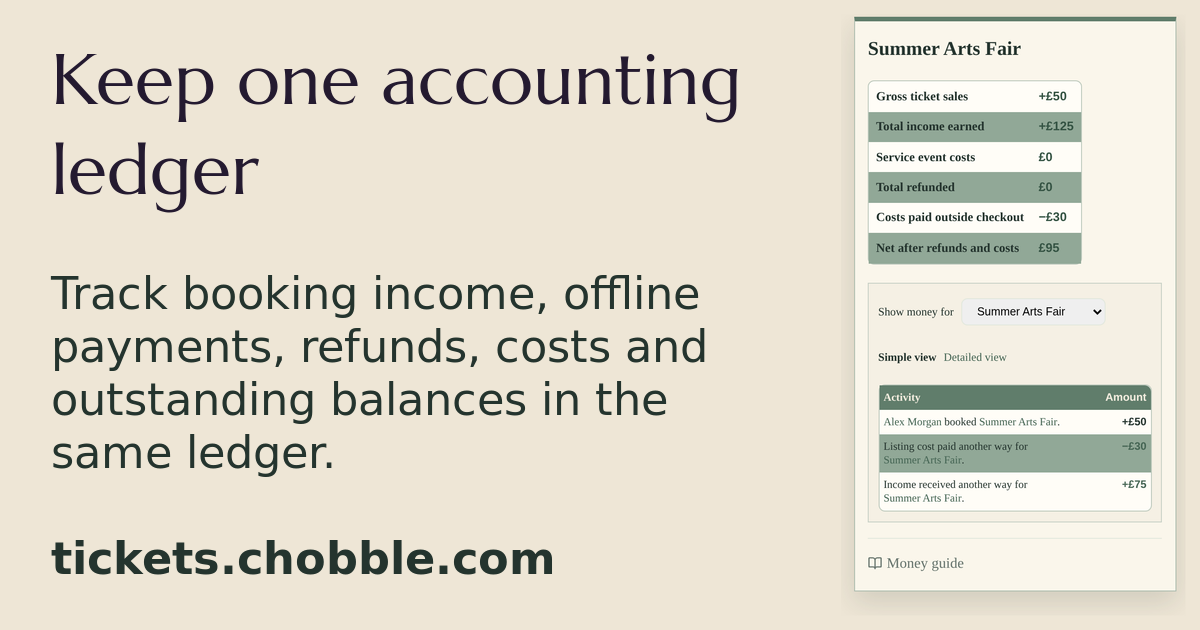
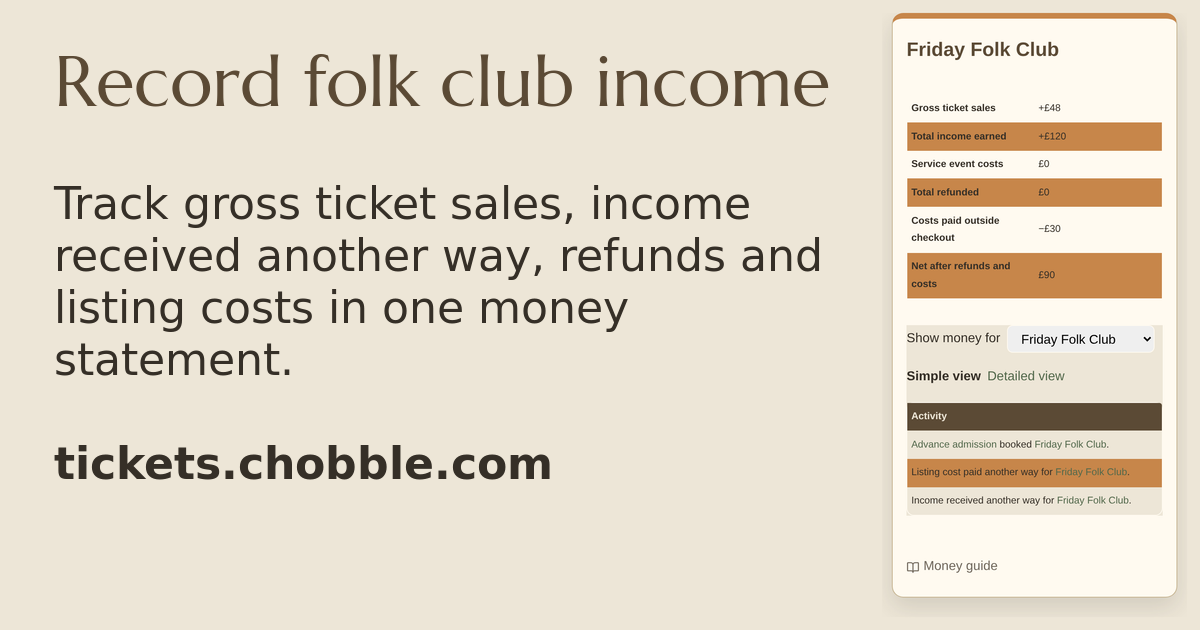
A folk club ledger combining advance sales, door income and event costs.
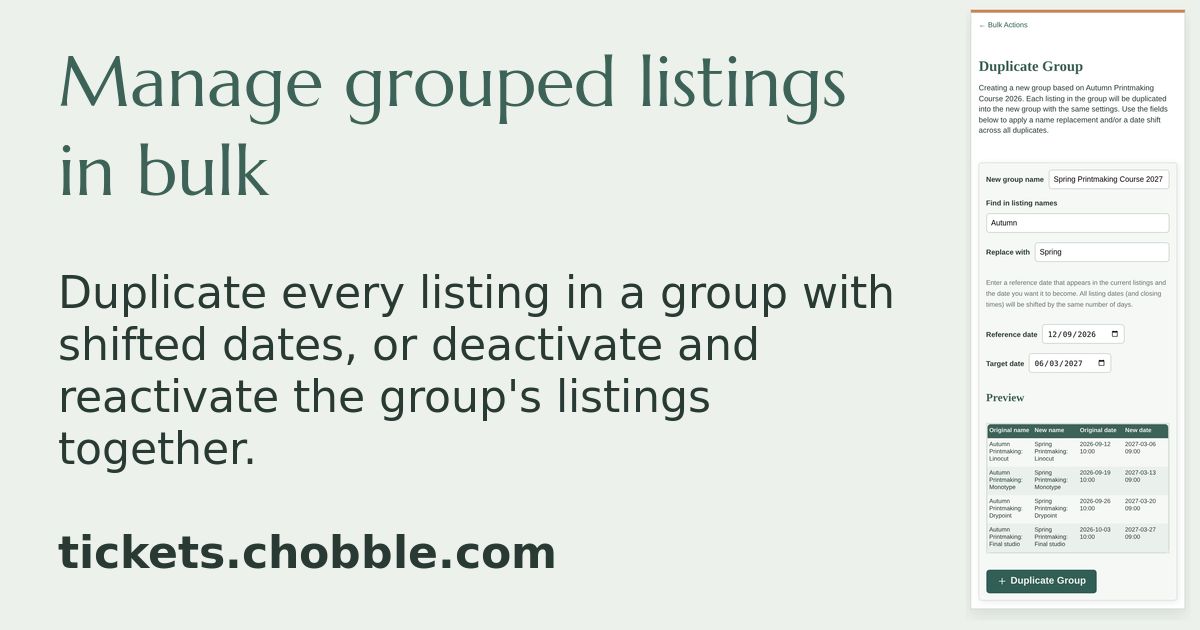
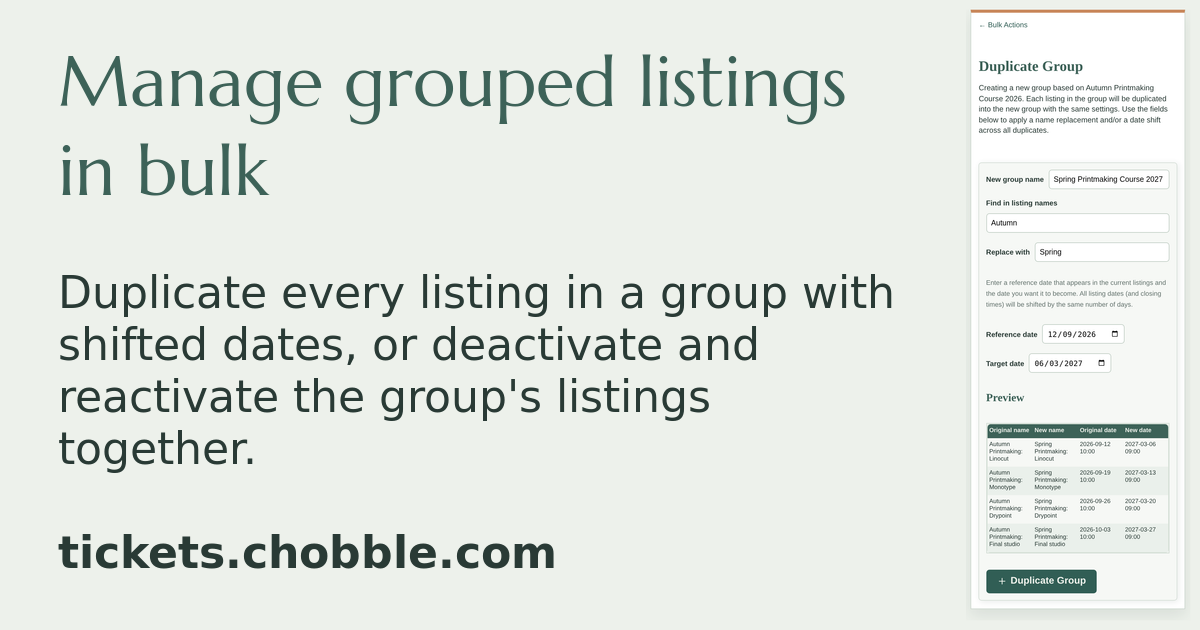
Duplicate a group of listings and shift their dates in one step.
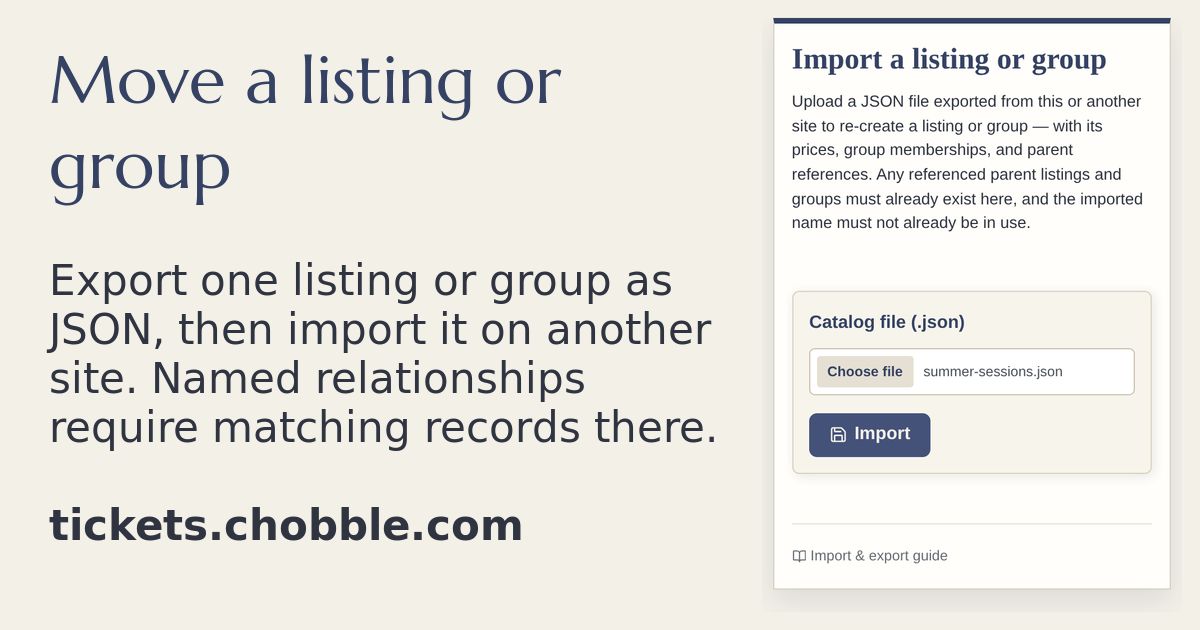
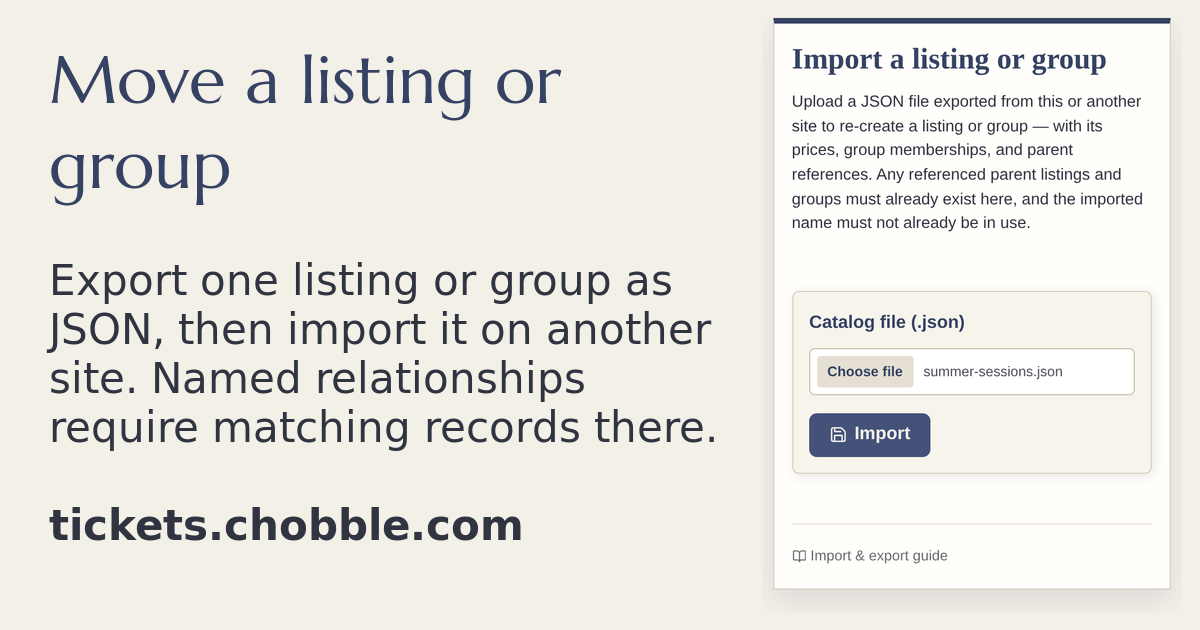
Catalogue import — bring listings in from a JSON export.
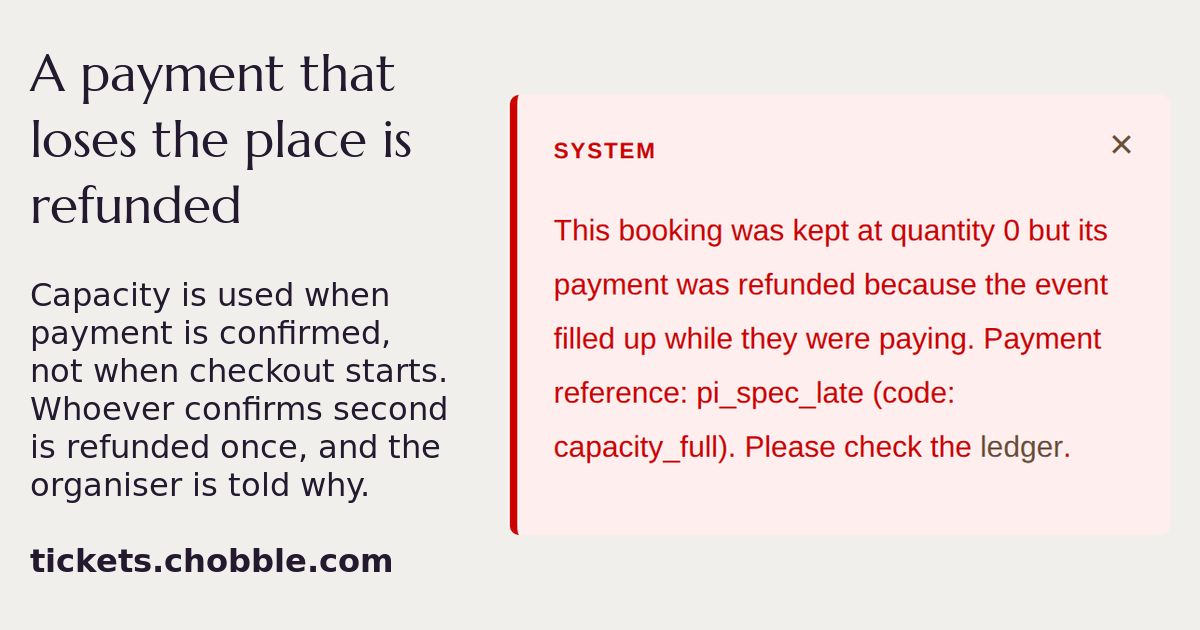
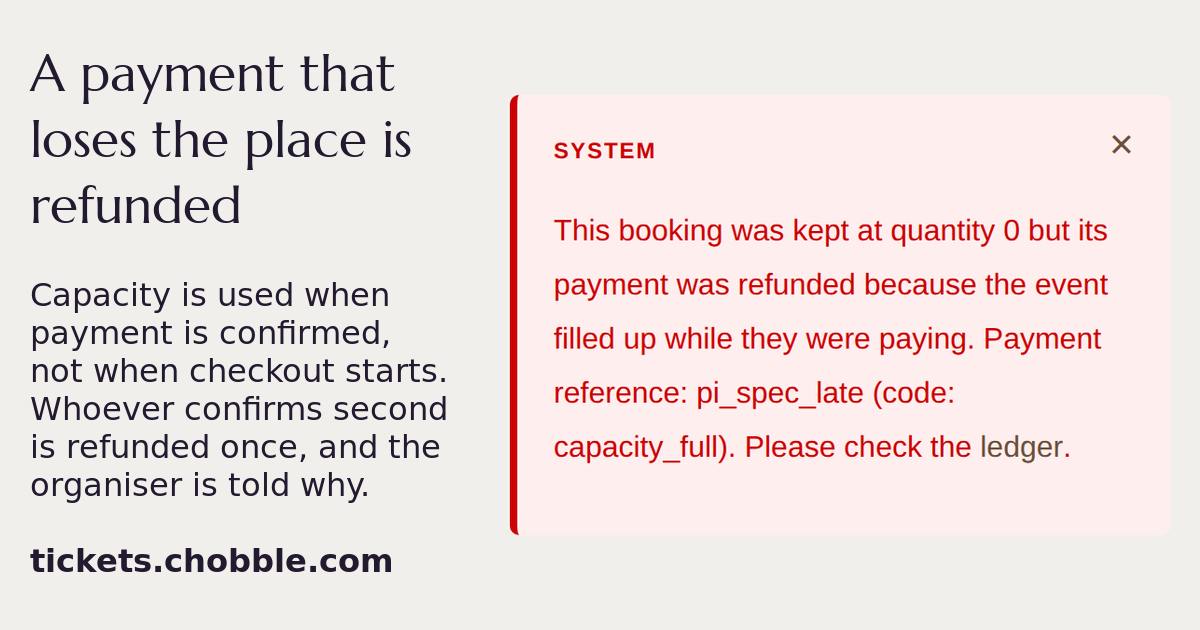
The note left when a payment arrives after the last place has gone.
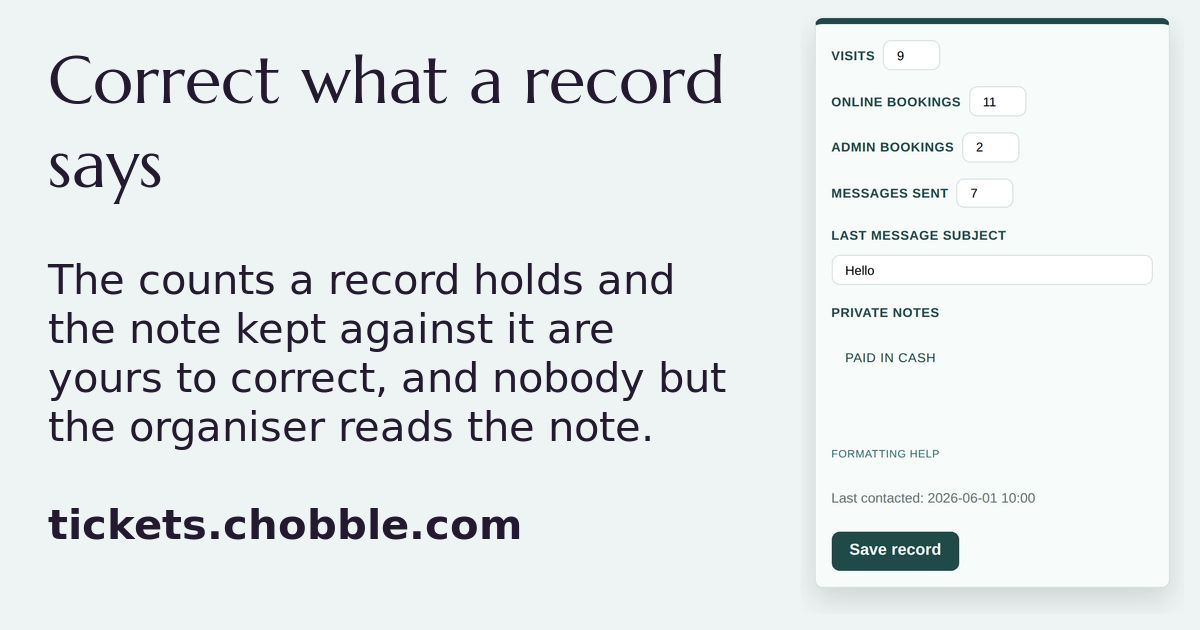
A contact record whose counts and private note the organiser has corrected.
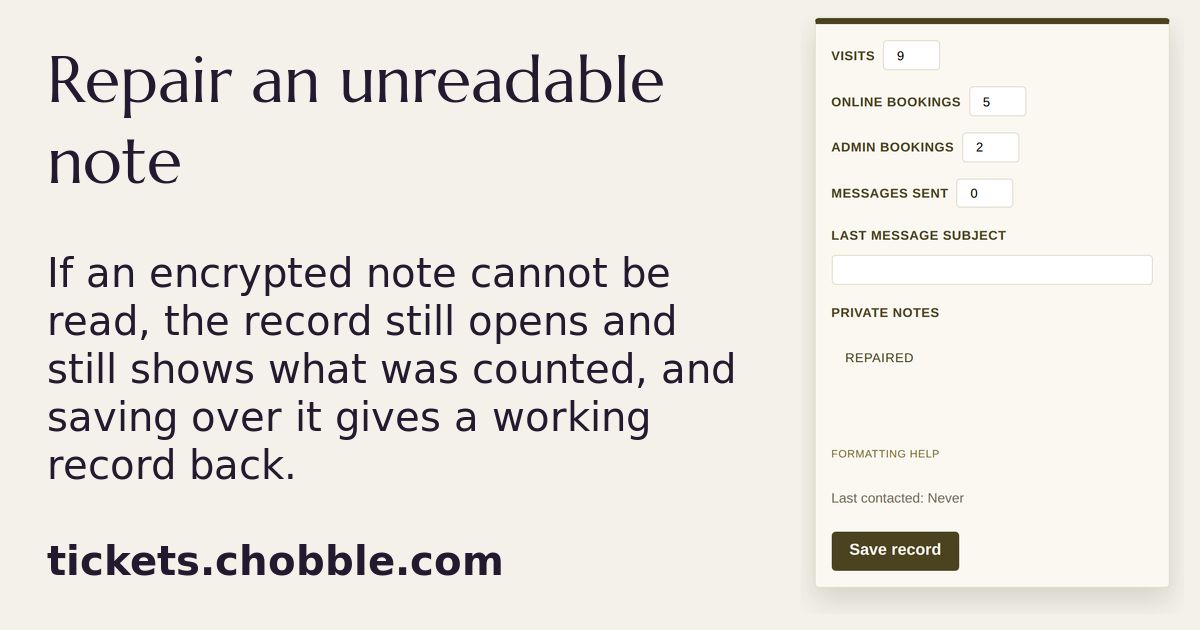
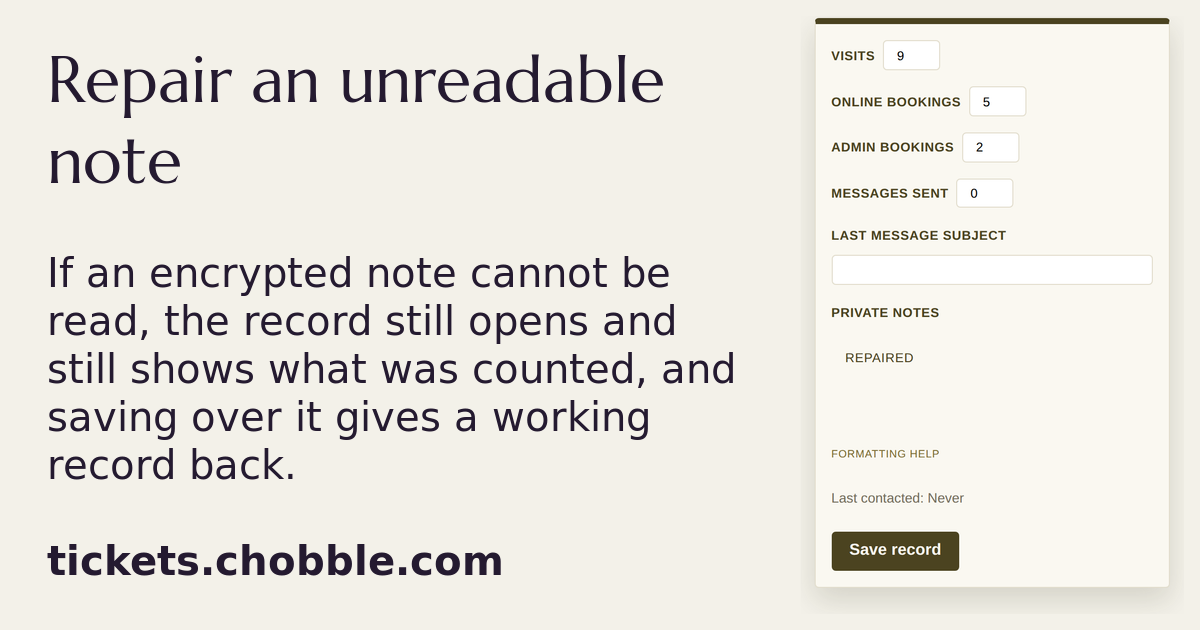
A record that opened and kept its counts after its encrypted note could not be read.
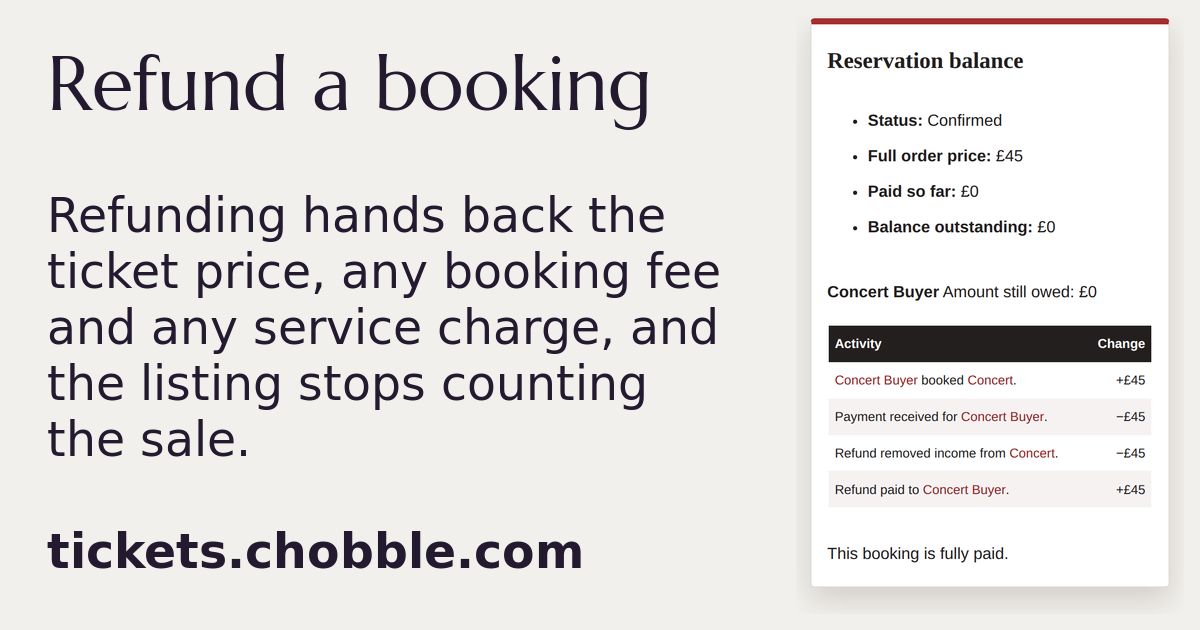
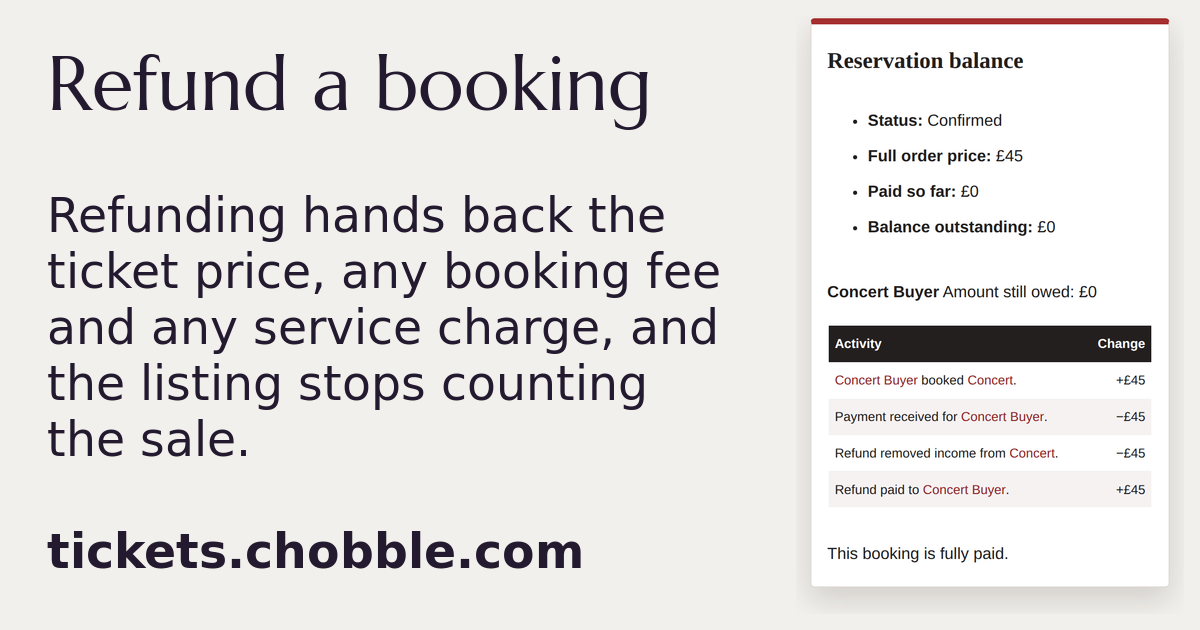
One booking's money after a refund, adding up to nothing owed.
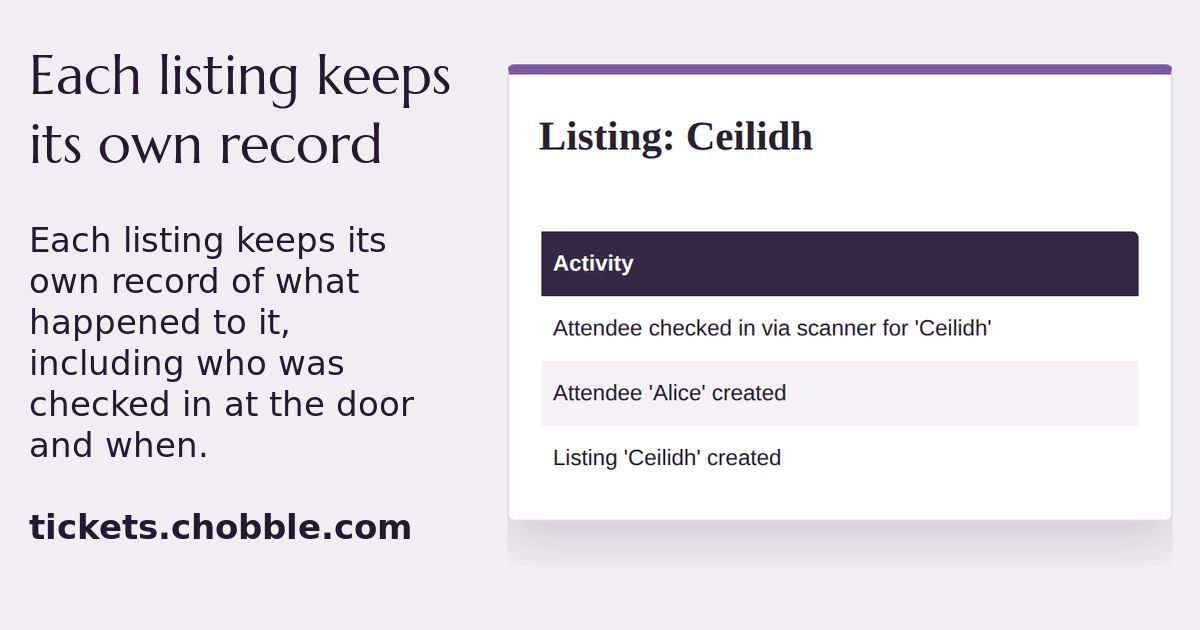
A listing's own record, with a door check-in written into it.
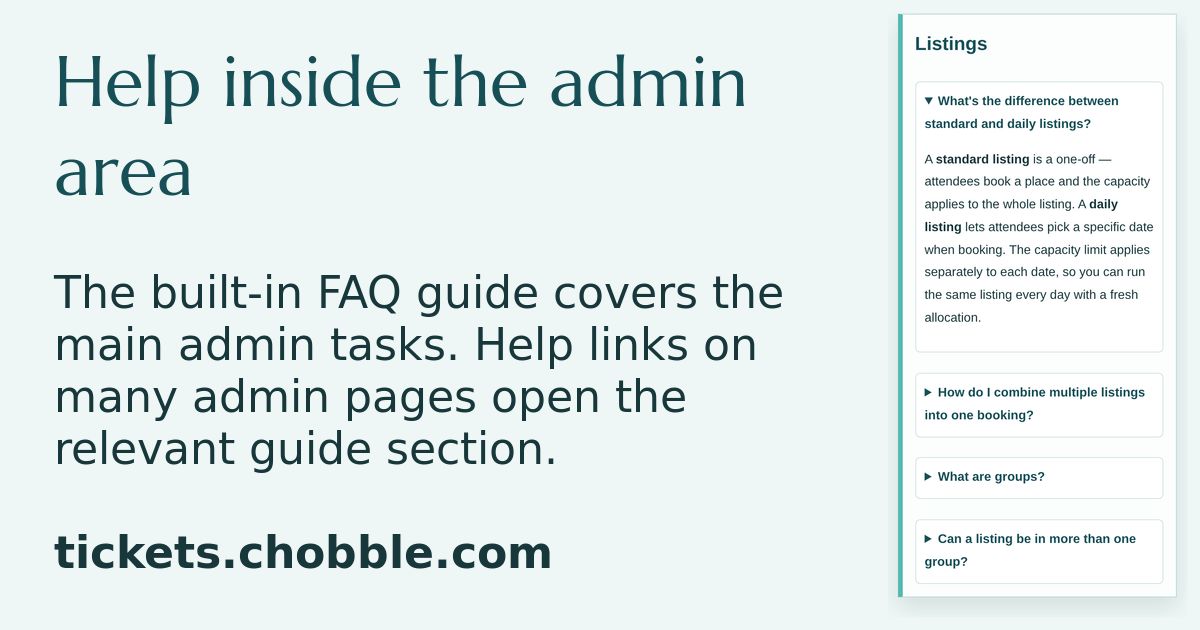
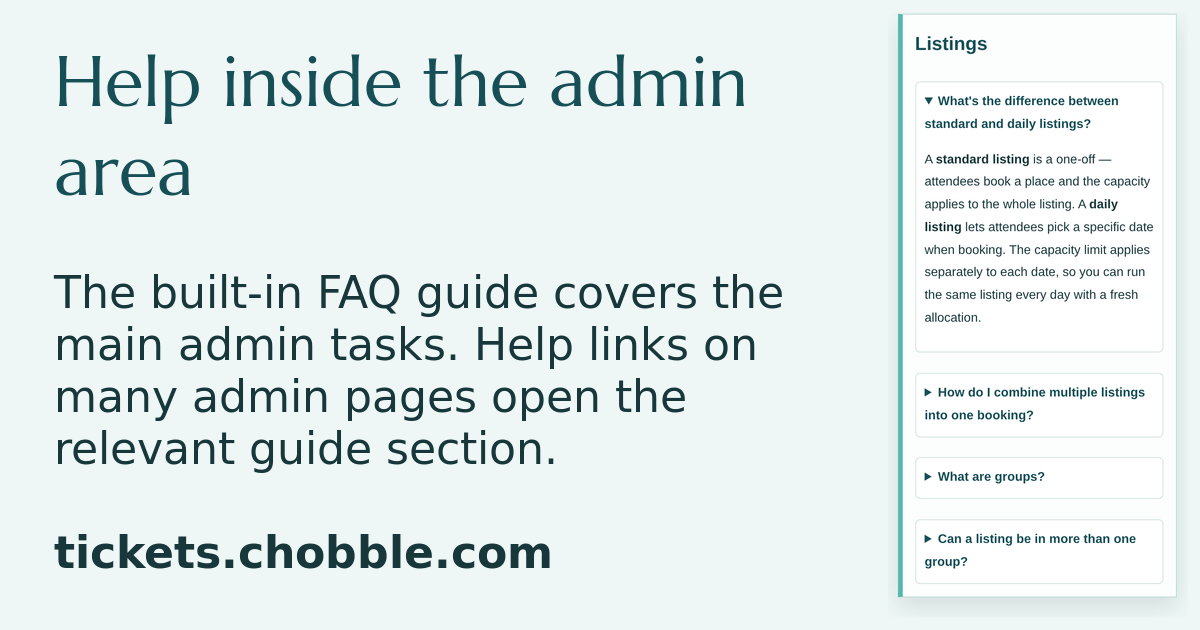
The admin guide — answers one click away from any admin screen.
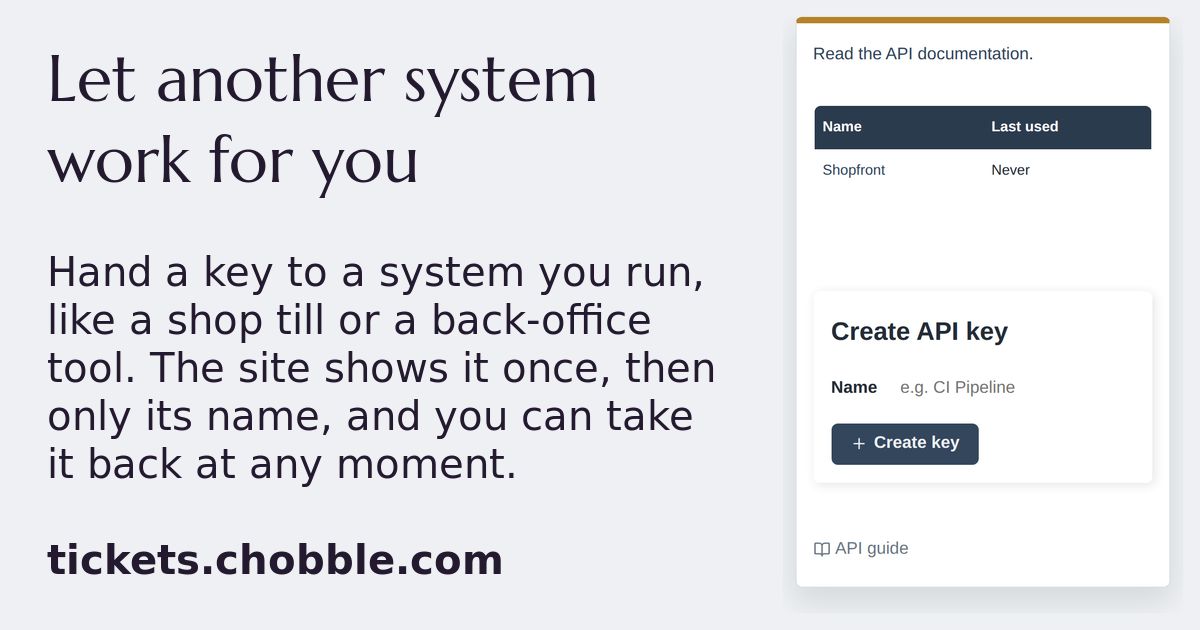
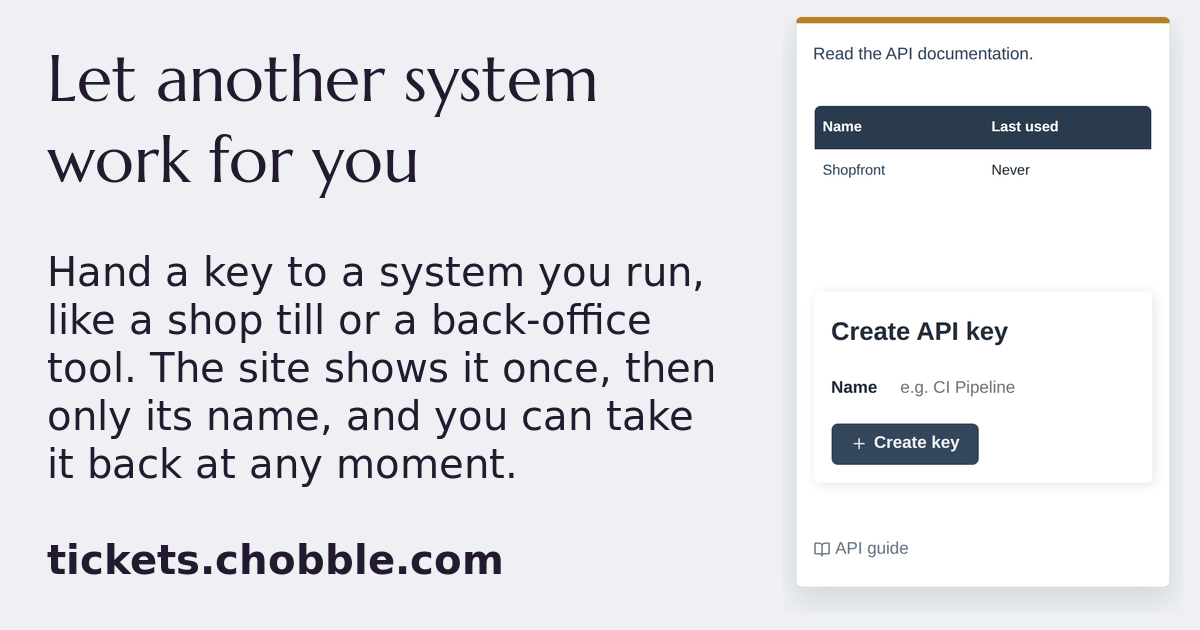
An API key list naming a key without showing the key itself.
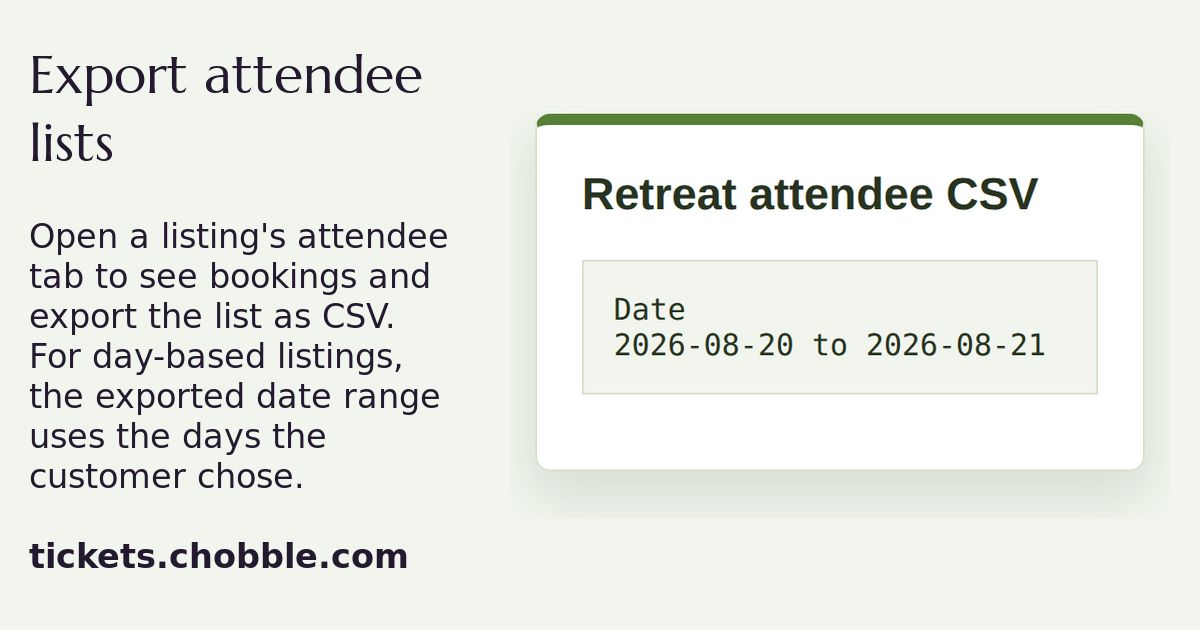
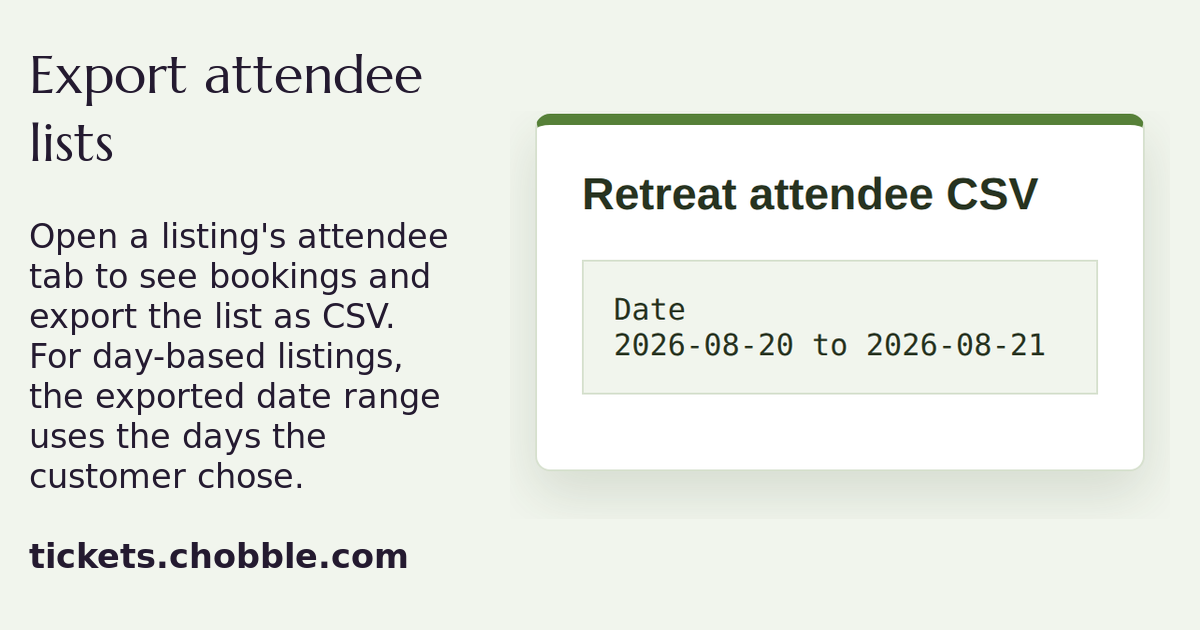
A Retreat attendee tab with a booking date and an Export CSV link.
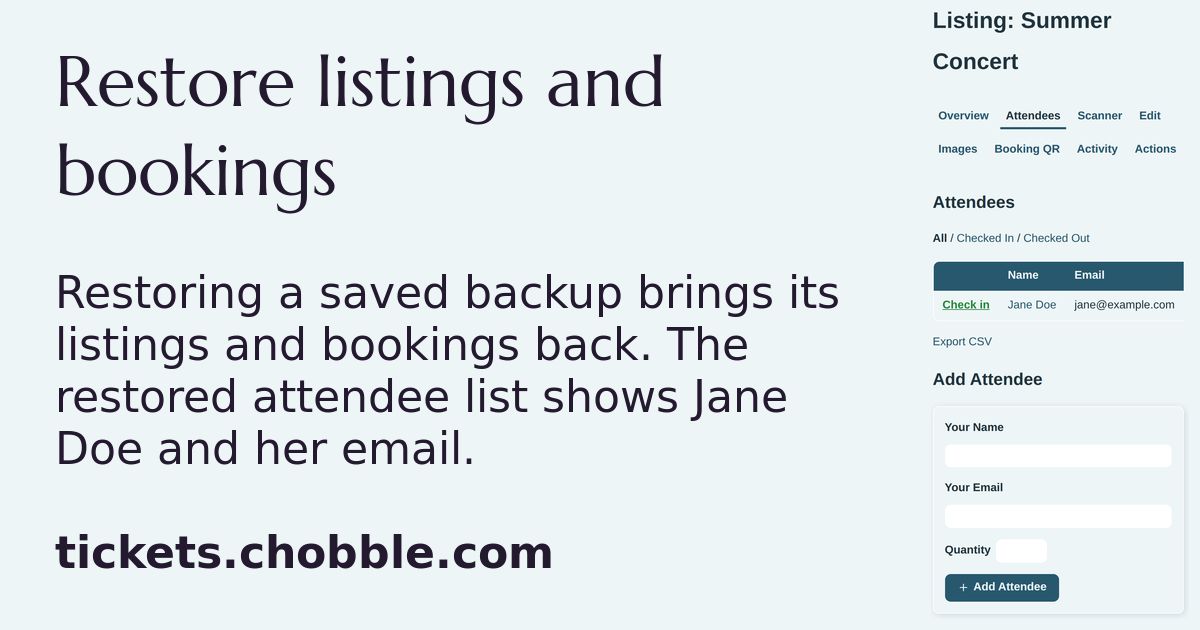
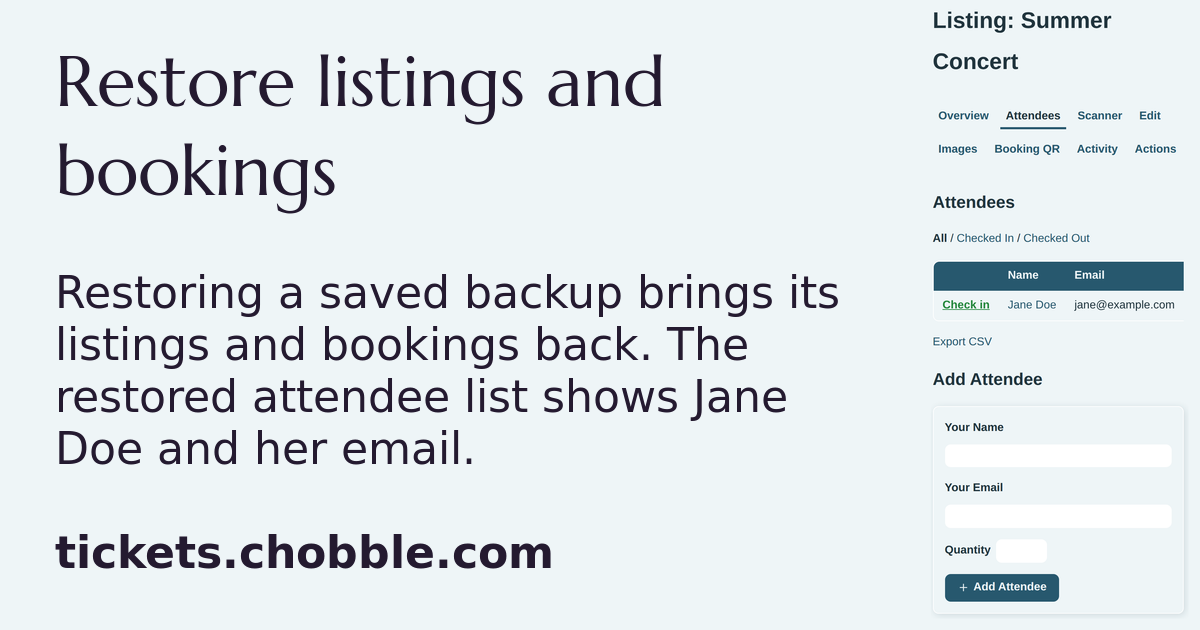
A restored attendee list showing Jane Doe and her email.
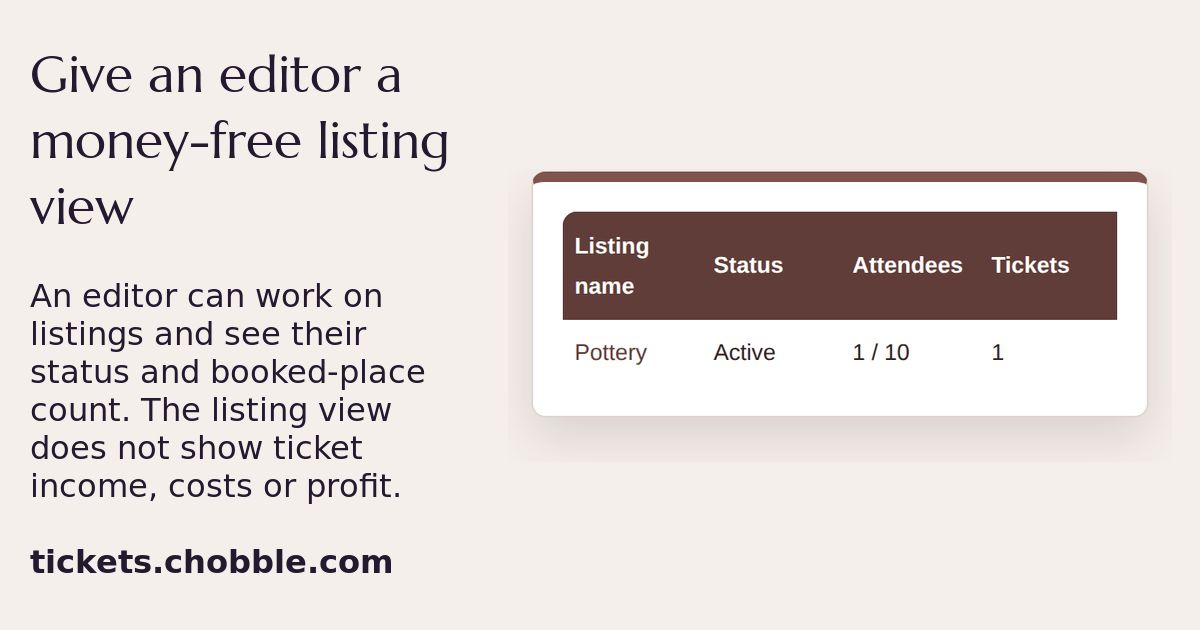
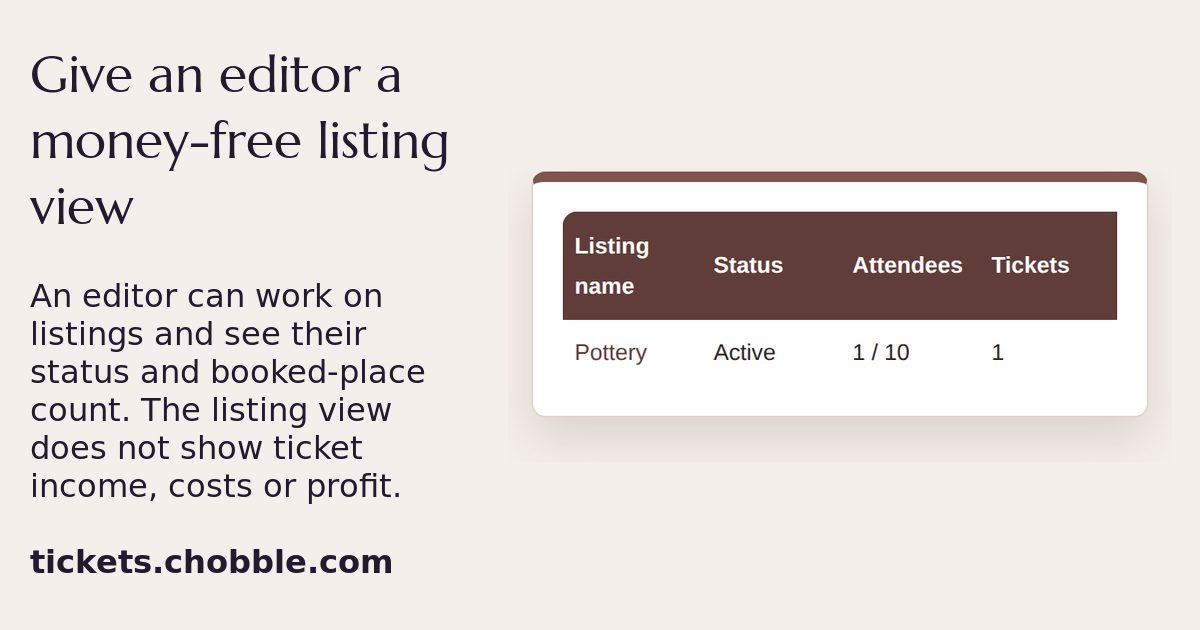
An editor's listing view, with no money columns.
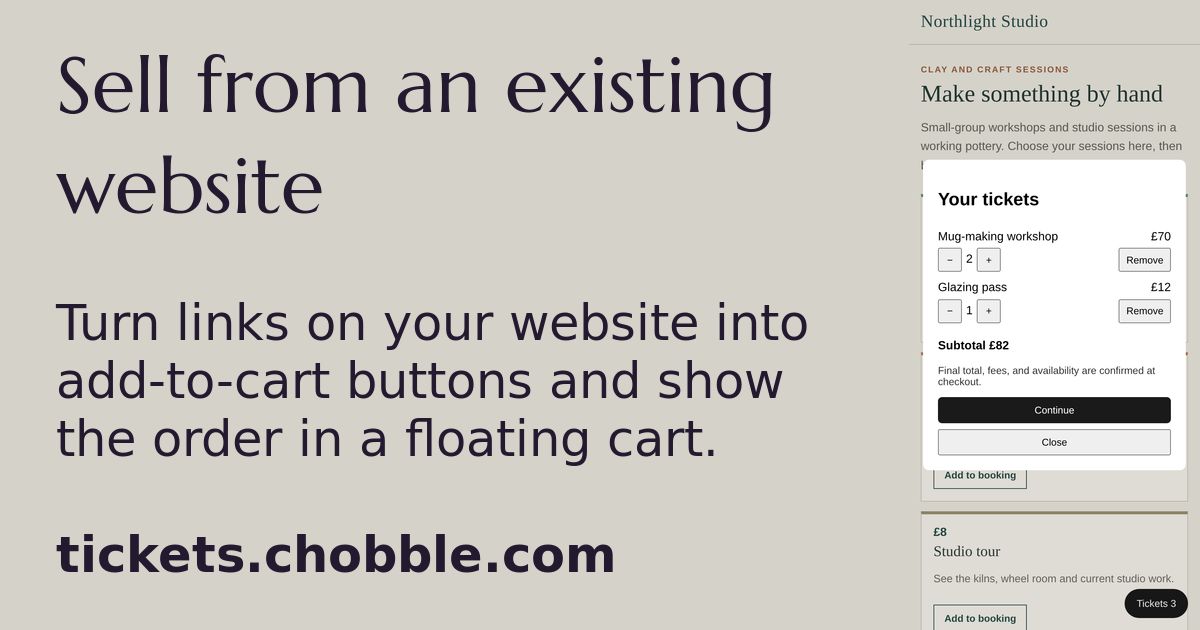
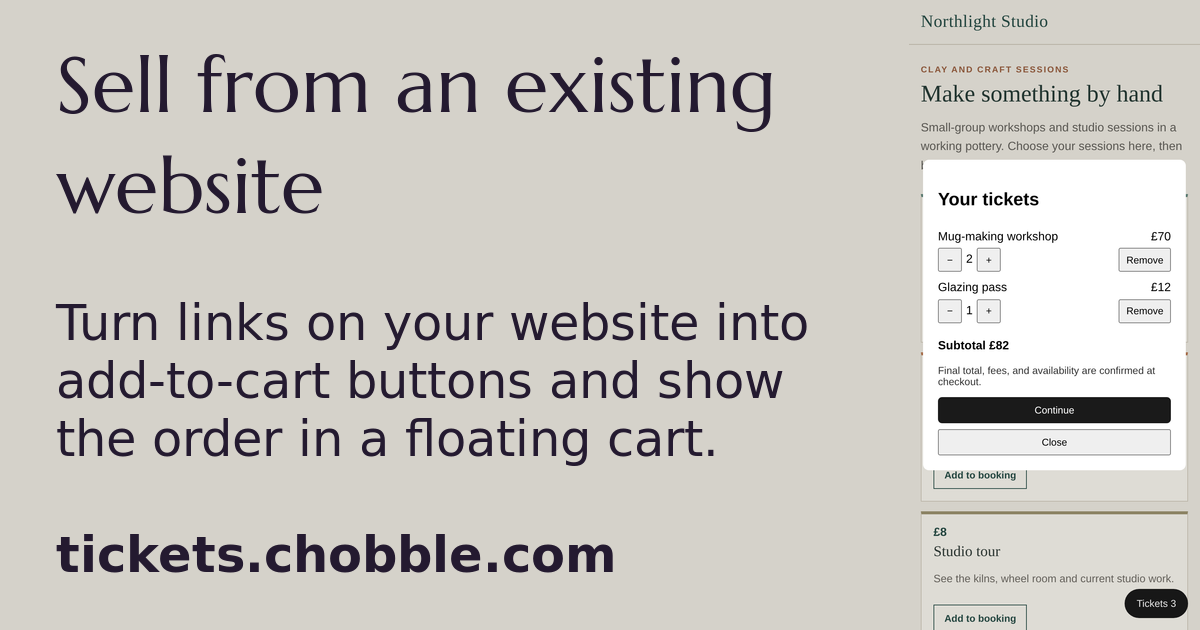
The order widget — a cart placed over an existing website.